Chapter 7: The Vote That Changed Harbor Point
The independent review took six weeks.
During that time, winter settled over coastal Virginia.
Cold winds swept across the marshes.
Holiday lights appeared on porches.
The memorial lawn remained quiet, but the orange barriers were removed after the board confirmed that no approved construction required them.
Walter visited the bench one afternoon and brushed fallen leaves from its wooden slats.
He sat for several minutes, remembering Eleanor.
He had expected retirement to be simpler.
He had imagined quiet mornings, visits from Rebecca, and occasional trips to the naval museum.
Instead, he was helping organize records, attending meetings, and learning more about association governance than he had ever wanted to know.
Yet something good had begun to happen.
Residents were talking to one another again.
Not only about Patricia.
They were discussing budgets, maintenance priorities, accessibility, and the future of their community.
Margaret Collins organized a neighborhood coffee gathering where residents could ask questions without being shouted down.
Thomas explained how board minutes and financial reports were supposed to work.
Rebecca helped several older neighbors access the association’s online records.
Frank Delaney persuaded the board to review the condition of the clubhouse entrance, where a cracked walkway had become difficult for residents using walkers.
The same people who had once avoided HOA business were becoming involved.
Then the independent accountant completed the financial review.
The findings were serious.
The $18,500 consulting payment and the $42,000 project-services payment had been made without adequate documentation of the required board authorization.
The accountant found no evidence that the full board had approved either expenditure.
Some preliminary work had been performed, including drawings and financial projections.
But the review could not establish that the amounts paid were reasonable for the services delivered.
The report also identified weaknesses in the association’s payment approval procedures.
Patricia and Raymond had been able to authorize substantial expenses without sufficient independent oversight.
Raymond acknowledged his role.
He resigned as treasurer and agreed to cooperate with efforts to recover or resolve disputed payments.
The accountant did not conclude that Patricia had personally stolen association funds.
Nor did the report establish that Douglas Harlan had committed fraud.
Those questions would require evidence beyond the financial review.
But the findings were enough to demand corrective action.
The board referred the matter to independent legal counsel.
The association also began discussions with the consulting firms about documentation, contract authority, and potential reimbursement.
Douglas disputed any suggestion that his companies had acted improperly.
He maintained that services had been provided in good faith based on representations from association officials.
The legal issues remained unresolved.
The governance issues were clearer.
Patricia had repeatedly acted beyond the authority the board had granted her.
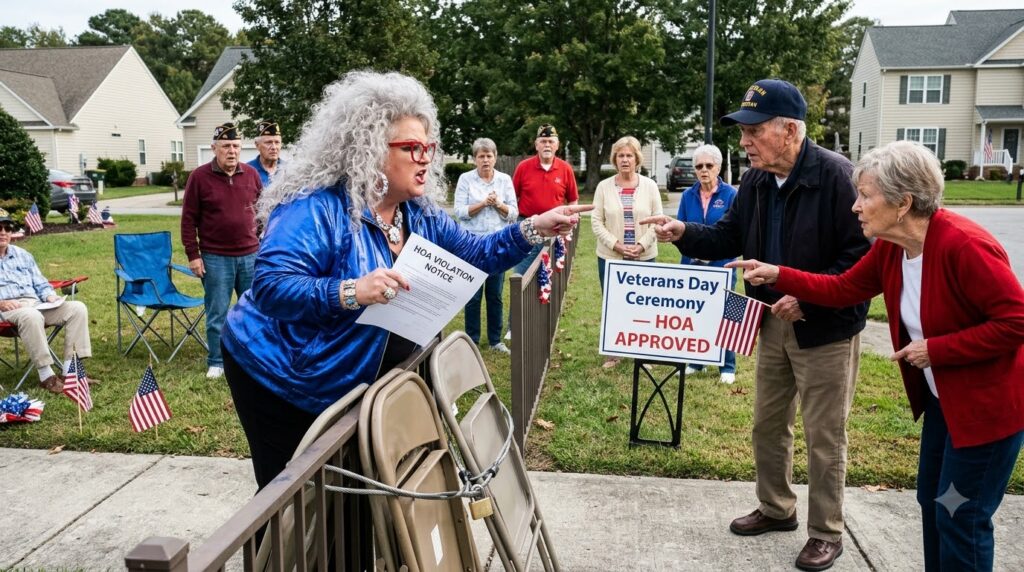
She had attempted to enforce restrictions that conflicted with the approved Veterans Day event.
And she had imposed or initiated penalties against residents without a sound documented basis.
The board rescinded Walter’s $250 fine and the additional $150 penalty.
Linda’s event-organizer warning was withdrawn.
Frank’s citation was canceled.
Margaret’s landscaping notice was also reversed after a review found no consistent basis for enforcement.
But the residents wanted more than canceled fines.
They wanted safeguards against the same thing happening again.
A petition circulated requesting a special membership meeting to consider removal of Patricia from the board under the association’s bylaws.
The petition received more than enough signatures to trigger the process.
Patricia responded with a lengthy letter to homeowners.
She claimed that she had been unfairly targeted for trying to protect property values.
She argued that the proposed redevelopment could have benefited the community.
She also accused her critics of resisting modernization.
Some residents agreed with portions of her argument.
Harbor Point did face maintenance challenges.
The clubhouse roof needed repairs.
The pool equipment was aging.
Several drainage areas required attention.
But those problems did not excuse bypassing the association’s approval procedures.
The special meeting was held on a cold Saturday morning in January.
More than a hundred homeowners attended in person or submitted valid proxies.
Martin Caldwell opened the meeting.
An independent inspector of elections supervised the voting process.
Patricia was given an opportunity to speak.
She delivered an angry defense of her decisions.
Her voice rose as she described herself as the only person willing to make difficult choices.
Walter sat quietly beside Rebecca.
He had no desire to humiliate her.
He wanted the community to decide whether it still trusted her judgment.
When the ballots were counted, the result was decisive.
Patricia was removed from the board by a substantial majority under the procedures set out in the bylaws.
She stood motionless as the result was announced.
For several seconds, nobody spoke.
Then Martin thanked the residents for participating.
There was no celebration.
No cheering.
Only the subdued sound of people gathering their coats.
Walter thought that was appropriate.
Removing a board member wasn’t a sporting victory.
It was a serious decision about responsibility.
Patricia left through a side door.
Her electric-blue jacket from Veterans Day had long since been replaced by a dark winter coat.
But Walter recognized the rigid set of her shoulders.
For months, she had insisted that authority meant having the final word.
Now the homeowners had exercised the authority that belonged to them.
And the community could finally begin repairing what had been damaged.