
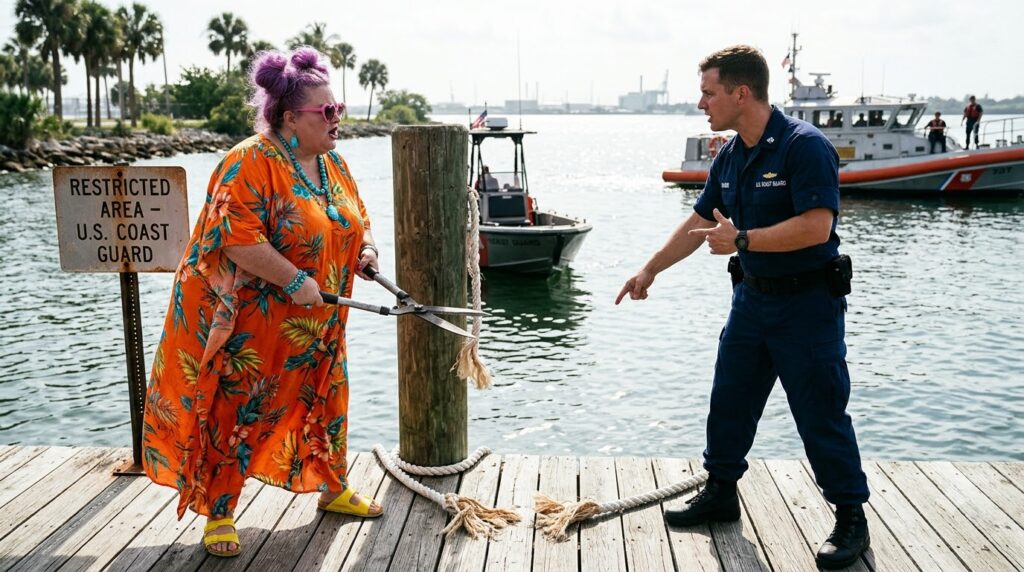
Chapter 9: The Judgment
By the time Patricia’s case reached its conclusion, the neighborhood had changed.
Pelican Point Estates had elected new HOA leadership.
Martin Keller agreed to serve temporarily as president while the board reorganized its procedures.
The association adopted stronger financial controls.
Consulting contracts above a specified amount required recorded board approval.
Homeowners gained easier access to meeting minutes and financial summaries.
The disputed waterfront project was abandoned.
An independent review confirmed that the HOA had no ownership interest in the Coast Guard dock.
The association pursued recovery of the unauthorized expenditures through civil proceedings.
After negotiations, Victor Lang’s company agreed to return a substantial portion of the consulting fees without admitting liability.
Patricia was separately required to reimburse the association for certain expenses she had improperly authorized.
For many residents, those developments mattered more than the viral video.
They had spent years feeling powerless in their own neighborhood.
Now they could attend meetings without fear of retaliation.
Eleanor Brooks was especially pleased.
She had never wanted Patricia humiliated.
She wanted the association to remember why it existed.
An HOA was supposed to maintain common property and protect the interests of homeowners.
It was not supposed to become one person’s private kingdom.
Meanwhile, Patricia’s legal case moved toward sentencing.
After reviewing the evidence and consulting with her attorney, she entered a guilty plea to a federal property-damage offense.
The court considered her lack of a prior criminal record, the intentional nature of her conduct, the documented damage, and the danger created by releasing an unmanned vessel.
The judge also reviewed the financial consequences.
The government had incurred repair expenses, replacement costs, and additional operational burdens.
Patricia’s attorney argued that she had acted impulsively and had not intended to endanger anyone.
The prosecutor responded that the absence of an intention to injure someone did not make the act harmless.
The boat had been deliberately released into an active waterway.
Other people had been forced to respond.
Public resources had been diverted.
The judge listened carefully.
When Patricia was given an opportunity to speak, she stood slowly.
Her clothing was subdued.
Her hair was no longer bright purple.
She looked older than she had in the dock video.
For several seconds, she struggled to find words.
Then she acknowledged that cutting the rope had been wrong.
She said she had allowed anger and pride to overwhelm her judgment.
She apologized to the Coast Guard personnel who had been forced to deal with the consequences.
The judge did not treat the apology as meaningless.
But neither did he treat it as a substitute for accountability.
Patricia received a sentence that included probation, restitution, a substantial financial penalty, and community service, along with conditions prohibiting unauthorized entry into restricted federal facilities.
The court warned her that violating the terms of her sentence could result in more serious consequences.
The restitution obligation was particularly difficult.
Patricia had money, but much of her wealth was tied to her house and investments.
She had already spent heavily on legal representation.
Her damaged party boat required repairs.
Her reputation in Pelican Point had collapsed.
The costs of one afternoon were far greater than she had imagined.
Outside the courthouse, she saw Daniel standing near the entrance.
He had attended the hearing as part of the case.
For a moment, she considered approaching him.
Then she stopped.
She understood that another public confrontation would serve no purpose.
Daniel noticed her.
He gave a brief, neutral nod.
Then he walked away.
There was no celebration.
No humiliating speech.
No final argument.
The law had spoken, and the people responsible for public safety had work to do.
Patricia stood on the courthouse steps, realizing that she could no longer force the world to revolve around her wishes.
For the first time, she had to decide what kind of person she would be when nobody was required to obey her.








