
CHAPTER 5: THE RIDGE BREACH
The air down here was different. It didn’t have the clean, recycled chill of Vance’s office; it was thick, wet, and tasted distinctly of copper filings and wet lime. The sub-surface corridor beneath the logistics hub was narrower than the blueprints in my coat pocket indicated, its walls formed from rough, unpolished concrete that sweated a desaturated white crust of saltpetre.
“Keep your weight on the left side of your boot,” I muttered. My voice didn’t echo; the low, rhythmic hum of the automated lines overhead swallowed the sound before it could travel ten feet. “The drainage channels on the right are slicked with machine lard. If you slip with that splint, you won’t get back up.”
Private Miller didn’t answer with words. His breath came in short, shallow hitches behind me, the hard plastic of his arm cast scraping against the cold iron conduits that ran along the ceiling. Under the desaturated yellow glow of an emergency bulkhead lamp, his face looked completely drained, the skin around his jawline showing a faint, gray discoloration—the unmistakable shadow of peripheral degradation beginning to constrict the tissue.
The steel deck plates beneath our feet didn’t just vibrate; they pulsed, a deep, sub-audible thrum that matched the mechanical heartbeat of the automated lifts three levels below us.
“How much further to the valve junction, sir?” Miller asked. He stopped, his left hand locking onto a rusted water pipe to steady himself. His fingers were stiff, moving with a jerky, uncoordinated friction that reminded me of my own hands during the winter of seventy-six. “The grease… it smells like burnt hair up ahead.”
“Two hundred yards,” I said, my own fingers reaching inside the wool coat to touch the canvas ledger. The frayed olive cloth was warm against my ribs, an antique anchor in a space that was rapidly converting into a tomb. “The old filtration hub is right behind the backup generator vault. If Vance’s lockdown sequence held the primary dampers, the gas shouldn’t have broken the secondary seals yet.”
A loud, metallic clack echoed from the vertical access ladder behind us—the distinct, heavy drop of a security hatch being slammed shut from the clean world above.
The yellow emergency lights didn’t fail, but they flared once, their filaments whistling with a sudden spike in the auxiliary power line. Then came the sound: a low, wet hiss that vibrated through the steel conduits, followed by the sharp scent of dry ozone. It wasn’t the sound of an explosion; it was the sound of a system breathing out, a deliberate, pressurized venting from the deep containment cells.
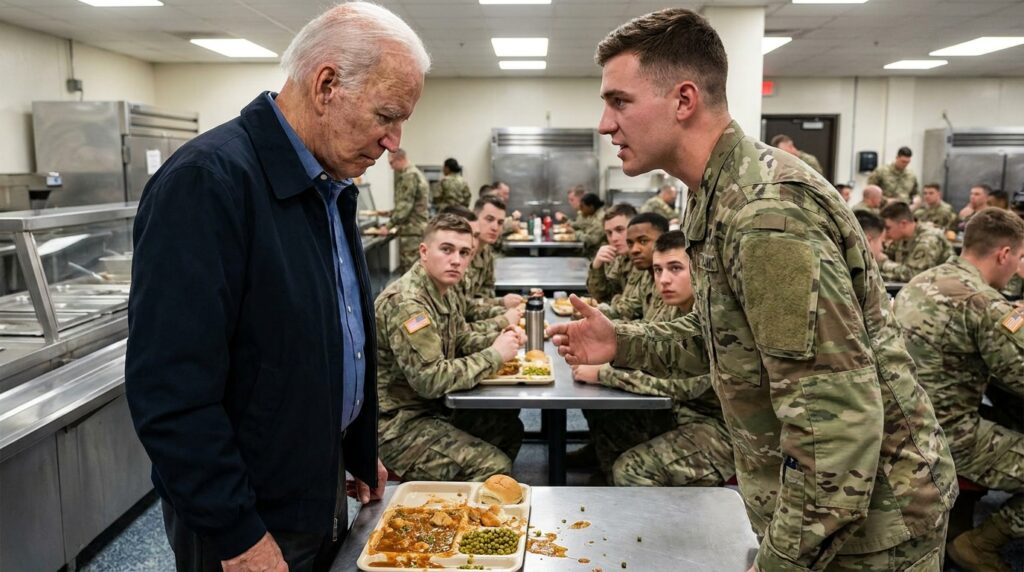
I didn’t wait for Miller to adjust his balance. I reached back, my old fingers locking onto the dry fabric of his utility jacket with the same unyielding muscle memory that had broken him in the cafeteria.
“Move,” I said, the rasp in my throat hard and dry as bone. “The automated system just cleared the first stage. If we aren’t past the generator block before the secondary vents cycle, we won’t need the filtration formulas anyway.”
We broke into a limping, uneven stride, our boots striking the wet concrete in a ragged cadence. The tunnel began to slope downward, the desaturated yellow light giving way to a dense, desaturated fog that rolled off the drainage gutters, carrying the weight of a forty-year-old secret that had finally rusted through its cage.








