
CHAPTER 1: THE FRAYED EDGE
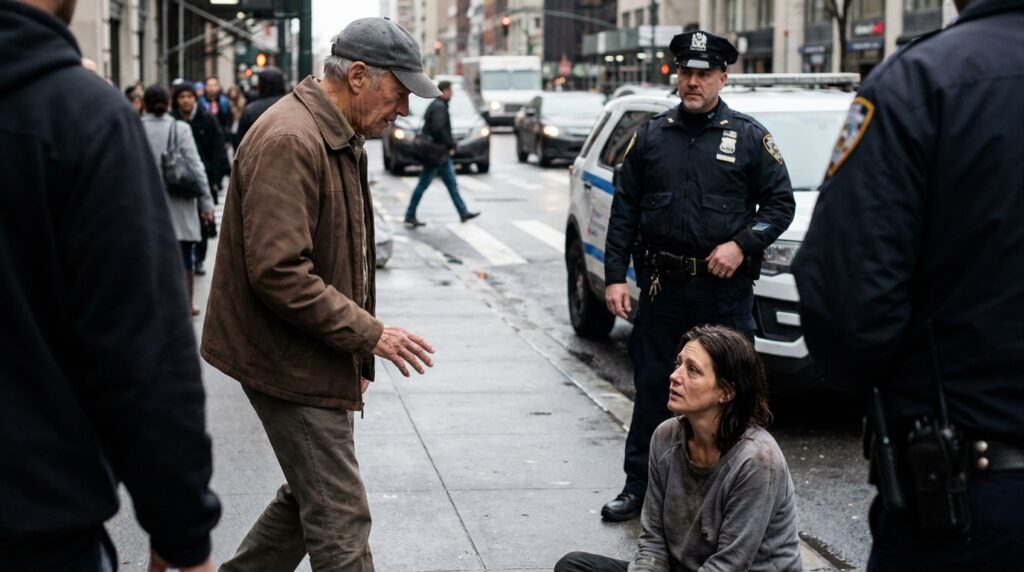
The right pocket of the brown cotton jacket was torn at the corner, just enough for the cold, salt-rimmed wind off the transit canal to bite at Arthur Vance’s knuckles. He didn’t pull his hand out. Instead, his thumb rolled over the tiny, sharp ridges of the brass insignia clutch resting loose in the seam. It was a minuscule piece of hardware, no larger than a shirt button, but the metal was dense, heavy with the weight of an era the city had spent thirty years paving over.
Around him, downtown moved with a frantic, unseeing velocity. People in slick nylon coats and heavy leather boots brushed past his shoulder, their eyes locked on the glowing screens held inches from their faces. To them, he was part of the masonry—a slow-moving calculation they had to steer around, a late-70s frame slightly bent by the decades, topped with a faded olive veteran’s cap that had lost its structured crown long before the kids on the corner were born. The daylight was thin, desaturated, casting long, pale shadows across the grease-slicked granite of the sidewalk.
He noticed the change in the street’s rhythm before he saw the cause. It was a subtle hitch in the flow of pedestrians fifty yards ahead, a widening circle of avoidance near the concrete parking island where the delivery trucks idled. The air smelled of burnt diesel and wet cardboard.
“Get up,” a voice barked from the center of the clearing. It was young, sharp with a manufactured malice that belonged to someone who had never had his skin torn by anything more serious than a chain-link fence. “We told you yesterday about setting up your trash in front of the bay door. Move it.”
Arthur didn’t alter his pace, but his spine straightened, a fraction of an inch at a time, the vertebrae settling into an old, familiar alignment that had nothing to do with age and everything to do with ballast. Through the gap between two stopped commuters, he saw her. The woman was small, her dark hair graying at the temples, clinging to her scalp from the damp mist. She wore a worn gray sweater that had frayed at the cuffs until her wrists showed, pale and shaking. She was on her knees, her fingers clawing at a split plastic bag as a trio of young men in heavy, dark sportswear crowded her perimeter.
Across the four lanes of asphalt, a dark municipal police cruiser sat against the curb, its engine pulsing a steady vibration through the soles of Arthur’s shoes. Inside, behind the tinted glass, the silhouette of a clean-shaven officer remained perfectly still. A hand moved near the steering wheel, casual, holding a paper coffee cup. The light bar on top remained dead.
The lead kid stepped closer, his heavy boot coming down directly on the corner of a waterlogged cardboard box the woman was trying to drag toward herself. The cardboard tore with a wet, heavy slap. “I said look at me when I’m talking to you.”
Arthur’s hand stopped moving inside his pocket. His thumb pressed down hard against the brass ridge until the pain was clean and localized. He looked at the officer across the street, whose face remained obscured by the glare of the low afternoon sun, then he looked back at the pavement where the woman’s head was bowed so low her forehead nearly touched the grit.
He didn’t think about his lungs or the dull ache in his left hip. He just took two elongated, measured strides out of the pedestrian stream and entered the clearing, his shadow falling across the split plastic bags before the lead boy could raise his foot a second time.








