
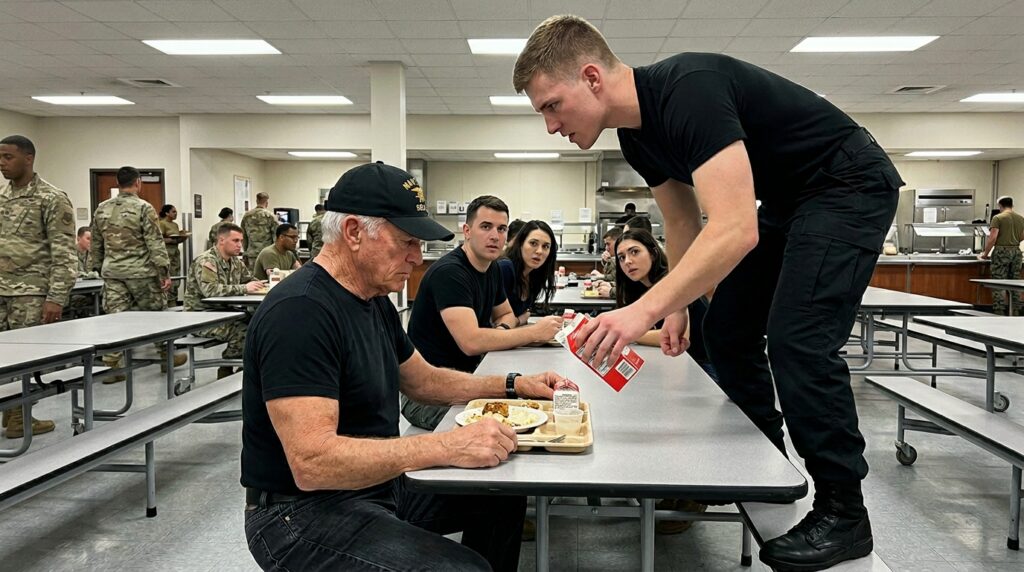
CHAPTER 5: THE LEDGER IN THE RAIN
The rain didn’t fall; it drove sideways, sharp and heavy with the grit of the valley’s coal-cuts, soaking the wool of Arthur’s coat until it clung to his shoulders like wet canvas. His boots found no purchase on the gravel path between the dry-kiln and the main administrative block. Every stride was a deliberate negotiation against his swollen left knee, the joint clicking with a faint, hydraulic wetness inside the bone.
Behind him, the kiln door remained open, a dark mouth breathing out the sulfurous stench of the rising core. Thomas and the boy were gone, their tracks already dissolving into the orange puddles leading toward the western perimeter fence.
Arthur didn’t look back to see if Vance was following. He knew the director’s intellect; Vance wouldn’t chase a physical threat through the mud. He would run for the files. He would run to burn the clearance ledger before the county sheriff’s cruiser cleared the lower rail-gate.
Arthur reached the rear entrance of the administrative building, his leather palm slamming against the heavy iron fire door. The latch was stiff, choked with years of external rust and dried grease. He threw his weight against the panel. The iron yielded with a screech that was swallowed instantly by the rumble of the facility’s old steam turbines down the hill.
The interior corridor was dead quiet, smelling of cold floor wax and the stale grease of the nearby kitchens. The desaturated yellow light from the overhead bulbs flickered rhythmically, timed to the erratic pulse of the old generators.
Arthur walked with an uneven, heavy stomp, his boots leaving thick, gray cakes of limestone mud on the linoleum. He reached Vance’s private office within two minutes. The typewriter ribbon he had watched Vance change earlier was sitting on the green blotter, a twisted black snake in the dim light. But the desk drawers were open, their contents turned over in a frantic scramble.
Vance had already been here. And he had taken the primary keys to the underground vault archive.
Arthur stood in the center of the office, his chest heaving, his eyes scanning the room through the sharp, gray lens of the protector. He didn’t take everything, Arthur thought, his eyes tracking a thin line of white lime dust that led from the corner of the desk toward the wall-mounted gun locker.
He stepped toward the locker. The steel door was locked, but the hinge pins were old, unhardened iron. Arthur didn’t look for a key. He gripped the heavy, cast-iron bookend from Vance’s desk—a miniature anvil used to hold up the facility regulations—and drove the corner of it down into the upper hinge with a single, massive drop of his arm.
The iron pin sheared with a dry, metallic snap. Arthur pried the steel door open with his bare fingers, the rough metal biting into his callouses until a thin line of dark blood ran into the rust.
Inside, behind a pair of unused security shotguns, sat a small, dented ledger tin. It was stamped with the old 1991 logistics detachment code—the same code that was on the fragment in his watch.
Arthur pulled the tin out, his thumbs forcing the brass clasp.
Inside lay a duplicate iron key, identical to the one he had taken from the mess hall floor, but this one was clean, free of tape, its teeth sharp and unused. Beneath the key was a single sheet of blue carbon paper—a duplicate manifest that hadn’t been included in Thomas’s stolen file.
The text was written in Arthur’s own neat, military script from thirty years ago. It detailed a secondary injection site beneath the main residential barracks—not the dry-kiln. The kiln was just the drainage point. The true heart of the cistern pressure loop was sitting directly beneath the beds of seventy retired men.
Vance hadn’t been executing a relocation plan; he had been falsifying the perimeter monitors for months to keep the state from condemning the land before the facility’s insurance policy matured. If the core blew, the residential floor would collapse into the caustic soup first.
The floor beneath Arthur’s boots trembled—a faint, rhythmic shudder that made the inkwells on Vance’s desk rattle against the wood. The pressure was moving up the line faster than the drainage could clear.
“You always were too thorough, Arthur.”
The voice came from the doorway. Arthur didn’t drop the tin. He turned slowly, his spine straight, facing the director who stood in the frame, his coat drenched, his face a hard, pale stone in the flickering corridor light. Vance wasn’t holding the security piece now; he was holding a heavy master-switch box he had pulled from the main corridor panel.
“The county line is closed,” Vance said, his voice flat, deadened by the sound of the rain against the glass behind him. “There’s an accident at the rail-cut. A logging truck turned over. Nobody is coming down this road for four hours, Arthur. Not the sheriff. Not the board.”
Arthur looked at the clean iron key in his hand. “The barracks are sitting on the main loop, Vance. You knew the concrete cap was thin.”
“It was thick enough for thirty years,” Vance said, his knuckles turning white as he gripped the iron handle of the switch box. “It would have held another six months if that boy hadn’t started digging into the line-scale. I’m clearing the lower tier now. The rest of them will move when the board signs the emergency transfer tomorrow morning.”
“They won’t survive the night if the core vents through the floor-drains,” Arthur said. He dropped the ledger tin onto the desk, his boots shifting into a wide, heavy stance. “Turn the main pumps back on.”
“The pumps will fracture the lower pipe-walls,” Vance countered, his eyes wide, illuminated by a cold, desperate intellect. “If I turn them on, the whole valley gets the water. The state shuts us down by noon. We lose the charter, Arthur. We lose the home.”
Arthur took a slow breath, the smell of damp wool and sulfur filling his throat. The “Sovereign Protector” didn’t choose between the myth and the men. He chose the iron reality of the lives in front of him.
“Then we lose it,” Arthur whispered.
He moved forward, his heavy wool coat swinging like a shroud as he stepped into the light of the door.








