
CHAPTER 2: THE SCARS OF THE FRICTION
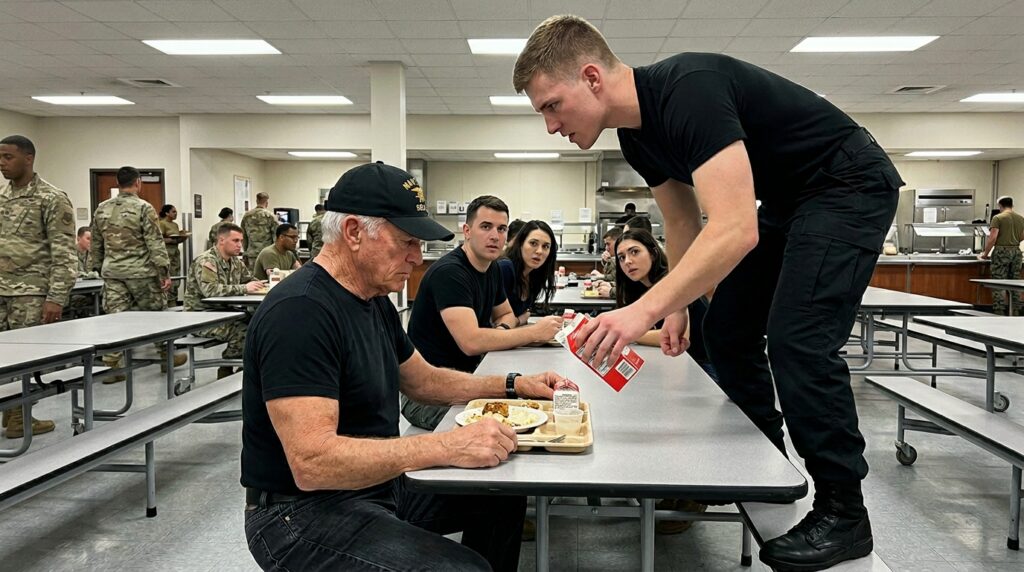
“You broke his collarbone, Arthur. And you broke my table.”
Director Vance didn’t look up from his desk. His fingers, thin and stained yellow from decades of state-issued tobacco, were busy threading a fresh ribbon into an ancient mechanical typewriter. The ribbon hissed as it pulled through the rusted iron gears of the machine, a dry, grating sound that vibrated through the small, unventilated office. The room smelled heavily of damp ledger paper, cold coffee, and the sharp sulfur tang of the coal-fired heater down the hall.
Arthur stood stiffly in front of the desk. His knees had begun to swell, the fluid building up beneath the caps with a dull, throbbing pressure that felt like sand ground into a bearing. He didn’t ask to sit. His civilian trousers were still damp with the sour milk from the mess hall, the fabric stiffening as it dried against his skin.
“The boy was off-balance,” Arthur said. His voice was too thick for the small space, scraping against the plaster walls. “The floor was slick. If he broke, it’s because he was made of soft timber.”
“He’s thirty years younger than you,” Vance countered, finally snapping the metal casing of the typewriter shut with a hollow clack. He raised his eyes, gray and filmed with the cataracts of an administrator who had watched three generations of men rot from the inside out in this valley. “His name is Miller. His father was field artillery in the nineties. A bad liver and a worse temper. The boy has been living out of a truck in the lower lot for three weeks, waiting for his old man’s back-benefits to clear the board. He thinks this place is hiding the money.”
Vance reached into his drawer, his hand brushing against a stack of desaturated, yellowed intake forms before pulling out a small, heavy object. He dropped it onto the green blotter between them. It landed with a dull metallic thud.
It was a notched brass locker key, its head wrapped tightly in three layers of oxidized black electrical tape. The tape was frayed at the edges, revealing a dark, rusted crust underneath that looked less like iron corrosion and more like dried fluids.
“The kitchen staff found it under the table after they carried the Miller boy out,” Vance said, leaning back until his wooden chair screamed in protest. “It’s not for any locker in the public pavilion. The serial number stamped on the barrel belongs to the old subterranean ordnance vaults beneath the dry-kiln. The ones we sealed when the rail line was pulled up in eighty-eight.”
Arthur looked at the key. His left hand, still cramped from holding the boy down, twitched against the seam of his trousers. The tiny metallic sliver he had pulled from his broken pocket watch was currently pressed into his palm, its sharp corners biting into his skin. The alloy of that sliver matched the exact chemical grade of the vault locks—a hardened, zinc-dipped steel intended to withstand industrial caustic wash.
“The vaults are empty,” Arthur said, his tone flat, defensive. He felt the phantom weight of his old rank settling over his shoulders like a wet canvas coat. “We cleared them under the detachment directive.”
“Then why was the boy carrying the key?” Vance’s voice dropped, becoming transactional, sharp. He slid the key an inch closer to Arthur. “The facility board doesn’t want the county sheriff sniffing around the lower lot, Arthur. They don’t want people asking why a twenty-two-year-old casual laborer is trying to dig into the foundations of a state-supported veteran home. You clean your own friction. Take the key. Find out what he’s been tampering with before he comes back from the clinic with a lawyer or a tire iron.”
Arthur’s fingers moved before his brain could countermand the instinct. He picked up the brass key. The oxidized tape felt cold, greasy against his skin. The smell of old adhesive and wet iron lifted from it, a familiar, stale odor that instantly brought back the gray, suffocating heat of the underground bunkers where he had spent his final months of active duty.
He didn’t thank Vance. He turned and walked out, his boots striking the gray concrete floor of the corridor with a slow, uneven rhythm.
The descent to the lower kiln lot was a transition through layers of decay. The main facility gave way to the old industrial skin of the compound—weathered red brick that had turned black from decades of coal smoke, corrugated iron roofing that rattled in the river wind, and the pervasive, heavy silence of abandoned machinery. Arthur walked through the drizzle, his eyes scanning the rusted perimeter fences, his mind automatically cataloging the blind spots in the security lights.
He wasn’t thinking like a retired old man anymore; the “Predator-Prey” lens had clicked back into place with the mechanical certainty of a locked bolt. Every shadow between the rusted fuel tanks was a potential counter-move; every puddle of orange, iron-heavy water reflected a sky that felt like a low ceiling closing in.
He reached the timber door of the old dry-kiln. The padlock on the exterior chain was intact, coated in a thick, undisturbed skin of brown rust. But when Arthur looked closer, his eyes caught a clean, silver scratch along the hinge plate—the bright, unmistakable shine of fresh friction where a crowbar had recently been wedged.
The boy hadn’t broken in here. He had already been inside.
Arthur used his body weight to push the heavy oak door open, the wood scraping against the grit on the sill. The interior was pitch black, smelling of dry rot and the old, chemical preservative they used to spray on the ammunition crates. He reached into his pocket, his hand passing past the watch to pull out a small, brass-cased penlight.
The narrow beam cut through the dark, illuminating the thick layer of limestone dust on the floor.
There were two sets of tracks in the dust. One belonged to the heavy, treaded work boots of the Miller boy. The other set was older, smaller, the edges of the prints softened by months of settling silt—the sharp, narrow heel-strikes of an administrator’s shoe.
Arthur followed the boy’s boots toward the rear of the kiln, where the concrete floor had cracked away to reveal the iron staircase leading into the subterranean drainage vaults. At the top of the stairs lay a discarded manila folder, its corners chewed by mice.
He knelt, his joints groaning in the dark. He shone the penlight onto the paper.
It was an official military medical discharge log, dated August 14, 1991. The name at the top was Corporal Thomas Miller. Across the center of the page, a massive red stamp had obliterated the diagnostic notes: CLAIM DENIED – LACK OF PROXIMATE SERVICE CONNECTION.
Beneath the stamp, the authorization signature was a neat, microscopic scrawl that Arthur recognized before he even read the typed name below it. It was Vance’s signature. But stuck to the back of the file with a rusted paperclip was a secondary document—a yellowed carbon copy of a shipping manifest for forty-gallon steel drums, marked with the specific, restricted classification code for toxic compound storage that Arthur himself had logged into the company record books thirty years ago.
A sharp rustle from the top of the stairs made Arthur freeze. The penlight died as his thumb clicked the switch off in the same microsecond. In the absolute, heavy darkness of the vault, he heard the wet, dragging sound of someone breathing through a broken nose.
The boy was back. And he wasn’t alone.








