CHAPTER 8: THE SHIFT ON THE ASPHALT
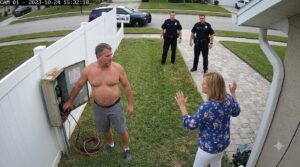
The inspector stopped two paces short of the porch steps, his leather briefcase swinging once before settling against his thigh.
His eyes didn’t fixate on the smartphone held out in my palm. They drifted past my elbow, taking in the jagged splinter of oak where the doorframe had split, the dangling black plastic of the camera housing, and the rusted iron bolt still driven deep into the pine trim.
“What caused that damage, sir?” the inspector asked. His voice remained measured, professional, but the sharp legal edge in his posture softened into something far more cautious.
“A three-inch iron bolt,” I said, my thumb swiping across the glass screen to play the high-definition backup video recorded sixty seconds prior. “Fired from a tensioner behind the hedge line of Lot 113. The camera caught the trajectory, the operator, and the grey PVC junction box mounted inside the utility easement.”
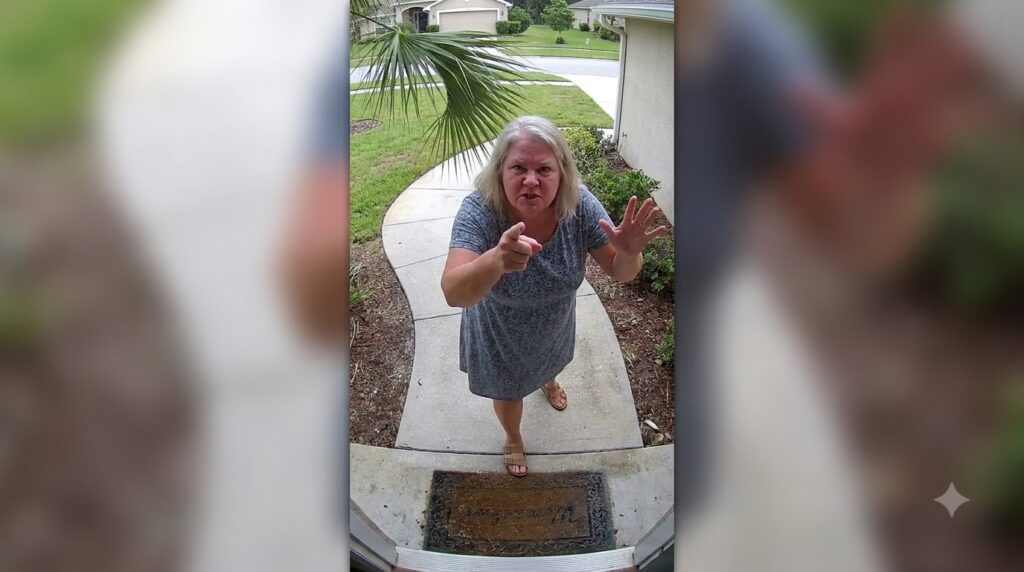
Evelyn Krauss stepped off the curb, her tan sandals striking the asphalt with a sharp, frantic slap.
“Inspector, this is a stall tactic!” Evelyn’s voice cut through the afternoon heat, shrill and unravelling at the edges. “He’s attempting to distract you from the property boundary violation! That camera was illegally positioned to spy on my private driveway!”
The inspector didn’t turn around to look at her. He took one step up the walkway, his polished dress shoes crunching against the fine sand on the concrete. He leaned over my shoulder, staring at the lit screen.
On the high-resolution recording, the wide-angle frame showed the entire porch threshold. It captured Miller standing near the steps, the green-tinted brass benchmark gleaming at the foot of the palm tree, and the clear line of sight straight through the hibiscus hedge to Evelyn’s white polo sleeve resting on the pneumatic lever. The video captured the distinct, metallic pop, the spray of splintered wood, and the camera housing shattering as the iron bolt struck the frame.
“That’s a pneumatic wire driver,” the inspector noted, his brow furrowing as he zoomed in on the grey PVC box mounted behind the hedge. “And that box… that’s not a residential circuit.”
“It’s the master bypass valve for the municipal water trunk,” Miller called out from the bottom step, stepping forward until he was standing beside the inspector. “Installed thirty years ago when the developer laid out the block. Evelyn’s garage was built six inches over the easement line to cover the access hatch.”
Evelyn reached the edge of my lawn, her face devoid of color, the white polo shirt sticking to her chest in the humid glare.
“Miller, you keep your mouth shut!” she shouted, her hands clenching into tight fists at her sides. “You have no standing here! You’re an accomplice to his non-compliant modifications!”
“I’m a homeowner on this street, Evelyn,” Miller said, his voice quiet, flat, carrying the weight of forty years of silent observation. “And every house on this side of the road was built off that same crooked baseline. You didn’t keep that ledger to protect our property values. You kept it so nobody would ever measure your garage.”
The inspector looked down at the white envelope in his hand—the red wax seal of the Circuit Court glistening under the harsh midday sun. He didn’t hand it to me. Slowly, deliberately, he folded the document in half and slid it back into his internal jacket pocket.
“A temporary restraining order applies to property disputes, Mrs. Krauss,” the inspector said, turning around to face her. “It does not apply to the intentional destruction of evidence or the unlawful obstruction of a municipal utility bypass.”
“I… I was protecting my boundary!” Evelyn stammered, stepping backward onto the white gravel strip. Her posture, usually so rigid and unyielding, seemed to collapse inward, her shoulders hunching as if the heat itself had grown too heavy to bear. “The code… the town ordinances require strict enforcement!”
“The County Engineer will be here in twenty minutes,” the inspector replied, reaching into his pocket for his radio. “Along with a full survey crew and a representative from the water authority. We’re going to pull the baseline from that brass benchmark under the tree.”
Evelyn stood motionless at the edge of the gravel, her eyes fixed on the green-capped brass marker at the foot of the palm tree. The small arrow, chiselled deep into the oxidized metal, pointed inexorably toward her garage wall.
Down the cul-de-sac, two more front doors opened. Neighbors stepped out onto their lawns, standing silently along the curb, watching the self-appointed authority of the neighborhood stand exposed in the glare of the four-o’clock sun.
She didn’t speak again. She turned away from the porch, her head bowed, her tan sandals dragging through the white gravel as she walked back toward her dark, silent house.
I looked down at the iron bolt embedded in my doorframe, then at the glowing screen in my hand. The initial dispute—the six inches of concrete, the unpruned palm frond, the endless stream of paper notices—had burned away like morning mist, revealing the true, unyielding bedrock of the land beneath our feet.