CHAPTER 6: THE LAST ROOTS IN THE SILT
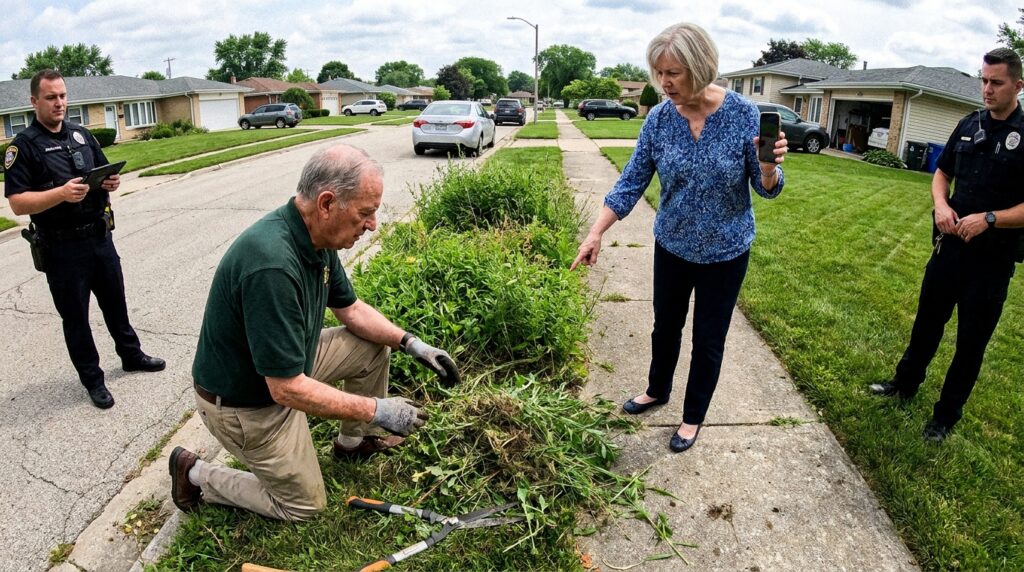
The low, dual-tone growl of the municipal utility truck’s engine shifted gears fifty feet down the lane, its tires tracking over the coarse gravel bits on the asphalt as it departed. Arthur didn’t watch the white cab shrink into the shimmering heat ripples at the end of the block. He stayed exactly where he was, his weight braced against his knees on the folded corrugated cardboard pad, his gloved palms catching the direct heat of the concrete walkway.
Across the street, the slam of a heavy front door vibrated faintly through the dense afternoon air. Mrs. Gable was gone from the driveway, her spotless luxury sedan left sitting solitary under the shade of the oak tree. The street was empty now, stripped of its sudden, brief theater, returning to the stark, silent geometry of fences and manicured lawns that defined the cul-de-sac.
Arthur drew a long, shallow breath through his nose, tasting the dry, metallic dust he had kicked up during the labor and the bitter, iron tang of the rusted trowel neck resting against his fingers. He looked down at the narrow dirt easement strip running between the concrete walkway and the curb line. The thick, multi-stalked thistle that had occupied his attention before the arrival of the local patrol uniform remained halfway pulled, its fibrous green base split open from his earlier grip.
He adjusted his canvas work gloves, the coarse material scraping against his khakis with a dry, rhythmic hush. He didn’t rush. He slipped the iron tip of the trowel down into the fractured aggregate of the curb, seeking the root’s central node, pushing through the gray, compressed clay that sat beneath the surface. His fingers closed tightly around the crown of the weed. With a slow, deliberate heave that sent a predictable, dull ache through his shoulders and lower back, he pulled.
The root came free with a sharp, wet snap, bringing a clump of caked gray subsoil out from the deep crack in the concrete.
Arthur laid the plant on top of the dark pile of pulled vegetation beside his boot. The green leaves were already turning limp, blackening into thin, brittle ribbons under the direct mid-day glare. He looked down at the old surveyor’s wax crayon mark on the lip of the curb, then traced his gaze along the invisible blue line the digital terminal had mapped across the street—the line that cut half a foot into the brick foundation of the garage opposite his lot.
He knew what would happen next month when the county construction crews arrived with their orange cones, their heavy diesel graders, and their steel transit levels to begin the avenue widening project. They wouldn’t care about neighborhood association covenants or thirty years of unrecorded landscape assumptions. They would follow the vector maps locked inside the municipal registry. They would see the encroachment, they would place their survey pins exactly where the data dictated, and the legal weight of forty years of administrative error would descend on the property across the asphalt.
Arthur reached into the pocket of his khakis and pulled out a clean rag, wiping the gray silt from the rusted iron neck of his trowel before slipping the tool into his canvas gear bucket. He didn’t feel a rush of anger or the sharp satisfaction of a short victory. In his decades of maintaining heavy equipment in the township yards, he had learned that the land always won its battles against the things humans built on top of it. Structures shifted, calculations failed, and the actual physical boundaries on the earth eventually broke through the paper records meant to contain them.
He picked up the cardboard pad, tucked it under his arm, and lifted the bucket by its wire handle, the metal clinking softly against his garden shears. As he stepped over the clean, cleared edge of the concrete walkway and moved toward his own porch, his boots left two dark, dust-stamped prints on the concrete line—the line he had drawn to keep the chaos out of his yard.