CHAPTER 5: THE LEGAL BOUNDARY FLIPS
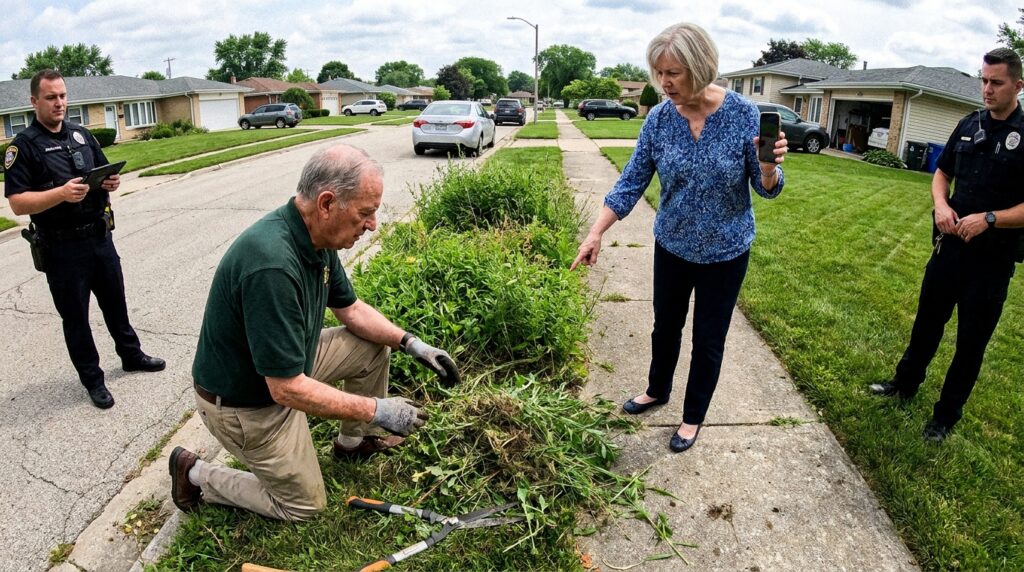
“Ma’am, he can clear this strip, let him finish.”
The First Officer’s voice wasn’t loud, but it possessed the cold, mechanical weight of a ledger slamming shut on an empty table. He held the rugged tablet chest-high, tilting the screen just enough to catch the flat glare of the sky. The green digital lines didn’t flicker anymore. They were anchored across the interface, casting a faint blue tint onto his chin as he looked up.
Mrs. Gable’s pointing hand dropped instantly to her side. Her fingers curled inward, the smartphone vanishing into the shadow of her dark trousers as her arm went loose. The rigid, forward-leaning posture that had carried her across the asphalt seemed to lock into a brittle, defensive freeze. She looked at the terminal screen, then down at the dust-covered concrete seam where Arthur’s work boots were planted.
“That calculation is an administrative error,” she said. Her voice had lost its smooth, rhythmic tempo, dropping into a sharp, dry whisper that sounded like dead leaves scraping across metal. “The subdivision layout has been locked in the county record since the initial platting. A field deputy cannot alter a certified zoning designation with a software overlay.”
“The overlay isn’t ours, ma’am,” the Second Officer said, her boots shifting an inch closer to the curb line, her fingers resting casually near her belt buckle. “This is the updated GIS database from the state surveyor’s office. They re-indexed the regional coordinates when they approved the funding for the avenue expansion. The original builder’s mistake is logged right here. It’s public record now.”
Arthur slowly drew himself up, his knees popping with a dull, wet crack that sounded loud in the sudden silence of the cul-de-sac. He kept his split-cowhide work gloves on, the thick canvas fabric stiff with gray clay and the bitter green juice of the weeds he’d pulled. His shadow, short and heavy under the mid-day sun, fell squarely across the pile of thistles. He looked at Mrs. Gable’s face. For six months, he had been the target of her lens, the individual she photographed and logged into her private binders as a blight on the block’s valuation. Now, the space between them felt different. The concrete under her feet wasn’t her defensive line anymore; it was an illegal platform.
“Officer,” Mrs. Gable said, her thumb tapping the hidden casing of her phone with a small, frantic rhythm. “The permanent use rule applies here. The structure has been standing for thirty-four years without a property dispute. Arthur has never filed a notice of objection with the association or the county recorder.”
“Because he didn’t know his land went that far, ma’am,” the First Officer said flatly. He reached down to his harness, clipping the terminal back into its quick-release bracket with a heavy, plastic click. “And neither did you, until you started digging into the county’s engineering files to force an eminent domain acquisition on his frontage. You tried to push the road into his yard so the county wouldn’t notice that your own brickwork is sitting six inches inside his deeded property line.”
The air between them felt thin, dry, and heavy with the smell of scorched asphalt. Arthur looked down at the old surveyor’s wax mark on the lip of the concrete curb. The yellow crayon, nearly swallowed by thirty years of grime, suddenly made perfect sense. It wasn’t the edge of the street; it was the old contractor’s correction point—the place where the road should have shifted to keep the block straight.
“We aren’t here to issue citations for vegetation, Arthur,” the First Officer said, turning his stocky frame toward the older man. His expression remained unhurried, his clean-shaven jaw relaxed as he looked at the pile of pulled weeds. “The report filed against you is being logged as unsubstantiated. You’re completely within your rights to maintain this strip. In fact, under the municipal safety code, you’re the only one who has the legal authority to touch it.”
Arthur didn’t smile. He didn’t offer a word of vindication across the line. He simply gave a short, quiet nod, his eyes moving back to the dirt pocket between the sidewalk and the curb where the last thick thistle stalk remained rooted. He had spent his whole life working with materials that had weight—iron, stone, wet silt—and he knew that a legal victory on a digital screen didn’t move a single pound of earth.
Mrs. Gable took two slow steps backward, her leather shoes clicking awkwardly against the concrete aggregate as she moved away from the workspace. She didn’t raise her phone again. Her face had turned a dull, ash-gray under the direct sun, the blue patterned blouse suddenly looking too large for her shoulders as she crossed back over the hot asphalt toward her own driveway.
“We’re clearing the call, ma’am,” the Second Officer called out after her, her voice echoing off the double-garage doors across the lane. “But I suggest you get in touch with your title insurance company before the county crews bring the stakes out next month.”
The two officers turned back toward their patrol unit, their heavy boots thudding against the road surface as the heat ripples swallowed their silhouettes. Arthur watched them go, then looked down at his gloves. The grit under his fingernails was his own dirt now—every inch of it. He reached for his trowel.