CHAPTER 5: THE AMBUSH AT THE CURB
“You have no authority to access those plats without a board-certified quorum, Brenda,” Mark said, his boots grinding a lone piece of loose limestone aggregate into the blistering asphalt.
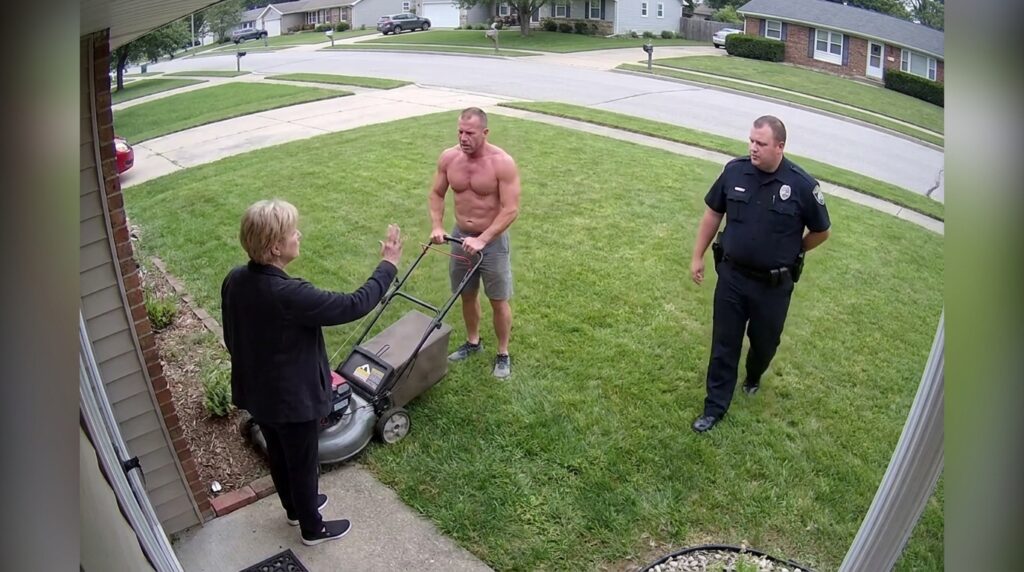
The three-tiered cluster of aluminum mailboxes sat at the corner of the block, its metal housing radiating heat like a radiator core. Three neighboring homeowners stood backed against the cedar fence line, their expressions frozen under the wide brims of their yard-work caps. Brenda was in the center of the walkway, her fingers clawing at the edges of her leather folder, her dark windbreaker rustling like dry corn husks. She had spent the last twenty minutes trying to rally the street before the man from the sedan could open his logbook.
“This association was incorporated under the state code of seventy-two, Mark,” Brenda snapped, her voice tightening, fighting the low-frequency rumble of a delivery truck passing three blocks over. “We protect our own basements. If the county changes the axis parameters, your property line slides into the public sewer lane too. You think you’re insulated because you have a doorbell camera?”
Mark didn’t look at her folder. He looked down at the sidewalk strip where the state official was already kneeling, a long brass mechanical caliper resting against the concrete curb. The man in the white shirt didn’t look up at the argument; his pen made a scratching sound on the heavy linen pages of his ledger, documenting the notched iron survey pin Mark had exposed an hour prior.
“The board didn’t pour four inches of illegal aggregate over the storm valve, Brenda,” Mark said. His words were short, transactional. “Your husband did. To hide the fact that your structural wall is listing into the civil easement.”
A collective, sharp intake of air came from the fence line. Old man Miller, who had lived three doors down since the Nixon administration, took a slow step forward, his hand shielding his eyes from the midday glare. “The storm valve? The one that handles the slope runoff from the bypass road?”
Brenda’s chin jerked. Her pale eyes darted toward Miller, then back to Mark, her chest rising and falling beneath the heavy nylon jacket. “The masonry was settling. It was an emergency repair. The board was notified in writing back in ninety-four.”
“There’s no record in the master log, Brenda,” Mark said. He pulled a folded sheet from his pocket—the municipal code sheet the inspector had left behind. “The city didn’t log an emergency. They logged a systemic pressure drop that starts under your concrete pad and terminates three inches inside my cellar slab.”
The state official stood up then, the hinges of his leather-bound ledger popping in the dry heat. He didn’t look at the small crowd by the mailboxes. He walked past them with the unhurried, heavy stride of an enforcement examiner, his eyes fixed on a faded silver stencil mark inside the rim of the curb box—a sequence of numbers matching the US-1961 stamp Mark had uncovered under the mortar.
“Ma’am,” the official said, his voice flat as unpolished stone. He didn’t look at Brenda’s folder. “The nineteen eighty-eight plats your association has on file are secondary copies. They don’t include the Federal Civil Defense revisions from the cold-war era grid-mapping.”
Brenda took a slow step back, the heel of her shoe catching the edge of the grass line. The folder in her hand slipped, the plastic sleeves inside clicking against her rings. “The eighty-eight deed is the legal baseline for the entire sub-division. It was cleared by the title company.”
“The title company didn’t check the subterranean utility grid from sixty-one,” the official replied. He adjusted his tie, his fingers leaving a faint gray smudge of graphite on his collar. “The six-inch strip you’ve been fighting over isn’t on his deed. And it isn’t on yours either.”
Mark narrowed his eyes, his thumbs hooking hard into his shorts pockets. The heat seemed to thicken between the houses, the desaturated gray of the asphalt reflecting a glare that made the survey stakes look like they were vibrating. The decoy secret—the old man’s desperate attempt to hide an illegal drainage leak under a patched stone step—was breaking apart, but the real line beneath the dirt wasn’t moving where anyone expected.
Brenda’s performative authority didn’t just crack; it dissolved into the dry heat of the curb. She looked down at the state vehicle’s blue plates, her mouth opening and closing without a sound, her entire body rigid as an ungreased gate latch while the neighborhood watched her kingdom turn into public ground.