CHAPTER 8: THE MONUMENT OF SCARS
The key scraped against the tumbler with a sharp, dry scratch before the starter caught. When Carl threw the hydraulic levers forward, the excavator didn’t roar—it groaned, its tracks grinding together with a high, iron shriek that sent vibration rolling through the limestone shelf below Miller’s pasture.
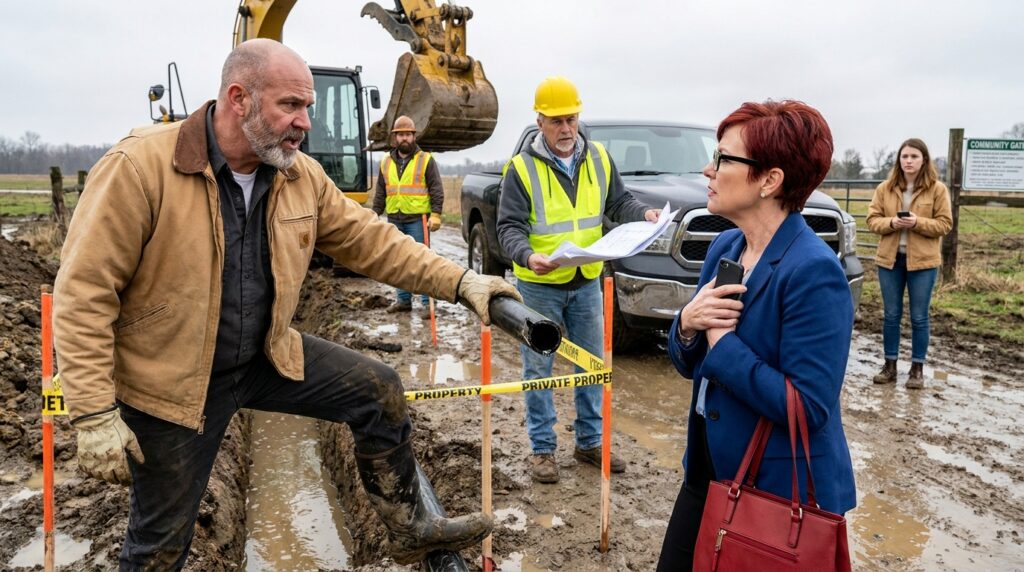
Time seemed to slow, widening into a cold, gritty gap between the beats of the wind. Miller stood his ground on the pasture lip as the massive yellow arm rose from the ditch, its steel teeth dragging a thick, heavy slurry of grey clay up into the light. The black sewer pipe—the massive polymer snake that had tried to link thirty-six mortgages to his dirt—strained under the shifting weight. With a hollow, wet pop that sounded like bone breaking through water, the joints separated. The unpermitted conduit fractured, its severed lip dropping back into the dark pool at the bottom of the trench with a listless, heavy splash.
Every link of the tracking chain beneath the cab groaned as the machine began its slow, heavy retreat across the property boundary. Rust flakes, bright orange and dry, rained down from the undercarriage, dusting the crushed bluestem grass like dead leaves. The tracks tore the pasture turf one final time, exposing the gray limestone bedrock beneath before the iron pads rolled off Miller’s property and crossed onto the subdivision’s paved easement road.
Evelyn Vance didn’t move her feet out of the mud to dodge the tracks. She stood perfectly frozen, her stocky frame silhouetted against the manicured entrance arches of Whispering Pines. Her red handbag remained flat on the dark truck hood, forgotten on top of the damp blue drawings. Her black-framed glasses had gathered a fine glaze of freezing drizzle, completely obscuring her eyes behind two round sheets of gray mist. She wasn’t looking at the excavator anymore; she was looking past the fence line at the straight, uniform rows of identical asphalt shingles that climbed the ridge. Thirty-six homes sat silent under the heavy clouds, their dry infrastructure completely isolated by the rusted iron boundary pin at her feet.
Frank lifted his heavy clipboard from the truck fender, the wood clicking against the metal with a sharp, definitive snap that broke the silence. He didn’t offer a hand to Vance. He tucked his ledger under his high-visibility vest and turned his back to the subdivision, his heavy leather boots tracking the last of the clay toward his utility truck’s door.
“That’s the tag, Evelyn,” Frank said. His rumble was flat, dry, and clean of any administrative flexibility. He didn’t look back as he pulled the truck door open, the old hinges giving a long, metallic squeak. “The trench stays open until the county environmental crew logs the soil test. Any attempt to fill this gap before the marshal clears the title order will be processed as destruction of evidence. Tell your board they can find the master filing under the original 1920 patent ledger.”
The neighbor girl backed away through the temporary chain-link gate, her white shoes trailing long smears of pasture silt onto the pristine asphalt of the development road. Her smartphone screen stayed bright, reflecting a tiny, flashing blue light off her wet cheek as she watched the subdivision’s structural credit dissolve in real-time. She didn’t speak to Vance, and she didn’t look back at Miller. She just kept the camera pointed down at her feet, tracking the grey mud as it crossed the threshold from the old world into the new.
Miller reached down into the long grass, his split-cowhide fingers closing over the cold, hand-forged head of his grandfather’s iron boundary pin. The metal was pitted, rough, covered in decades of subterranean rust that left an orange shadow across the leather of his glove. He ran his thumb over the square top, checking the alignment against the fresh gray scar the excavator had left in the turf. The pin hadn’t budged an inch. The modern grid had run up against it, hit the limestone, and bounced back into its own narrow gates.
He stood up slowly, his knees making a dry, cracking sound in the raw valley air. He unbuttoned his heavy canvas jacket and tucked his brass pocket rule back into the lining, his fingers lingering on the cold grease of his old fence tool. He looked across the open, scarred ditch toward Evelyn Vance. Her tailored blue blazer looked thin now, the fabric dark and soaked through by the afternoon drizzle until it clung to her shoulders like old canvas.
“The line is clear, Vance,” Miller said. His voice was low, dry, carrying the rasp of stone grinding against stone. He didn’t raise his hand, and he didn’t point toward the gate. “The ditch stays just like this. Every time your people look out their back windows, they can look at the cost of trying to steal an inch of dirt.”
Vance didn’t answer him. She reached out with a stiff, red-jointed hand and picked up her red handbag, her fingers clutching the leather strap until her knuckles went gray. She didn’t look at the open trench or the broken pipe at the bottom. She turned her caked, broken shoes toward the pavement, her steps heavy and uneven as she walked back through the gate, leaving the tattered blueprints behind on the cold metal hood of Frank’s idling truck.
The diesel smoke from the reversing excavator thinned out, drifting away across the bluestem until the pasture smelled of nothing but wet grass, iron-rich silt, and the sharp, clean tang of the northern wind. Miller stayed by his boundary pin until the taillights of Frank’s pickup flared red at the blacktop, his boots buried deep in his own earth, watching the gray water settle over the stone.