
CHAPTER 6: The Unraveling Paperwork
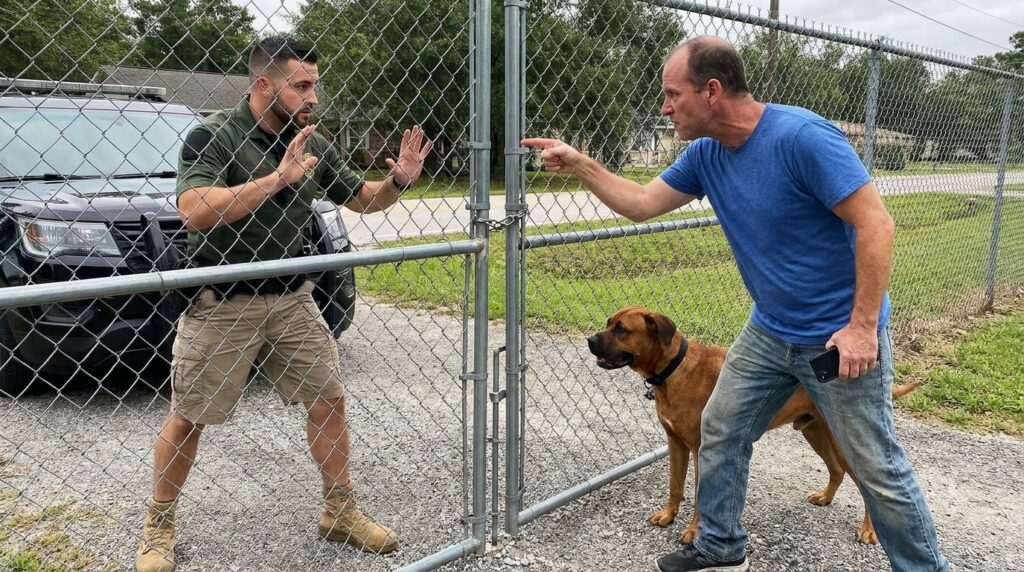
The truck tires ground through the open gateway, crushing the dry weeds and sending a spray of fine gray gravel against the inner wheel wells. In the rearview mirror, the deputy stood motionless beside his idling SUV, watching my tailgate clear the latch line before he turned his head toward Arthur’s porch.
I didn’t press the accelerator. I let the pickup coast down the two-hundred-foot driveway toward the weathered metal workshop, the engine idling in a low, heavy chug. The victory at the gate felt cold, like a draft coming through a cracked window in the dead of winter. The padlock was gone, the gate was wide, and Arthur had retreated into his house, but the stiff blue folder resting on the seat beside me seemed to hum with a different kind of weight.
I pulled up to the workshop doors, killed the engine, and grabbed the folder. The heat inside the cab was oppressive, but I didn’t step out into the yard. I flipped open the blue cover, laying the county survey map flat across the vinyl steering wheel.
There, right at the bottom corner of the township grid where the red clerk’s seal sat embossed into the heavy stock, was a series of faint, handwritten characters in faded blue ballpoint ink. It wasn’t part of the standard printer output from the recorder’s office. It was a marginal notation, penned in a sharp, slanted hand: Pending Abandonment Petition #884-B — V.H.
My thumb ran over the paper, feeling the slight indentation left by the ballpoint tip. V.H. Victor Hargrove. Hargrove had been the chief deputy clerk for land records until two years ago, when the county board quietly forced him into early retirement following a state audit into altered rural easement filings.
Arthur hadn’t just made a wild guess about the gate three days ago. He had an official file number. He had been operating under the belief that Petition #884-B was a done deal—that the county had already processed an administrative abandonment of my right-of-way, turning the gravel lane over to his parcel to complete a lot-line adjustment. The uncertified surveyor who drove the fresh pin in the dirt hadn’t been acting alone; he had been following the exact boundaries laid out in Hargrove’s two-year-old pending file.
A hard knock sounded against the passenger window.
I didn’t jump, but my hand instinctively closed over the edge of the survey. Outside the glass stood Old Man Henderson. His face was weathered like cedar shingle, his faded denim overalls stained with tractor grease, his eyes squinting through the harsh glare of the afternoon sun.
I rolled the window down three inches. The smell of dry dirt and hot iron drifted into the cab.
“You put him in his place, Miller,” Henderson said, his voice raspy from decades of pipe tobacco and valley dust. He spat a dark stream of tobacco juice into the weeds near my front tire. “Deputy made him hand over the keys right in front of the whole road.”
“It’s not over, Henderson,” I said, looking out past his shoulder toward the chain-link gate at the end of the lane.
Henderson wiped his chin with the back of a calloused hand. “He locked the gate, Miller. The law made him open it. What else is there?”
“The paper he’s relying on,” I said, holding up the blue folder just enough for him to see the edge of the sheet. “Arthur didn’t buy a lock on a whim. He bought a promise from someone at the courthouse before Hargrove got cleared out.”
Henderson’s thick eyebrows pulled together, casting deep shadows over his pale eyes. He looked toward Arthur’s house, where the blinds in the front window twitched once and went still. “Hargrove? That old snake was signing off on property line shifts for anyone who bought him a steak dinner at the lodge. You think Arthur paid for your lane?”
“I think Arthur thinks he already owns it,” I replied, my voice flat. “And if Hargrove’s signature is sitting on a pending abandonment petition in the county basement, that padlock today was just the test run.”
“So what are you going to do?” Henderson asked, his tone shifting from casual neighborly satisfaction to the guarded caution of a man who knew how deep county feuds could run.
“I’m going to the recorder’s office first thing tomorrow morning,” I said, closing the blue folder with a sharp, decisive fold. “I’m going to pull Petition #884-B out of the archive before Arthur finds out the deputy’s report just flagged his survey as a fraud.”
As Henderson walked back toward his property line, I looked back at the survey map one last time. The physical gate was open, but the real boundary line wasn’t made of steel or wire—it was buried in the county vaults, and someone was waiting for the ink to dry.








