
CHAPTER 1: The Locked Latch
The gearshift of the pickup clicked into park with a dry, metallic snap that seemed to strip the last ounce of moisture from the air. Before me, the heavy chain-link gate—the one that had swung open for every load of gravel, timber, and spare machinery I’d hauled onto the back half acre for ten years—wore a stranger’s armor. A solid brass-shackled padlock hung from the twist of wire like a fresh tick on a lean hound.
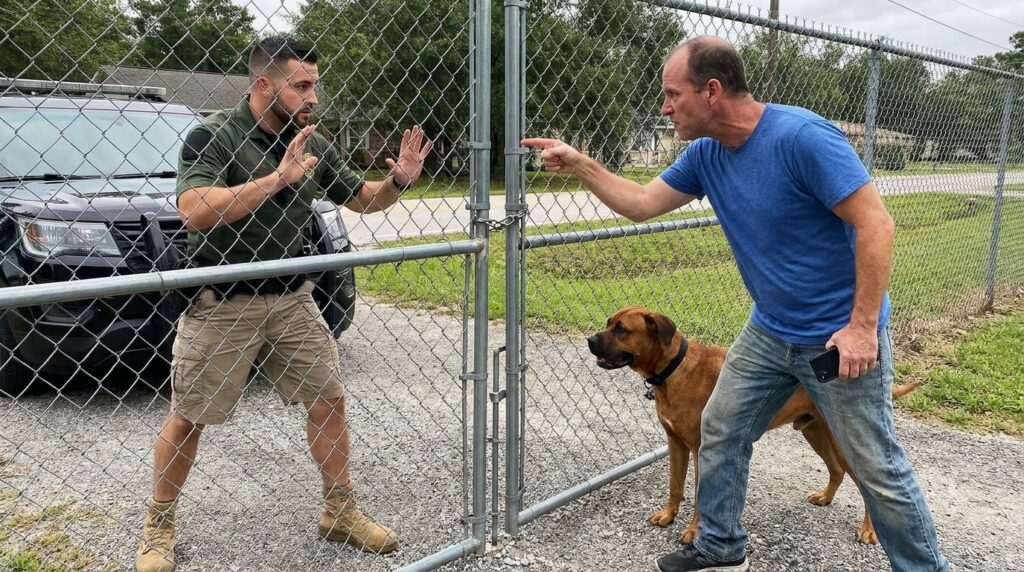
I sat there with my hands resting on the worn vinyl steering wheel, feeling the residual heat of the diesel engine thrumming up through the floorboards. The sun was dipping low over the ridge, cutting long, jagged shadows across the dry weeds and the packed-dirt track of the easement. My knuckles were gray with dried mortar dust from the morning pour, and the back of my neck throbbed with the dull, persistent ache of a twelve-hour workday. I didn’t need to look up to know who had put it there. Arthur Miller’s faded blue T-shirt and stocky, forward-leaning silhouette were already visible through the wire mesh, planted squarely on the other side of the boundary line like an overweight sentinel guarding a tomb he didn’t own.
“You’re done hauling through here, Miller,” Arthur’s voice carried across the gravel, flat and nasal, carrying that familiar self-appointed authority of a man who spent his retirement counting other people’s footsteps. He had his black smartphone gripped low near his thigh, the camera lens dark and pointed straight at my truck door. Beside him, his muscular reddish-brown dog paced the fence line, its dark muzzle low to the dry earth, tracking the vibration of my tires.
I killed the ignition. The sudden silence of the valley rushed in, filled only by the cicadas screaming in the dry scrub and the ticking of cooling exhaust pipes. I reached down, my fingers brushing the weathered leather of my work gloves tucked into my back pocket, and pushed the truck door open. The rusted hinge groaned, a sound as old as the county line.
“That gate’s been open since the Eisenhower administration, Art,” I said, my voice low, roughened by dust and restraint. I stepped down onto the sun-baked gravel, feeling the hard stone shift beneath my work boots. “Take the lock off.”
“It’s private property now, neighbor,” Arthur snapped, taking a heavy step forward until his chest was inches from the wire, his stubby finger jabbing through the square mesh. “County code enforcement expanded the setback last month. You’re tracking mud, oil, and heavy weight across common drainage. I’m protecting this neighborhood, and I’ve already called the deputies to have your truck towed for unauthorized access.”
I stopped five feet short of the gate, my gaze locking onto his face. The heat radiating off the gravel was fierce, but the cold realization in my gut was sharper. This wasn’t just another petty neighborhood dispute about lawn clipping boundaries. As my eyes swept past Arthur’s shoulder toward the base of the gatepost, a cold friction tightened my chest. Driven six inches into the hardpan right beside the corner post was a brand-new aluminum surveyor’s marker stamped with a municipal engineering code I’d never seen before—an official stamp dated three days ago, bearing a signature that didn’t belong to the county road department. Someone had quietly altered the plat maps behind our backs, and Arthur didn’t just think he owned the lane; he was waiting for a trap that had already been laid.








