
CHAPTER 2: The Encroaching Line
The aluminum pin gleamed like a cold eye in the dust, its stamped numbers cutting straight through the dry weeds at the base of the gatepost. I didn’t lean down to touch it. In the high desert heat of the valley, you learned early that anything buried six inches deep in another man’s dirt was either a secret or a trap, and Arthur Miller wasn’t the kind of man to spend money on surveyor’s steel unless he thought it bought him a piece of my hide.
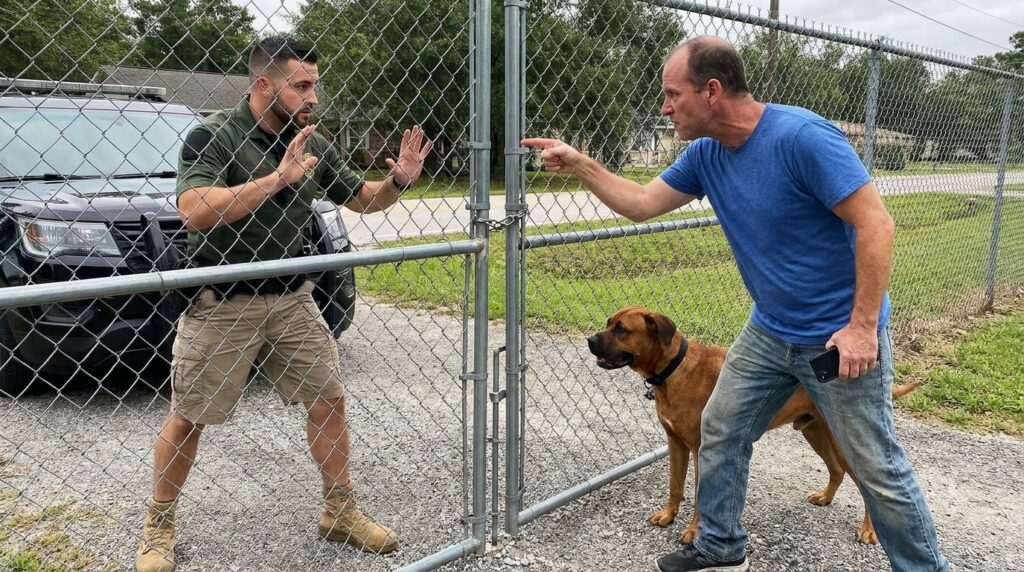
Arthur’s boots crunched on the gravel as he shifted his weight, his stocky frame blocking the latch line. His reddish-brown dog didn’t bark; it just leaned its shoulder against the wire mesh, panting in steady, rhythmic huffs that blew tiny dust rings into the dry air.
“You’re looking at progress, Miller,” Arthur said, his voice dropping into that smooth, practiced register he used when he thought he had the legal high ground. He tapped his thumb against the edge of his smartphone. “The county surveyed the whole drainage basin after the spring runoff. That pin marks the new easement boundary. The lane’s restricted to light passenger vehicles now. You bring that six-ton flatbed over this tile again, and you’re cracking the main line that keeps water out of six basements down the ridge.”
I kept my hands resting flat on the top rail of my truck door, feeling the sun-baked enamel burning warm through my calluses. “There isn’t a drainage tile under this gravel, Art. The main culvert runs eighty feet east, straight down the township line. My grandfather helped lay the concrete pipe in sixty-two.”
“Things change,” Arthur shot back, his jaw tightening as he thrust his chin toward the pin. “Maps get updated. Drainage shifts. The county certified the line three days ago. You don’t have a right-of-way for heavy equipment anymore, and if you touch that padlock, it’s criminal interference with a municipal utility.”
He was lying about the pipe, but he wasn’t lying about the pin. The metal was too fresh, the stamped numbers too clean. It hadn’t been set by a crew working a standard county road crew shift; there were no orange chalk marks on the gravel, no wooden witness stakes driven into the dirt bank, no high-visibility ribbons fluttering from the brush. It was a silent installation, done by someone who wanted the mark in the ground before the owner of the land realized the boundary had moved.
Behind Arthur’s shoulder, down near the curve where the gravel lane met the paved township road, a glint of sunlight bounced off a windshield. A dark green utility SUV was idling by the mailbox cluster, its diesel engine a low, distant hum against the dry chirping of the cicadas. The county deputy had arrived early, sitting on the shoulder, waiting for the call Arthur had already promised to make.
I reached back through the open window of my cab, my fingers closing around the worn leather strap of my tool roll sitting on the passenger seat. I didn’t pull it out. Instead, my thumb brushed against the stiff, rolled edge of the blue vinyl folder wedged behind the bench seat—the original land grant map and deed abstract I’d kept sealed since I bought the workshop parcel out right.
“You called the sheriff’s department for a property line dispute on a Tuesday afternoon?” I asked, my voice remaining level, flat as an iron plate.
“I called ’em for a trespasser threatening a public utility,” Arthur corrected, a small, tight grin pulling at the corner of his clean-shaven mouth. “He’s just waiting on me to give the word that you refused to clear the lane.”
He thought he had me pinned between the lock on the gate and the cruiser at the road. He thought the weight of my truck, the dust on my boots, and my silence were all proofs of a working man’s guilt. But as I looked down at that stamped aluminum pin again, I noticed the single detail Arthur’s arrogance had overlooked: the survey code stamped into the cap didn’t match the county department of transportation prefix. It started with a private engineering license number—one that had been revoked by the state land board six months ago after a scandal over altered boundary plats in the west valley.
A low crunch of tires on gravel sounded behind me. The green utility SUV had put its dark nose into the entrance of the lane, its roof lights unlit but its presence heavy and immediate, blocking the only way out.








