
CHAPTER 5: THE METALLIC TASTE OF THE RECORD
The fluorescent tubes in the drop ceiling of Room 402 hummed with a flat, alternating-current vibration that set a steady throb behind Arthur’s temples. It was a windowless box in the Washoe County Annex, where the drywall had softened from decades of roof leaks, leaving long, rust-colored maps of old water damage tracking down behind the vinyl baseboards.
“Let the record reflect that Mr. Vance has identified the master routing ledger from the Elko terminal,” the state investigator said. Her voice was dry, matching the chalky texture of the legal pads piled between them on the wood-grained laminate table.
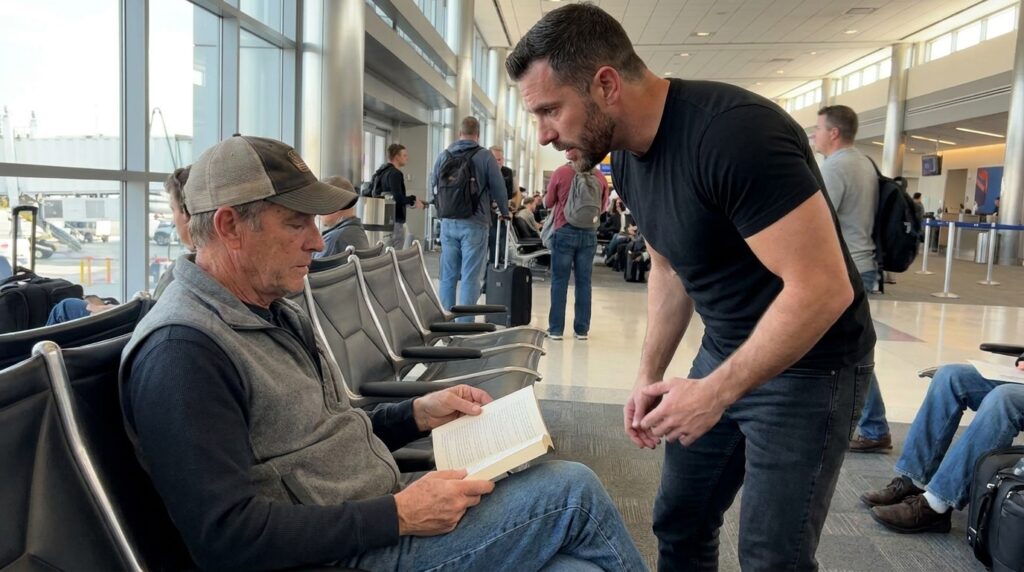
Arthur sat with his hands folded over his gray vest. The skin of his knuckles looked yellow under the artificial light, contrasting with the cold, zinc-plated frame of the institutional chair beneath him. Across the table, Julian sat between two junior public defenders. His black shirt was wrinkled from three days of living out of a motel suitcase near the tracks; his eyes were fixed on an embossed silver zinc pill tin Arthur had placed next to his water glass. The tin’s lid was worn down to the base metal, its corporate seal almost entirely obliterated by decades of pocket wear.
“Arthur,” Julian whispered, ignoring the lawyer tugging at his sleeve. “The lease agreement from April. The investigator says the signature on the Reno yard turnover isn’t mine. They’re saying it’s a forgery.”
Arthur didn’t blink. He watched the court reporter’s fingers move over her machine—a tiny, rhythmic clicking like a mechanical grasshopper in a dry field. “The signature is valid, Julian. It was executed under the emergency power of attorney you granted the holding company during the winter freight crisis.”
“But I didn’t authorize the liquidation of the diesel reserves,” Julian pressed, his upper lip slick with a thin film of nervous sweat. He leaned forward, his broad shoulders casting a sharp shadow over the investigator’s exhibit folders. “That money went directly into the Boise trust before the state tax warrants were served. If I didn’t sign it, that’s structured asset fraud. They’re looking at ten years on the corporate shield violations alone.”
The investigator didn’t look up from her notes. She adjusted her glasses, her fingers leaving a small white smudge on the dark plastic frame. “Mr. Vance, we have the forensic audit from the Reno depository. The asset diversion began forty-eight hours before your nephew signed the personal surety notes for the fuel lines. It looks an awful lot like you engineered a controlled collapse to insulate the family holdings while leaving the junior partner holding the primary criminal liability.”
Arthur reached out, his thumb tracing the worn edge of the silver pill tin on the table. The friction was a small comfort—the raw, cold feel of zinc against a thumb that had turned wrenches in the dust before Julian’s father had even bought his first tractor.
“The northern run was already a ghost, ma’am,” Arthur said softly. His voice didn’t carry the weight of an defense; it carried the flat indifference of an inspector signing off on a scrapped boiler. “The trucks were running on retreads because the regional credit lines had been red-tagged since November. If Julian hadn’t signed those fuel notes, the drivers would have walked off the line in Ely, leaving forty tons of perishable freight to rot on the pass. I didn’t structure a fraud. I maintained the line until the equipment reached the scrap yard.”
“At his expense,” the investigator said, her pen stopping with a sharp, definitive click against the legal pad.
“At the company’s expense,” Arthur corrected. He picked up the silver tin, the small metal box clicking as his thumb popped the latch. Inside, instead of the standard industrial grease-cutters or aspirin Julian expected, there were only three small, unlabelled white tablets—and a tiny strip of blue pharmacy paper bearing the name of a palliative clinic in Salt Lake City.
Julian’s eyes caught the blue paper. He froze, his hand dropping away from his lawyer’s arm. The anger in his jaw—the frantic, aggressive energy that had driven him through the airport terminal and the abandoned hangar—suddenly hit a dead zone. He looked from the tin up to the hollows beneath Arthur’s eyes, noticing for the first time how the older man’s vest hung loose over his chest, the fabric no longer filled out by the muscle that had built the Regenesis Line.
“Arthur,” Julian muttered, his voice dropping into a guarded, ragged register that didn’t belong in a legal deposition. “What’s in the tin?”
“Maintenance,” Arthur said, sliding the box back into his vest pocket with a single, practiced movement that locked the lid away from the record. He turned his eyes back to the investigator, his jaw setting into a hard line of rusted iron. “Let’s talk about the Reno yard. The state wants the keys by Tuesday. I have them in my bag. We can skip the final injunction if you’re willing to clear the driver manifests from the secondary liability pool.”
The public defender leaned over to Julian, whispering urgently into his ear, but Julian wasn’t listening. His eyes were fixed on the small, dark smudge of rust that had flaked off Arthur’s sleeve onto the white legal pad between them—a tiny piece of the old line, breaking down in real time under the cold glare of the lights.








