
CHAPTER 3: THE DECAY OF THE REGENESIS FREIGHT LINE
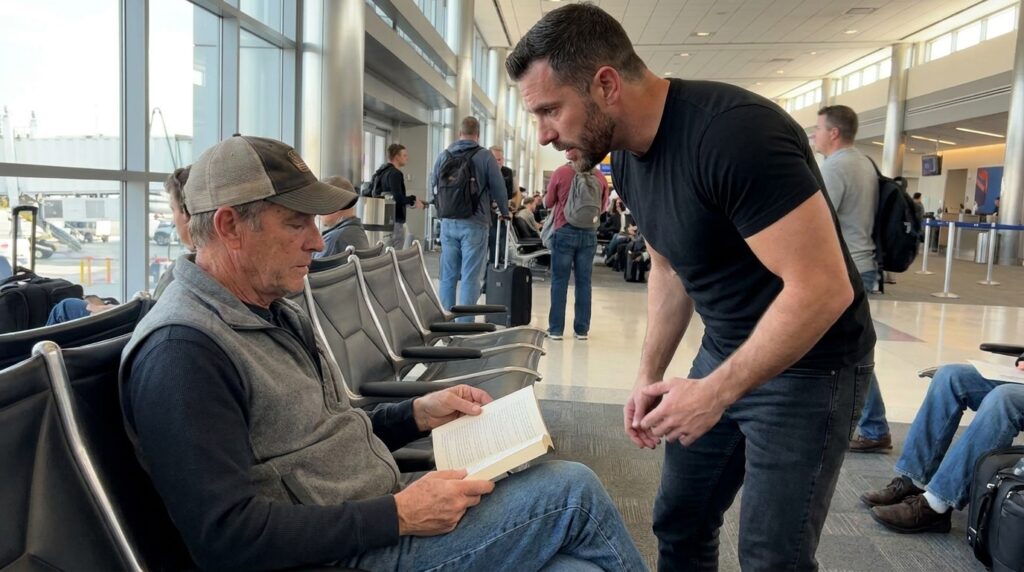
The tail wheel of the regional turboprop slammed into the uneven tarmac with a violent, structural shudder that rattled the teeth in Arthur’s jaw. Outside the scratched acrylic window, the world was a desaturated stretch of old concrete, cracked and infested with wild cheatgrass pushing up through the tar seams. They hadn’t reached Salt Lake. The storm had pinned them down in an old municipal field north of Elko—a graveyard for obsolete shipping containers and grounded agricultural dusters.
Arthur swung his legs out into the aisle before the seatbelt sign even flickered off. His joints were stiff, complaining from the cold draft leaking through the emergency exit seals.
“Where are you going?” Julian was up instantly, his shoulder heavy against Arthur’s arm as he reached into the overhead bin. He dragged his leather flight case down with an aggressive jerk, flaking tiny bits of dry gray paint from the ancient interior tracking of the plane. “The crew said we stay on the aircraft until the fuel trucks arrive.”
“The crew has an hour left on their legal duty ceiling, Julian,” Arthur said, adjusting his vest. He didn’t look back as he pushed down the metal stairs toward the rain-slicked asphalt. “They’re not going to refuel in a lightning cell. We’re being scrubbed. Look at the terminal line.”
Two hundred yards across the cracked apron sat a corrugated iron hangar with a faded logo from the old Regenesis Freight Line—the original trucking outfit Arthur had merged into their current venture ten years ago. The metal exterior was a patchwork of flaking orange rust and oxidized zinc primer, bleeding down onto the concrete like dried tea stains. It was an infrastructure built on loans that had never been fully retired, a physical testament to how much weight the business had been carrying under the surface.
Inside the hangar’s auxiliary office, the air smelled of stale grease, damp cardboard, and the metallic sting of an old kerosene space heater. A single bare bulb hung from a frayed cord, swaying slightly in the draft from the broken bay doors.
Arthur dropped his canvas duffel onto a desk topped with scarred green linoleum. His fingers went straight to his pocket, pulling out the leather wallet. He extracted the notched brass key and inserted it into the locking latch of a heavy, grease-stained steel document locker in the corner of the room. The mechanism resisted, frozen byyears of moisture, grinding with a high, rusted screech before the bolt finally gave way.
“That’s the regional archive,” Julian said from the doorway. His boots kicked a small pile of dry iron grit across the threshold. His black shirt was damp from the run across the tarmac, clinging to his ribs like a second skin. “The board closed this station three cycles ago. Why do you still have a physical key to a decommissioned file system?”
“Because the digital ledger only records what you tell it to record, Julian,” Arthur said, sliding open the top drawer. The steel rollers groaned, throwing down a small shower of dry, powdery rust onto the floorboards. He pulled a thick, ledger-bound printout from the back—a master logistics sheet bearing the corporate stamp from three weeks prior.
Julian moved fast, his muscular frame cutting off the light from the office window as he grabbed the edge of the ledger. “Give me that. You’ve been hiding the Reno asset allocations. I knew it. You’re trying to squeeze me out before the Tuesday vote by showing a cash-flow deficit at the western hubs.”
“Look at the bottom line, Julian,” Arthur said. He didn’t pull the ledger back. He simply let go of it, stepping away to stand by the window where the rain was turning the industrial yard into an orange mire. “Don’t look at the hub numbers. Look at the capital retention line under the holding company.”
Julian’s thumb ran across the paper, leaving a dark smudge of grease near the columns. His eyes tracked the numbers, his brow furrowing as he looked for the expected decoy—the administrative accounts he assumed Arthur had been using to bury his margins. But his breath caught. The red ink didn’t stop at the regional hubs. It extended upward, a bleeding line of negative variables that ran clean through the parent infrastructure.
“This is an old sheet,” Julian muttered, though his hands began to tremble slightly, his thumb twitching against the paper’s edge. “This says the operational accounts are dry. It says the Reno lease was terminated by the state in April. That’s impossible. We just cleared sixty freights through the pass last week.”
“We cleared sixty freights on credit extended by a firm that dissolved its corporate shield on the first of the month,” Arthur said calmly, his hand resting on the rusted frame of the window. The cold iron bit into his palm. “The equipment isn’t ours, Julian. The trucks are currently owned by the secondary collection house out of Washoe County. The entire venture is legally dead. It has been for forty-eight hours.”
Julian’s face went completely white, his aggressive posture collapsing as he slumped against the edge of the desk. The paper crinkled under his weight. “You… you let me sign the personal surety notes for the fuel lines last Tuesday. If the holding company is dry, those notes fall directly on my personal assets. Everything I put into the northern route… my house, the family plot in Elko…”
“You wanted the title of managing partner,” Arthur said, his voice flat, carrying the cold finality of wet stone. “You wanted to sign the papers without waiting for the audit. I told you three months ago that you were building a fuse. You just didn’t realize you were standing on the box when you lit it.”
Julian looked up, his eyes wide with a mixture of panic and a sudden, venomous clarity. “You did this. You let me take the liability so you could walk away with the clean accounts. Where’s the rest of it, Arthur? Where did the liquidation funds go from the warehouse sale? There was four hundred thousand in escrow.”
Arthur didn’t answer. He turned his head as a low, wet cough echoed from the main bay of the hangar—not the sound of the rain or the machinery, but a heavy, ragged human sound that cut through the silence of the abandoned terminal.
Julian froze, his hand still gripping the bankrupt ledger. “Who else is out there?”
Arthur reached down, picked up the notched brass key from the desk, and locked the drawer with a single, sharp twist. “The past doesn’t stay buried just because you stop paying the lease, Julian. Let’s go see what your drivers left behind.”








