
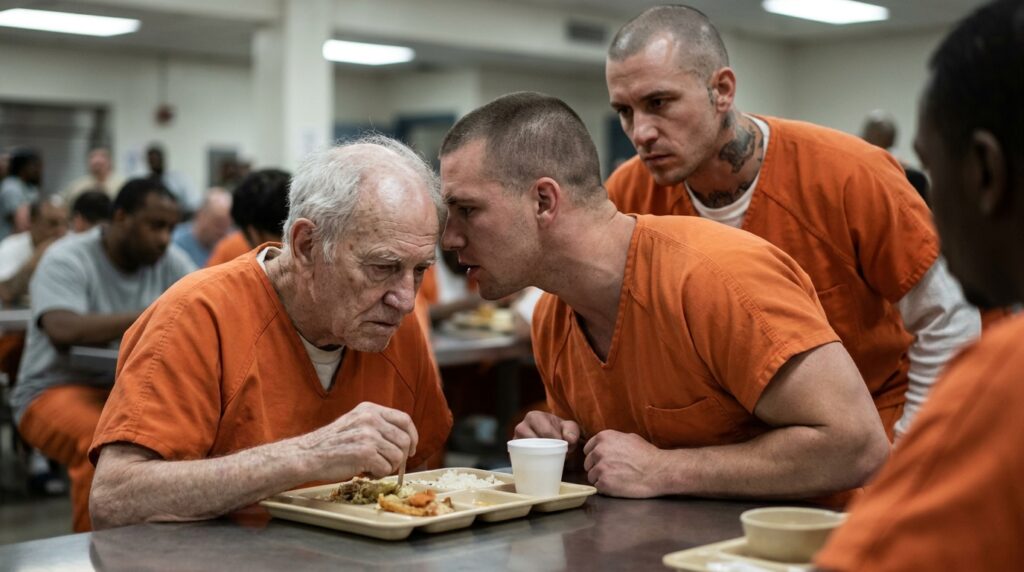
CHAPTER 7: THE FRICTION OF THE SHADOW WATCH
The double-bitted key finished its rotation with a dry, mechanical clunk that resonated up through the hollow core of the steel door. The door didn’t swing outward. In the absolute black of the isolation tier, the frame simply settled back two inches into its track, allowing a cold, wet draft from the laundry chute to bleed over the old man’s ankles. The smell came with it—hot machine grease, stale tobacco smoke, and the heavy, damp rot of old limestone sewers that had been sealed off since the expansion project.
The boots didn’t cross the threshold immediately. Vance stood in the gallery lane, his breathing rhythmic and thin, his heavy leather gloves scraping against the iron handle of an auxiliary crowbar he had pulled from the sally port lockbox. He was a man who knew the layout of Cellblock C as well as the old man did; he knew that in a six-by-nine space with an anchored table, a three-inch miscalculation in a swing meant hitting reinforced concrete instead of bone.
“The girl from the committee left her car at the main gate,” Vance said into the dark. His voice was flat, devoid of the heat that had carried him across the recreation yard. It was the dry tone of an administrator checking off an inventory sheet. “She’s sitting in the superintendent’s office waiting for the state line to come back up. She thinks she’s going to get the ninety-four file before the shift change.”
The old man didn’t move his chin from his chest. The four-inch iron ring welded to the center of the table was cold against his wrists, compressing the small bones until his fingers felt numb and heavy. “She’ll get what’s on the ledger, Vance. She’s already verified the signature. Your father’s ink is on the line.”
“My father didn’t know how to write in the registry script,” Vance whispered, his boots finally taking a slow, scraping step into the cell. The silhouette of his heavy shoulders blotted out the faint gray outline where the door seal had failed. “You thought you left a clean trail behind that wire plate, old head. You thought if I found that ledger fragment, I’d take the boy and clear out through the boiler room gate. But the ink on that yellow slip wasn’t ninety-four stock. It was the synthetic stuff the state started buying after the corporate merger in two thousand four. My father had been out of his uniform ten years before that bottle was cracked.”
The old man let his hands rest flat against the slick steel of the table surface, his thumb feeling the tiny pitting where generations of inmates had scratched their numbers into the laminate. The equal intellect of his enemy was a variable he had already factored into the calculation when he left the wire plate loose. Vance wasn’t a fool; thirty years on the tier had taught him how to spot a plant. But Vance was still chasing the decoy. He believed the fraud was designed to protect the old man from the federal lookback, rather than what it truly was—a breadcrumb trail designed to drag the senior guard down into the sub-structure of the facility before the power grid could reset.
“The synthetic ink doesn’t matter to the committee,” the old man said, his gravelly voice dropping an octave into the dark, matching the low rumble of the distant water mains. “They aren’t running a laboratory test on the chemical base. They’re running an audit on the name. If your father’s name matches the authorization code on the ninety-four burial register, the board will close the account. They don’t want a long trial, Vance. They want a signature that doesn’t cost them a seat on the corporate board.”
The crowbar moved in Vance’s hand, the tip of the iron bar dragging along the edge of the steel table with a sharp, high-frequency screech that set the teeth on edge. “The burial register isn’t in the office. The old man took the third volume home when he took his pension. It’s sitting in a cedar box under his workbench in Elmira. There’s no name on the ninety-four line but yours.”
The old man didn’t alter his breathing. The silence inside the limestone box stretched until the sound of the sulfur water dripping down the drainage column thirty feet away altered its rhythm, the metallic ping-ping-ping slowing as if a physical valve was being closed somewhere in the vertical line.
“The cedar box was cleared out three winters ago, Vance,” the old man said softly. “Your father sold that register to an asset clerk from the railway line for forty dollars and a bottle of gin. He thought he was selling an old book of work hours. But that asset clerk was the cousin of the man who went into the laundry tubs three weeks after Miller. He’s been waiting thirty years for the state line to go dead so he could verify the funding codes for the boiler house foundation.”
Vance’s boots stopped their scraping movement. The heavy bar didn’t rise, but the tension in his shoulders returned, a sudden rigidity that showed through his jacket silhouette under the pale gray draft. “The railway line doesn’t have an asset clerk in this county.”
“They do now,” the old man said. He slowly lifted his hands as far as the five-inch chain would permit, the iron links snapping tight against the anchor loop with a sharp, heavy ring that echoed off the damp stone. “They bought the right-of-way under the eastern wall last April. Tomorrow morning, when the lookback committee walks the yard, they aren’t going to look at the coal hoppers. They’re going to look at the original alignment pins under the number-four laundry dryer. If those pins don’t match the state surveyor’s map from ninety-three, the whole block sits on an unrecorded grave that belongs to the federal transport authority.”
The consequence loop had closed. The old man hadn’t just defense-mapped his own survival; he had turned the entire administrative legacy of the facility against the men who thought they owned the keys. He had become the sovereign protector of the unrecorded dead, using their names as structural anchors to ensure that neither Vance nor the cartel could clear the tier without his permission.
Vance didn’t answer with a threat. He turned his face toward the corridor, his head tilting as the sound of a heavy, brass-soled boot echoed from the laundry shaft at the far end of the gallery. It wasn’t the boy with the buzz cut, and it wasn’t the watch guard. It was a rhythmic, slow cadence that carried the distinct, heavy crunch of dry coal dust from the old foundations below.
The senior guard backed out of the cell room without closing the door, the crowbar held low against his leg as he vanished into the suffocating, absolute dark of the C-block lane, leaving the old man alone with the chain and the cold iron table.








