
CHAPTER 2: THE LOGIC OF THE TIER
The screech of the hydraulic gate closing behind the lunch detail was a wet, iron groan that vibrated straight through the soles of the old man’s canvas shoes. It was a sound he had measured in his marrow for thirty-four years, a sharp resonance that signaled the daily contraction of his world. The air in the corridor of Cellblock C was different from the mess hall; it was narrower, stripped of the heavy steam of boiling starch, replaced instead by the smell of ancient dampness, flaking gray paint, and the dry, bitter powder of oxidizing rivets.
He walked with his arms hanging loose at his sides, his fingers occasionally brushing the rough, pitted surface of the tier railing. Every five feet, a vertical iron bar met the horizontal track with a clumsy, heavy weld that had been painted over so many times it looked swollen, like arthritic knuckles. To a younger man, the walk back to a cell was a dead space between confrontations. To him, it was a tactical layout of friction and angles. He noted the way the afternoon light fell through the high, reinforced slit windows, throwing long, angled bars of shadow across the concrete floor. At exactly four o’clock, those shadows would deepen, creating an eleven-inch blind spot right beneath the tier-two mirror where the glass had gone cloud-gray from sixty years of humidity.
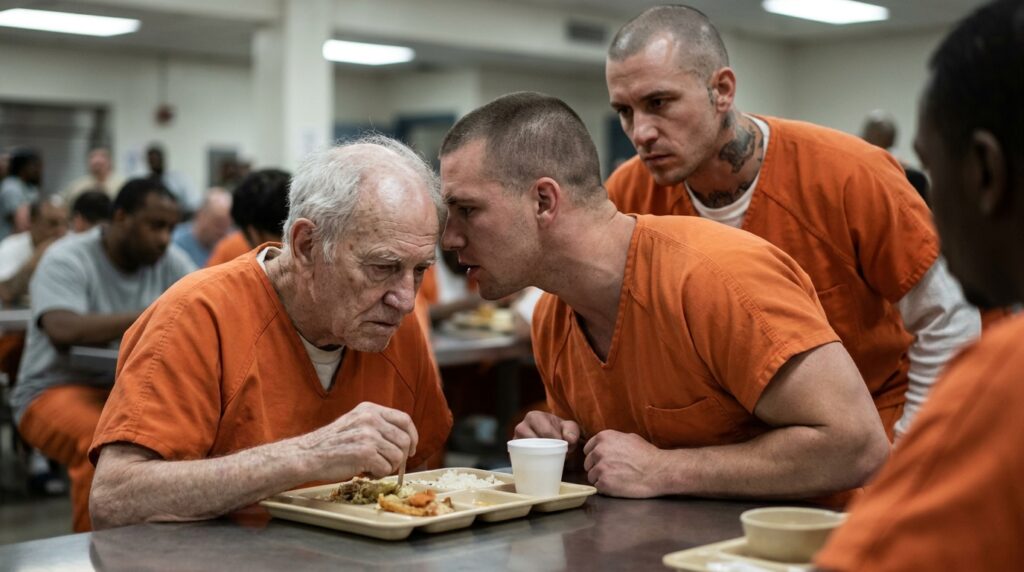
The tier was alive with the low, transactional murmur of lockup. Men stood along the catwalks, their orange-clad shoulders leaning against the wire mesh, their eyes tracking him as he moved past. They were looking for the tremor. They were looking for the slight hitch in his stride that would prove the food thrown across his forehead had cracked the old foundation. A prison yard didn’t always destroy a man with a blade; more often, it dissolved him through the quiet consensus of the crowd. If they decided he was weak, his space would vanish by yard-time tomorrow. His shoes would be taken from his feet while he slept; his tin cup would be emptied into the drain before he could drink.
He reached Cell 42 without altering his pace. The iron door was already racked open three inches. He slipped his thin frame through the gap, his shoulder blade catching the edge of the steel frame just enough to feel the cold bite of the metal through his shirt. Inside, the space was six feet by nine, a limestone box where the moisture never truly left the corners. He didn’t lie down on the thin, horsehair mattress. He sat on the edge of the steel bunk, his knees bent at a precise right angle, his hands resting on his thighs.
Above him, on the upper catwalk, the rhythmic thud of heavy, rubber-soled boots began its rotation. It was Vance. The old man didn’t need to look through the bars to recognize the cadence of the senior guard’s stride—heavy on the heel, a slight drag on the left toe where an old ligament had torn during the riots of ninety-eight. Vance was the man who had stood by the gate during the cafeteria faceoff, the man who had looked away while the cabbage broth was running into the old man’s eyes.
A sharp, metallic click echoed from the corridor just outside the cell door. It wasn’t the sound of a guard’s key ring; it was the specific, light tap of a standard-issue aluminum clipboard hitting the second bar of the gate. A small, tightly folded square of yellow paper fluttered through the gap, landing on the pitted concrete floor just two inches from the old man’s shoe.
The boots on the catwalk didn’t stop. They kept moving down toward the end of the tier, the sound fading into the general hum of the block.
The old man waited. He counted sixty heartbeats, watching the way a solitary black beetle crawled along the seam where the iron toilet block was bolted to the limestone wall. Only when the tier-boss downstairs yelled for the afternoon headcount did he reach down and pick up the paper. It was a standard institutional transit slip, the kind used to move high-security assets between facilities, but the bottom edge had been roughly torn away from a larger ledger sheet.
The paper was old, yellowed at the margins by years of improper storage in the basement archives, and it carried the distinct, sour smell of coal ash from the old boiler rooms. On the lined side, written in the cramped, purple ink of a nineteenth-century institutional fountain pen, was a log entry dated November 14, 1994. It listed three names under a transfer authorization code that had been crossed out with two heavy, red wax lines. The first name was his own. The second name was a man who had died in the laundry tubs three weeks after the date on the page. The third name belonged to the father of Senior Guard Vance.
Beneath the ledger line, written in a modern, hurried pencil ballpoint that he recognized from the guard desk logs, were three words: Before the fifteenth.
The old man unfolded the slip completely, turning it over against his knee. The texture of the paper was brittle, the fibers breaking under the pressure of his thumb. On the reverse side was a carbon copy of a commissary receipt from last Tuesday, showing a twenty-dollar deposit into the account of the buzz-cut boy, authorized by Vance’s personal administrative key code.
The pieces fell into alignment with the dry, mechanical click of a deadbolt sliding into a rusted strike plate. The confrontation in the cafeteria hadn’t been an outburst of youthful ambition or a random test of the tier hierarchy. The boy with the buzz cut was an instrument, a cheap piece of muscle bought with canteen credits and the promise of an easy cell transfer, deployed by a guard who needed an old ghost buried before the federal review board arrived at the gates next week. Vance wanted the 1994 file closed permanently, and the easiest way to close an ancient yard investigation was to ensure the last surviving name on the ledger was carried out of C-Block in a canvas bag.
A low, grating whistle sounded from the ventilation shaft near the ceiling, a wet rattle of old pipes that signaled the evening steam was being forced through the blocks. The old man stood up slowly, his fingers tracing the contour of the yellow paper before rolling it into a tight, hard cylinder no larger than a cigarette. He didn’t hide it under his mattress. He stepped to the small, rusted electrical conduit plate behind his sink, where the iron screws had been worked loose over twenty winters until they could be turned with a thumbnail.
He slid the paper into the dark void behind the wire casing, but as his fingertips brushed the dusty metal interior, they hit something solid. Something cold.
He drew his hand back. Tucked into the electrical box wasn’t just old dust. His fingers had come away tipped with a thin, black smear of industrial machine grease—fresh grease, the kind used to lubricate the firing pins of the guard tower rifles, still wet enough to smell of kerosene.








