CHAPTER 3: THE UNPERMITTED TRENCH
The low, rhythmic thrum of the diesel engine vibrated up through the wood of the porch railing before the vehicle even cleared the corner of the block. It was a heavy, industrial rumble that ground against the stillness of the afternoon. A moment later, a faded orange dump truck belonging to a third-party utility subcontractor ground its gears and slowed down at the curb, its air brakes releasing with a loud, metallic hiss that choked the air with a cloud of dry, sulfurous exhaust.
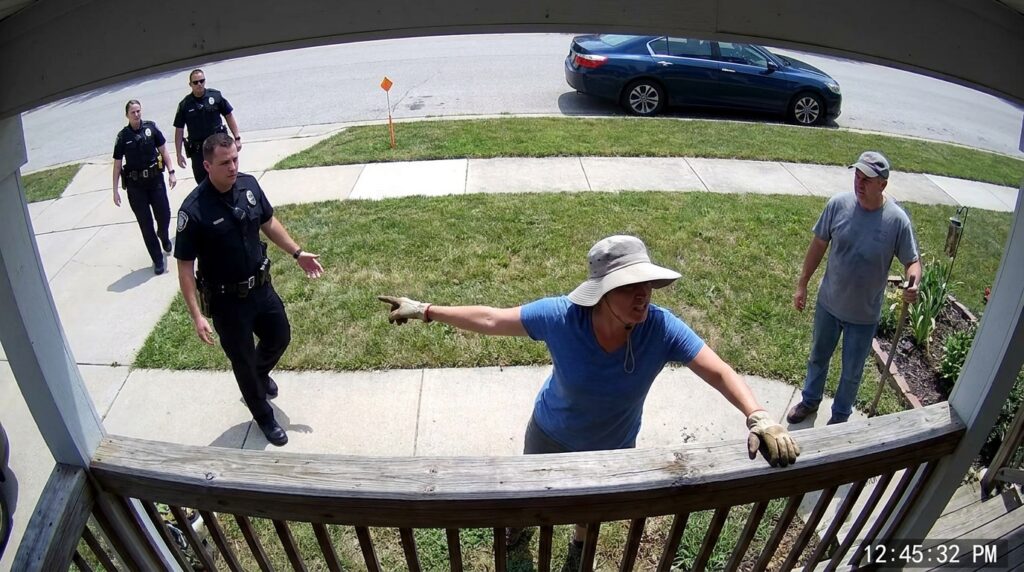
Helen didn’t flinch, but her arm remained frozen mid-gesture, her pointed finger hovering an inch from my chest. Her wide-brim straw hat shifted as she turned her head, her sunglasses catching the reflection of the truck’s rusted iron payload bed.
The driver didn’t get out. Instead, a man wearing a dirt-smeared safety vest and heavy work boots stepped down from the passenger side, holding a clipboard in one hand and a bundle of bright pink utility flags in the other. He stopped at the edge of the curb, looking back and forth between the fresh orange surveyor’s stake and the ragged trench Arthur had been carving into the dirt bed.
“Arthur,” I said again, my voice cutting through the mechanical idle of the truck. “I didn’t call code enforcement. I called the county utility inspector to verify the lateral lines before you poured the gravel footer. If your trench is within thirty inches of the old connection, you’re digging into the public right-of-way without an easement waiver.”
Arthur didn’t answer. He slowly leaned his weight onto the ash handle of his shovel, his boots sinking an inch deeper into the damp, black loam that smelled so strongly of old fuel oil. He looked at the utility worker, then down at the clumpy, dark soil clinging to the steel spade of his tool. The skin around his jaw went slack, his pale face glistening with a film of sweat that caught the brutal glare of the overhead sun.
Helen stepped back off the grass and onto the concrete sidewalk, her yellow leather gloves clenching the crumpled 1994 map tight against her hip. “This is a private lateral,” she said, her voice dropping into a harsh, transactional hiss that lacked its earlier performative volume. She pointed a gloved hand toward the worker. “We have the original association covenants right here. The developer left the maintenance of this boundary strip to the adjacent lots. The county doesn’t have jurisdiction over the residential landscape buffer.”
The worker in the vest didn’t look up from his clipboard. He walked four paces down the sidewalk, stopped exactly aligned with the orange survey stake, and looked over the fence line at the trench. He dropped a single pink flag into the grass three feet inside Helen’s property line—right where her driveway met the loose dirt of the perennial bed.
“Mone’s not here to talk about landscaping, ma’am,” the worker said, his voice flat, exhausted by the heat and the standard script of neighborhood friction. He used the tip of his boot to kick a piece of the dark earth Arthur had thrown onto the concrete. He frowned, stepping back as the faint smell of machinery drifted up from the friction of his sole against the dirt. “The county water authority flagged a pressure drop in the secondary main last Tuesday. We’re tracking a soil saturation anomaly. Your retaining wall is sitting right over the old industrial easement line from before the subdivision was platted.”
A sharp, sudden silence fell over the yard, broken only by the steady, heavy rattle of the truck’s engine.
I watched Helen’s shoulders go rigid beneath her blue T-shirt. She didn’t look at the pink flag, and she didn’t look at the worker. Her eyes snapped back to me, the glare on her sunglasses completely hiding whatever calculation was happening behind them. But her fingers were twitching inside the thick leather gloves, tearing a small, clean rip along the edge of the ninety-four paper document.
“There’s nothing under this dirt but roots,” she said. Her voice was too fast now, stripped of its legalistic authority and reduced to a sharp, defensive edge. “We laid this sod ourselves in ninety-nine. My husband knows exactly what’s down there. We don’t need a county subcontractor ripping up a permitted retaining wall based on a pressure reading from three streets over.”
She took three rapid steps toward Arthur, her hand reaching out to grab the handle of his shovel as if she could physically force him to fill the trench back in before anyone could look closer. Her movements were frantic, driven by a sudden, sharp panic that didn’t match a simple dispute over four inches of lawn.
“Arthur, put the tool down,” I said, my voice remaining flat, matching the heavy weight of the wood beneath my hands. “Look at the corner of that plat map your wife is holding. Look at the stain on the paper. That didn’t come from a kitchen counter.”
Arthur didn’t move to help her. He let go of the ash handle completely, stepping backward away from the dark, saturated loam of the trench. His gaze followed my words, landing on the dark, unctuous smudge that had soaked through the fiber of the old paper in Helen’s hand. In the blinding light of the afternoon, the smudge looked almost purple against the yellowed document, a thick, greasy residue that refused to dry.
The worker in the safety vest pulled a brass probe from his belt and walked toward the edge of the trench, his boots crunching heavily through the dry weeds at the boundary line. He didn’t ask for permission. He jammed the metal rod deep into the black soil Arthur had just turned over, leaning his weight into the handle until the steel gave a dull, wet thud against something solid and metallic buried two feet beneath the surface.
Helen froze, her gloved hand wrapped around the empty shovel handle, her face turning pale as the worker twisted the probe and pulled it clear, a thick, black glop of grease clinging to the tip of the brass.