CHAPTER 1: THE FIRST RESISTANCE
The heat in the valley didn’t rise; it settled, thick with the smell of scorched fescue and the dry, metallic tang of two-stroke oil. The yellow push mower vibrated against the calluses on my palms, a steady, numbing shudder that went up my forearms and stopped at the elbows. It was an old machine, heavy-decked and prone to pulling left where the wheel-bolts had rusted thin, but it cut clean if you held the line straight. I kept my eyes three feet ahead, tracking the graying, splintered slats of the wooden privacy fence that divided the two lots. The grass along the boundary was thick—un-edged for three seasons, growing sideways into the rotted bottom rails of the pine panels.
Then the shadow broke the sun on the left side of the fence.
“Shut it down! I said, turn that damn thing off!”
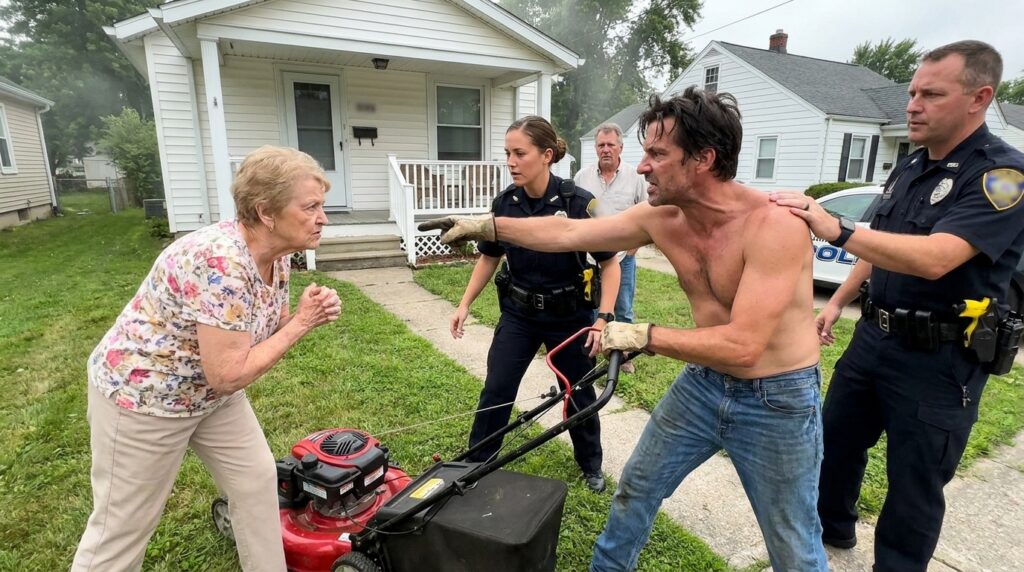
Through the dust-coated lenses of my glasses, the pink floral blouse looked like a smear of wet paint against the parched dirt of the driveway. She was seventy, maybe seventy-five, her short blonde hair sprayed into an unyielding, artificial ridge that didn’t move even as she leaned her torso completely over the top rail of the wood. Her knuckles were white where they gripped the rough pine, and her index finger was already locked, jabbing into the air inches from my blue cap.
I didn’t release the safety bar immediately. I let the machine run for three more seconds, the blade spinning at three thousand revolutions per minute over the property line, chewing through the coarse dandelions that grew exactly two inches on the lot-owner’s side of the wood. The vibration under my fingers felt like a small, trapped clock ticking down.
“Ma’am?” I pulled the cap brim lower, shielding my eyes from the glare off her silver-framed bifocals.
“You heard me, boy. You’re trespassing,” she spat, her voice thin and dry, like paper scraping against a brick wall. She didn’t look at my face; she looked down at the yellow housing of the mower, her chest heaving against the floral cotton. “This isn’t Miller’s land. He told you it was, but he’s a liar. Everything from that post to the ditch belongs to my family. You take one more pass with that deck and I’m calling the county marshal for property damage.”
I let the bar snap back. The engine died with a wet, heavy cough, the blade whistling against the compressed air under the deck until it settled into a dead, iron silence. The quiet that followed was immediate and hostile, broken only by the distant, hollow click of an automatic sprinkler three houses down.
My left hand remained on the black rubber grip. With my right, I reached into my back pocket and pulled out the tri-folded work order, the edges soft and gray from my own sweat. The paper was crisp, stamped by the city code enforcement office four days ago for standard residential maintenance. I didn’t hand it over the fence. I held it flat against my thigh, letting her see the blue ink of the signature.
“Mr. Miller’s out until five, ma’am,” I said, keeping my breath steady, the words flat and dry as the dirt under my boots. “The work order says to clear the fence-line. Three feet out from the wood. It’s what the city requires for the fire lane access.”
“The city doesn’t know where the stakes are,” she said, her finger jabbing lower, almost touching the yellow paint of the shroud. Her skin was spotted with sun-damage, her breath smelling faintly of stale peppermints. “The fence is wrong. My husband set those posts thirty years ago just to keep the dogs out, but the line is three feet into your side. You’re cutting my grass. You’re stealing my topsoil.”
I looked down. Below the blade casing, tucked into the dark crevice where the fence posts met the red clay, a rusted corner of iron was barely visible through the matted weeds—a fraction of an old surveyor’s pipe, half-melted into the earth by decades of runoff. It wasn’t where her finger was pointing.