Chapter 7: The Vote That Changed Pine Hollow
By the following weekend, Pine Hollow had reached a turning point.
Thirty-four homeowners had signed a petition requesting a special membership meeting to consider removing Karen Whitcomb from the HOA board.
The petition did not demand that she be punished without a hearing.
It asked for a formal process under the association’s bylaws.
Walter insisted on that distinction.
He wanted accountability.
Not revenge.
The governing documents required advance notice, a stated purpose, and an opportunity for the affected director to respond.
Thomas worked with the management company to verify the petition and arrange the meeting.
An independent attorney familiar with Vermont community associations was retained to advise the board on procedure.
The attorney made clear that the HOA’s governing documents, applicable law, and the facts would determine what action could be taken.
The residents could not simply declare Karen guilty because they disliked her.
Nor could Karen use her title to prevent a properly requested meeting.
The special meeting was scheduled for the following Saturday.
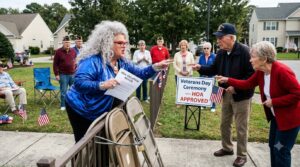
In the days before it, Walter noticed a change in the neighborhood.
People began helping one another again.
George organized volunteers to clear snow from the walkways of residents who couldn’t shovel safely.
Patricia coordinated grocery deliveries for households still recovering from the storms.
Linda prepared copies of the financial questions and supporting documents.
Helen baked two trays of oatmeal cookies for the volunteers.
Small gestures, perhaps.
But Walter recognized something important in them.
Pine Hollow was remembering what a community was supposed to be.
Karen, meanwhile, continued defending her decisions.
She sent a lengthy letter to homeowners claiming that Summit had provided legitimate administrative support.
She argued that its fees reflected the complexity of winter operations in a mountain community.
She also acknowledged that Michael Whitcomb was her nephew.
According to her letter, the relationship had not influenced the vendor selection.
But she offered no detailed work product demonstrating what Summit had delivered.
And the board records still did not show a properly documented approval of all three payments.
At the special meeting, forty-one of the forty-eight homeowners were represented in person or by valid proxy.
The clubhouse was packed.
An independent meeting chair explained the voting procedure.
Karen was given time to address the membership.
She spoke forcefully about her years of service, the difficulty of managing winter emergencies, and the criticism she believed she had endured unfairly.
Walter listened.
He did not interrupt.
Karen had served the community for years.
That deserved acknowledgment.
But service did not erase responsibility.
When her remarks ended, Linda presented the documented timeline.
She explained the special assessment, the payments to Summit, the unpaid contractor invoices, and the unanswered records requests.
Thomas described the board’s concerns about authorization and disclosure.
Daniel’s written incident report was summarized.
Linda’s original recording was preserved, and the relevant portion was shown to members.
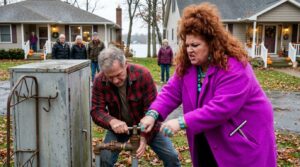
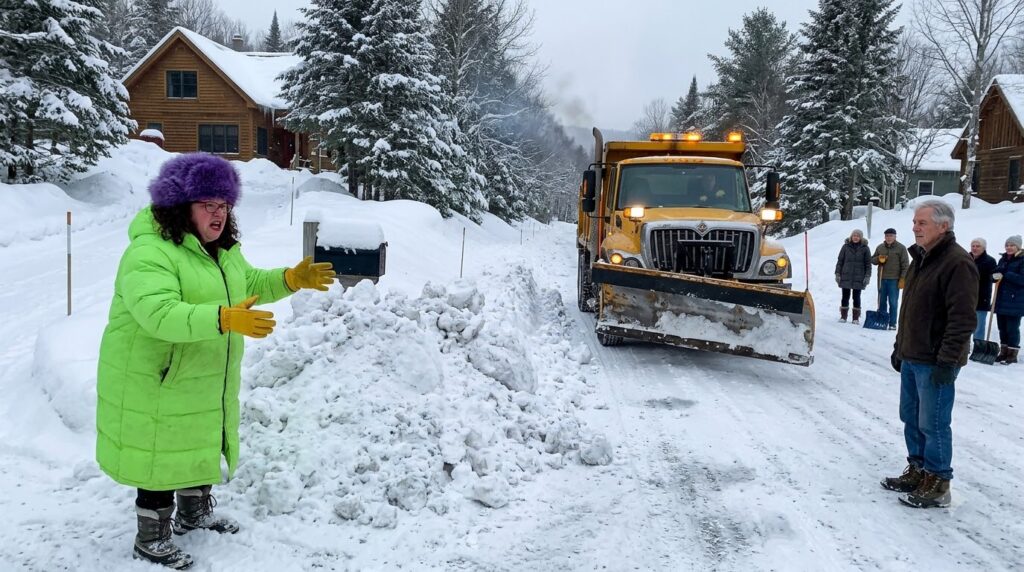
The room watched Karen strike the maintenance control.
The blade turned.
The snowplow advanced.
The snow piled across her driveway.
Several people smiled at the irony.
But the meeting chair reminded everyone that the video was relevant primarily because it documented interference with contractor equipment and a dispute over authority.
The financial questions were separate and more serious.
Walter appreciated that reminder.
A person could make a foolish mistake without committing financial misconduct.
The association needed to distinguish between the two.
Then Helen spoke.
She did not discuss invoices or corporate records.
She described what it felt like to be seventy-eight, living alone during a winter storm, waiting for essential medical supplies while the road remained blocked.
She described receiving a fine instead of help.
Her voice remained steady.
She said that Pine Hollow had always been her home.
But lately, she had begun to feel afraid of making an ordinary mistake.
Walter looked around the room.
Several residents were wiping their eyes.
When the voting began, the atmosphere became almost painfully quiet.
Ballots were collected and counted under the supervision of the independent chair.
The result was announced after verification.
Thirty-six votes supported Karen’s removal from the board.
Five opposed it.
The motion passed under the applicable voting requirements.
Karen sat motionless.
For a moment, Walter thought she might argue.
Instead, she gathered her folder, put on her purple fur hat, and walked toward the exit.
No one applauded.
Walter was glad.
This was not a sporting event.
It was the end of a troubled chapter in a neighborhood where people still had to live beside one another.
Karen paused at the doorway.
She looked back at the room.
Then she left.
The members had made their decision.
But the work of repairing Pine Hollow was only beginning.