Chapter 4: A Neighborhood Divided
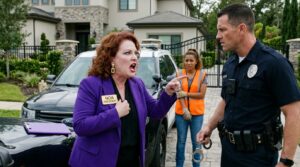
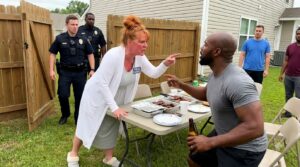
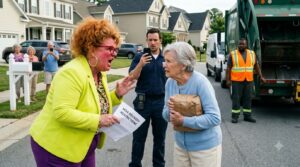
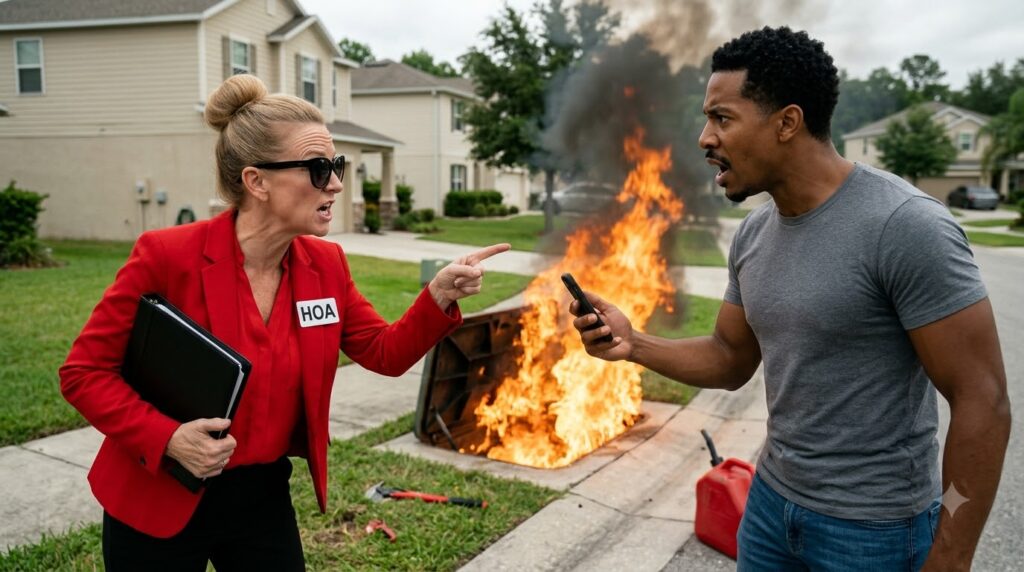
By Saturday, Willow Creek had split into two camps.
One group believed Patricia had become dangerous and needed to be removed immediately.
The other insisted she was being unfairly targeted by homeowners who had always resented her enforcement of community standards.
Patricia encouraged the division.
She distributed a letter describing herself as the victim of harassment.
She claimed the fire had occurred during an authorized maintenance inspection and suggested that witnesses had misunderstood what they saw.
She also accused Marcus of exploiting the incident to avoid legitimate HOA fines.
The letter contained no acknowledgment of responsibility.
No apology.
No concern for the elderly residents whose homes had lost power.
Instead, it emphasized the importance of preserving neighborhood unity.
That phrase angered Marcus more than he expected.
Unity, he thought, was not the same as silence.
He spent Saturday helping neighbors document their losses.
An elderly couple had thrown away nearly three hundred dollars’ worth of refrigerated medication and food.
A woman who worked remotely had lost two days of income.
Another homeowner had paid for a hotel because her husband’s respiratory equipment required reliable power.
The financial damage was mounting.
But the emotional consequences were harder to measure.
People had begun questioning whether they were safe in their own homes.
That afternoon, Marcus visited Mrs. Dorothy Lawson, an eighty-one-year-old widow who lived near the entrance.
Dorothy had known his parents for decades.
She invited him inside and showed him a stack of HOA notices.
Over the previous year, she had been fined for peeling paint on a mailbox, a cracked driveway edge, and an improperly trimmed hedge.
The total exceeded two thousand dollars.
Dorothy had paid in installments from her Social Security income.
“I didn’t want trouble,” she admitted.
Marcus noticed the framed photograph of her late husband on the mantel.
“He built that mailbox himself,” she said softly. “Patricia wanted me to replace it with one from an approved supplier.”
Marcus examined the notices.
The approved supplier was a company he did not recognize.
He wrote down its name.
Before leaving, he asked Dorothy whether she would be willing to share her experience at a homeowners meeting.
She hesitated.
Then she shook her head.
“I’ve lived here thirty-four years. I don’t want people treating me like an enemy.”
Marcus understood.
He promised not to use her name without permission.
On Sunday morning, the situation escalated.
Patricia announced that the emergency infrastructure contract would be approved by the board without a general homeowners vote.
She cited a provision allowing urgent expenditures necessary to protect community property.
Several residents questioned whether that provision applied.
Patricia responded that delay could expose the association to greater liability.
The logic sounded reasonable until Marcus considered the timing.
The proposed replacement project had existed before the fire.
The emergency had made it easier to justify.
At noon, Marcus received a call from a man named Thomas Grant.
Thomas was the Harborstone employee Helen’s camera had recorded speaking with Patricia before the fire.
He sounded nervous.
He said he had heard Marcus was asking questions about the contract.
Marcus suggested they speak somewhere public.
They met at a diner outside Willow Creek.
Thomas was forty-six, with tired eyes and the posture of someone who had spent years working outdoors.
He ordered coffee but barely touched it.
“I didn’t know she was going to do that,” he said.
Marcus waited.
Thomas explained that Harborstone had been hired to evaluate utility access problems and coordinate possible improvements.
He had visited the site Wednesday morning because Patricia demanded an immediate inspection.
According to Thomas, she was furious that the utility company had refused to approve a privately funded replacement of equipment it owned.
She believed the existing installation was an obstacle to the HOA’s redevelopment plans.
Thomas had warned her that the association could not alter utility-owned equipment.
He had also explained that any replacement would require proper engineering review and authorization.
“She told me she would find another way,” he said.
Marcus asked whether Thomas had reported the conversation.
Thomas shook his head.
“I thought she was just angry.”
He looked toward the window.
“Then I heard about the fire.”
Marcus studied him.
“Why are you telling me this?”
Thomas took a folded piece of paper from his jacket.
It was a copy of an internal Harborstone email.
The message discussed pressure from Patricia to approve an unusually expensive infrastructure project.
It also referenced an additional consulting fee payable to a company called Whitmore Advisory Group.
Marcus stared at the name.
Whitmore.
He looked up.
“Is that connected to Patricia?”
Thomas answered carefully.
“I don’t know who owns it. But I think somebody needs to find out.”
Marcus left the diner with a copy of the email and a growing sense that the neighborhood had been caught inside something much larger than an HOA dispute.
The fire had exposed a financial arrangement.
Now the people involved were beginning to turn against one another.