CHAPTER 5: THE METRIC SLIP
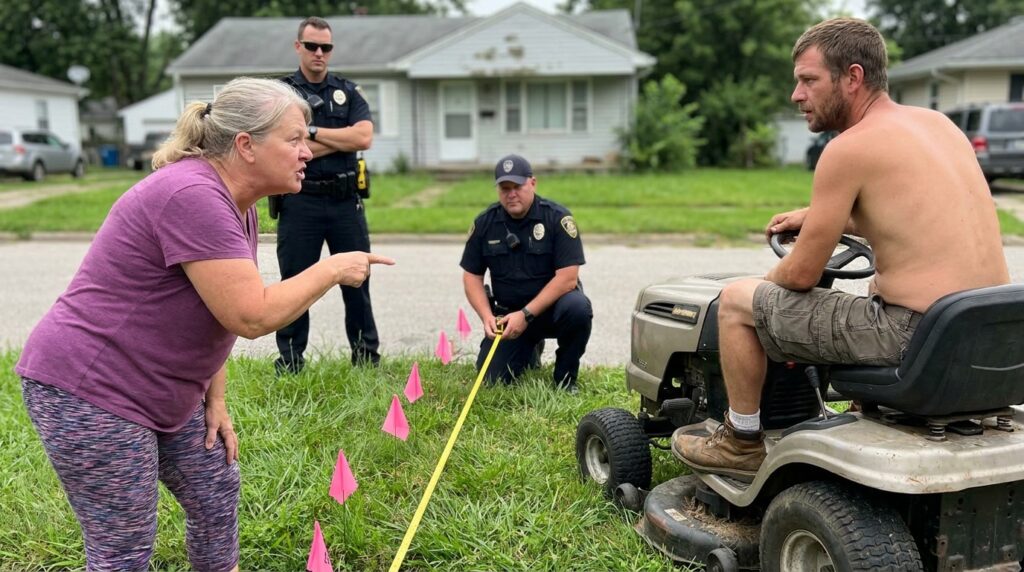
The steel ribbon of the tape measure gave a loud, singing screech as Garrett hooked the brass loop over the center bolt of the rusted isolation valve. He pinned the ring down with his thumb, the pitted iron plate cold and slick against his skin despite the baking heat of the sun. Thirty feet away, the stocky measuring officer backed up with an unhurried, rhythmic heavy step, his uniform boots crunching into the dry ditch grass as the silver tape rolled out between them like a cold wire.
“Keep it flat, Garrett,” the officer directed, his baritone voice clipped. He was kneeling near the concrete header block at the corner of the block, his thumb holding the heavy aluminum housing. The tape was tight now, singing in the slight breeze that ran between the houses, a straight line cut through the dry weeds that didn’t follow the curve of the neighbor’s pink plastic stakes.
The woman didn’t move from her position on the sidewalk margin, but her jaw had tightened until the skin over her cheekbones looked like yellow parchment. She held the blue plastic folder across her stomach like body armor, her fingers sinking into the plastic.
“This is an inaccurate benchmark,” she said. Her voice didn’t shake, but it carried the brittle tone of old iron under load. “The intersection header was reset during the 2018 curb repair. The original township pin was removed by the contractor. If you’re measuring from that block, your entire baseline is skewed by thirty-six inches. My husband explicitly noted that correction in the master file.”
The stocky officer didn’t look up from his housing. He reached down to his belt, pulled a small steel scribe from his tool pouch, and pressed the hardened tip into the grass at a specific graduation mark on the silver tape. “Thirty-one feet, six inches from the centerline pin,” he muttered, more to himself than to her. He shifted his weight, his knee joint giving a dry click. “According to the municipal grid, the easement line sits exactly twenty-eight feet from the concrete gutter header. Garrett, what mark do you have on that flanged lid?”
Garrett squinted against the glare off the silver metal. “Thirty-one six, right on the central nut.”
“Then the isolation valve is exactly three feet inside the public utility lane,” the officer said. He stood up slowly, letting the spring-loaded reel hiss as it swallowed thirty feet of steel tape back into the casing. The metallic snap of the final loop hitting the housing sounded like a small hammer blow. “Which means your flags are sitting four feet into the county right-of-way, ma’am. This worker isn’t trespassing. He’s within the cleared work boundary.”
Across the street, the neighbor with the yellow mug let out a short, dry laugh that cut through the idling rumble of the distant sedan. The woman in the housecoat took a step forward, leaning against her porch railing to see the exposed iron plate in the sod. The social friction on the block was shifting, the heavy silence breaking as the neighborhood realized the gatekeeper’s boundary was melting into the mud.
The woman’s hand jerked, the blue plastic folder slipping an inch. She adjusted her dark sunglasses with her thumb, her mouth twisting into a tight line. “The utility lane map you’re using is a digital rendering. It doesn’t have the legal status of the certified plat sheets. I have the signed layout right here.” She thrust the laminated sheet toward the officer again, the plastic catching the hard glare of the noon sun.
The stocky officer walked back down the flagged line, his boots leaving a crushed path through the high rye. He stopped in front of her, his shadow broad enough to completely cover her white sneakers. He didn’t take the sheet. He simply reached down and pointed his scribe at the blurred blue photocopy seal at the bottom of the page.
“This layout wasn’t recorded at the clerk’s office, ma’am,” the officer said, his tone flat and entirely empty of empathy. “This is a field draft from the water district maintenance shop. It’s a work-order sheet for an underground repair, not a deeded boundary. And the signature at the bottom isn’t a county surveyor’s stamp. It’s an internal inventory clearance.”
The woman froze, her shoulders dropping an inch as her forward-leaning posture failed her. For the first time, she looked down at the dark, wet patch of soil bubbling around the rusted iron valve between her feet, where the water was continuing to rise, staining her patterned leggings with a fine spray of muddy spray.
The tall backup officer shifted his stance behind her, his hand resting loosely on his duty belt, his shadow holding her fixed against the hard concrete of the sidewalk.