
CHAPTER 6: THE THREEDAY INJUNCTION
The third morning broke the color of an old zinc tub.
At 5:00 AM, the city felt hollow, its pulse reduced to the low, rhythmic thrum of a single idling transit bus three blocks over. The grease-thick soot from the yellow loader had settled during the night, leaving a fine, dark skim over the puddles in the corridor. It didn’t smell like tar anymore; it smelled of deep earth, wet lime, and the cold, metallic sweat that bleeds out of brickwork when the temperature drops before dawn.
Miller stood at the mouth of the alley, his hands jammed into the pockets of his canvas coat to hide the stiffness in his knuckles. His joints ached with the specific, wet fire that comes from seventy winters of lifting stone. Across the street, framed by the chain-link fence of the construction yard, the white sedan belonging to the district building inspector sat dark, its windows milked over with morning frost.
“You’re a stubborn old bastard, Miller,” Vance said from the shadow of the trailer awning. He hadn’t changed his clothes, but his black t-shirt was covered by a heavy nylon work jacket now, the collar turned up against the river mist. He held a cardboard cup of utility-grade coffee, the steam rising in a thin, straight needle into the dead air. “The marshal’s office didn’t sign a refusal. They signed a forty-eight-hour stay for structural review. That clock runs out when the city hall bells strike noon today.”
“The variance I filed covers the party wall, Vance,” Miller said. His voice was thick, clogged with the dust of the old pump house. He didn’t look at the younger man; his eyes were fixed on the frost clearing from the inspector’s windshield. “You touch the footing under Isaiah’s corner before the engineer verifies the settlement lines, and the whole five-story tenement on the left drops two inches into the cellar. The city doesn’t like building collapses on the morning news.”
Vance walked down the metal steps of the trailer, his boots making a flat, hollow clink against the iron treads. He crossed the cracked asphalt of the street, stopping two feet from Miller, just where the grease trap sat hidden under the silt.
“The inspector isn’t coming, Miller,” Vance whispered. He leaned in, the smell of cheap coffee and tobacco smoke hot against Miller’s face. “The development board bought the mortgage on his brother’s yard down in the flats. The paperwork clearing the footing stability is already sitting in the county box. When the marshals come back at twelve, they aren’t coming with eviction notices. They’re coming with a criminal trespass warrant for you.”
Miller didn’t move an inch. He let his thumb find the iron ring of his keys inside his pocket, pressing the brass edge into his palm until it hurt. “Then they’ll have to serve it while I’m holding the line.”
“Isaiah won’t be here to see it,” Vance said with a slow, dry grin that didn’t reach his eyes. He reached into his nylon coat, pulling out a small, yellowed piece of paper—not a corporate document, but an old blue-ink prescription form from the city clinic dated three days ago. “His lungs are full of fluid, Miller. The clinic nurse said if he stays in this damp slot another twelve hours, his heart’s going to stop before the tractor even hits the bricks. You aren’t saving his home. You’re just choosing the box he gets buried in.”
Vance turned and walked back toward the construction fence, leaving his half-empty coffee cup balanced on the rusted top of a trash bin.
Miller stood still until the grease on his boots began to turn white with frost. He turned on his heel and walked back into the deeper shadow of the alley, where the brick walls narrowed until they nearly touched his shoulders.
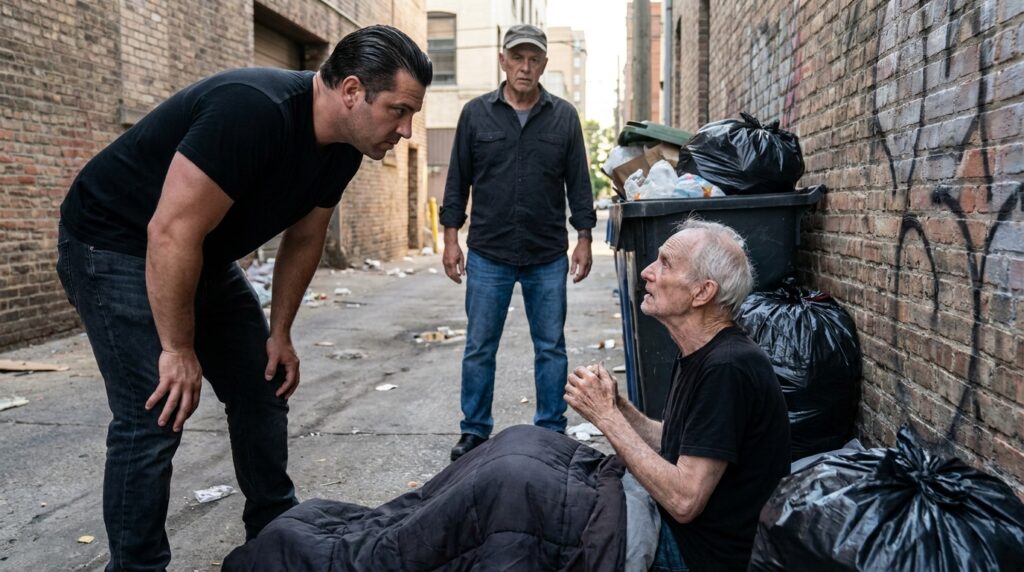
Isaiah was awake. He was sitting up on the canvas bundle, his face the color of old newspaper left in the rain. His breathing was louder now, a wet, rattling whistle that seemed to shake his entire thin frame under the gray wool coat. But his hands weren’t in his pockets. He had pulled back the corner of the heavy canvas pad he slept on, exposing the bare, cracked concrete of the alley floor.
Buried three inches into the aggregate, half-choked by decades of compressed mud and dried lard, was a heavy, circular iron plate—a municipal inspection eye that didn’t appear on any city map Miller had drafted since the war. In the center of the iron disk was a square, recessed socket, the exact size of the brass radiator valve key Isaiah had been spinning for thirty years.
“The inspector won’t come, Miller,” the old man rasped, his lips blue around the edges. He didn’t look up, his fingers tracing the rusted rim of the iron eye. “They think the grid belongs to the court. They think because they redrew the lines on a piece of white paper in ninety-six, the water forgot where it used to run.”
Miller knelt beside him, the smell of stagnant lime water rising from the open seam in the concrete. “What is this, Isaiah? The water works logs didn’t show a high-pressure line under this section.”
“It isn’t a city line,” Isaiah said, his hand trembling as he placed the square tip of the brass radiator key into the iron socket. It fit with a greasy, heavy clack. “It’s the old bypass from the brewery canal. The one they bricked over in forty-two when they built the warehouse foundations. It runs directly under the construction yard, right through the middle of Vance’s new footings. If you turn this valve three revolutions, the pressure from the river intake will drop the cellar floor of that trailer sixty feet into the quicksand before the marshals can even put the key in their handcuffs.”
Miller looked from the brass key to the wet, dark brick of the tenements rising five stories above them. The micro-mystery of Isaiah’s thirty-year holdout wasn’t a legal claim; it was an anchor over an underground river, and the old man’s hand was already starting to twist the iron.








