
CHAPTER 1: THE LANE FOUR STANDOFF BEGINS
The register belt did not click to a halt; it died with a low, hydraulic groan that signaled a deliberate mechanical override. I did not take my hand off the canvas strap of my tote bag. Inside it, two wooden crates of heirloom regional plums sat precisely balanced against a sealed carton of cold-pressed oil, their weights distributed according to the simple laws of gravity I had spent four decades working around. The air in the Oakridge Artisan Market was thick with the scent of dark roasted beans and the damp, sharp smell of fresh cedar shavings scattered beneath the display bins. It was a space built to mimic a simpler era, yet beneath the rough-hewn pine beams, the soft green glow of the terminal screen flickered with the steady, binary heartbeat of an enterprise logistics mainframe I knew down to its raw database queries.
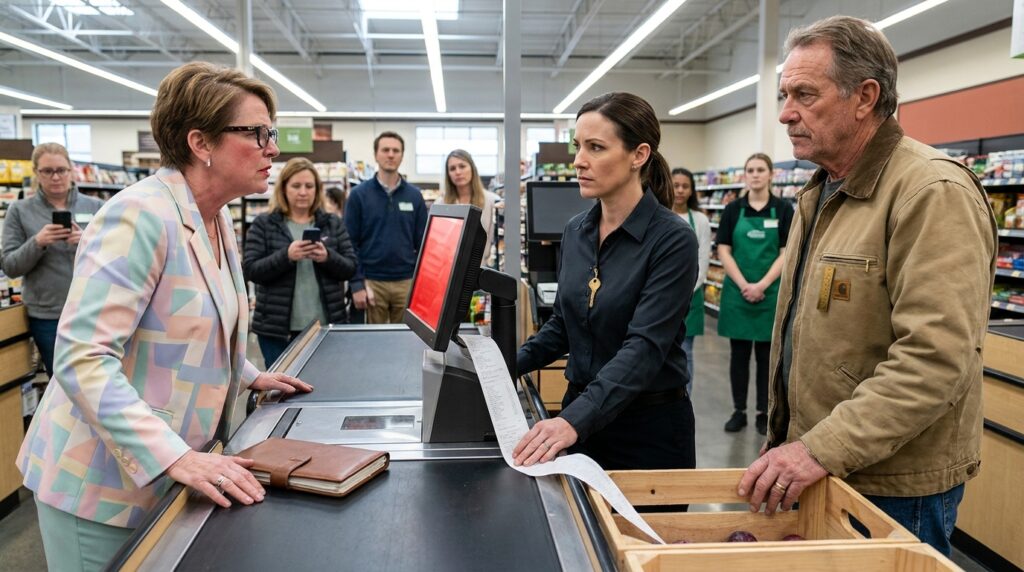
Connie Fitzpatrick stepped into the narrow line barrier, her wide silhouette clad in a pastel geometric blazer that caught the glare of the high industrial skylights. The leather-bound ledger she carried under her arm didn’t touch the counter—she slammed it directly onto the glass scanner window, a deliberate physical breach that caused the teenage cashier to yank his fingers back from the conveyor belt.
“This transaction is frozen,” she announced, not to me, but to the six people waiting behind me in the queue. Her voice carried the flat, uninflected authority of a self-appointed auditor who had spent seven years turning the market’s compliance committee into a personal fiefdom. “This individual is attempting to clear a tier-four commercial corporate allotment without localized verification. Under rule twelve, I am taking custody of these assets for an immediate inventory audit.”
I looked at her designer glasses, the frames thick and dark against her rigid cheekbones, before my gaze dropped to the pocket of my canvas jacket. My thumb brushed the cool, grooved edge of the brass calibration rule tucked near my pen pocket. The metal was steady. It did not expand or contract based on the volume of a room.
Behind me, the line shifted. The wheels of a metal grocery cart squeaked against the polished concrete floor as a shopper lowered a basket of organic greens to get a clearer view. The cashier’s green apron crinkled as he took a step back, his hands rising slightly in the universal gesture of a low-wage worker recognizing a corporate threat he wasn’t paid to resolve.
“The terminal has already processed the authorization token,” I said, keeping my tone within the flat, low register of a systems evaluation report. “The encrypted barcode was scanned three seconds ago. You should check the database before you touch that cart, Mrs. Fitzpatrick.”
She let out a short, rhythmic laugh that had nothing to do with humor. It was a tactical sound, designed to reframe my restraint as confusion for the people watching from the next aisle. She pulled her smartphone from her pocket with a sharp click of her fingernails against the case. “I am well aware of what the terminal shows, Mr. Mercer,” she said, her eyes narrowing as she read my primary identification off the pending transaction field. “But a tier-four account belongs to the regional developers who fund this cooperative, not to casual sub-letters who look like they walked off a construction site. This space remains exclusive because some of us enforce the boundaries.”
She raised the phone, the lens catching the gray noon light as she pointed it directly at my face. In the reflection of her glasses, I watched the blue loading bar of the market’s internal network community app begin to cycle. A paradigm-shifting piece of information caught my eye on her screen—the notification header on her open intranet app displayed a flashing red override code that I had written myself five winters ago during the system’s structural deployment, a code that should only appear if the terminal had detected a massive, unresolved internal corporate default linked directly to the committee’s own domestic ledger.








