CHAPTER 6: THE EVIDENCE STRIP
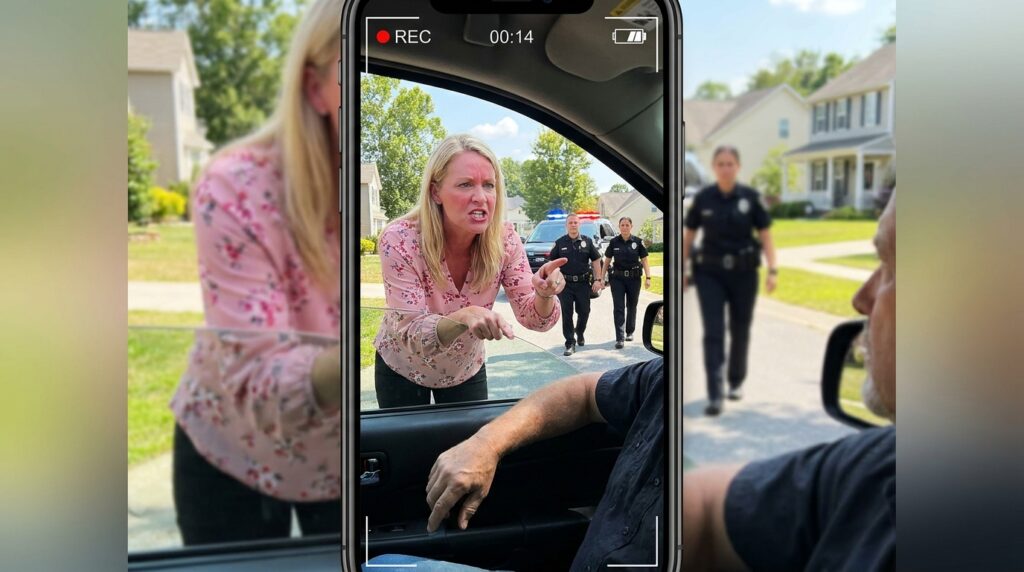
The open window bay let the full weight of the afternoon roll inside the sedan. The steel door sill was hot enough to leave a red grid mark on my forearm if I pressed down too hard, its gray factory primer showing through where years of work sleeves had ground away the top coat. The female deputy didn’t take her hand off her belt line, her fingers hooked casually over the hard plastic casing of her flashlight bracket as her boots shifted closer to my rocker panel.
“Keep the phone where it is, sir,” she said, her voice dropping beneath the steady, high-register whine of the cruiser’s light rack. Her eyes didn’t track the screen; they stayed on the lower corner of my left jaw, watching the pulse line behind the skin. “Go ahead and pass your identification and whatever structural paperwork you’re referring to out through the gap. We’re going to clear this lane before the school buses start turning around at the intersection.”
I didn’t let the camera tilt. My right thumb held the focus lock on the screen, keeping Brenda’s rigid, floral-printed silhouette anchored against the pale backdrop of her garage door. With my left hand, I reached into the glove compartment, my fingers sliding past a tangle of old zinc-coated structural fasteners and grease-stained hex keys until they hit the heavy, cold texture of the laminated plotting map. The plastic sleeve was thick and scored with old scratches from the tool chest, the edges yellowed by the mineral oil that always pooled in the bottom of the tray.
“This is the seventy-four engineering summary, Deputy,” I said, my voice deadened by the wide-open space of the driveway apron. I passed the stiff folder through the window, the edge of the laminate scraping against the rusted interior door lock cylinder with a thin, metallic hiss. “It contains the permanent drainage dedication for this entire block section. It hasn’t been modified by any township clerk filing since the concrete base was poured.”
Brenda took a step forward, her boot grinding a piece of loose limestone down into the gray dust until the rock shattered into small, white fragments. “That map doesn’t show the ninety-two realignment, Arthur! The county road surveyor physically moved the stakes three feet to the east when they put the culvert pipe in. You’re using a dead ledger description to justify blocking the public turnaround!”
The male deputy, who had been leaning over the front fender of Brenda’s crossover, walked back down the gravel strip, his heavy leather heels clicking against the exposed stone with a slow, deliberate weight. He took the laminated folder from his partner’s hand, his gloved fingers tracing the heavy black grid lines that marked the perimeter of my parcel. His sunglasses reflected the pulsing blue bar of the cruiser, turning his face into a pair of dark, flashing voids that stayed fixed on the bottom margin of the page.
“There’s a water main marker right under your front bumper, ma’am,” the male officer said, his voice flat, carrying the dry, gravelly texture of someone who spent eight hours a day reading code violations along the state highway. He didn’t lift his eyes from the print. He pointed a stubby, ink-stained finger toward the creeping clover where the brass disk lay half-buried. “The ninety-two amendment you’re talking about would put the public turnaround loop right on top of the old mainline vault. The county doesn’t certify right-of-way parking over a primary structural utility line. Not without a deep-trench reinforcement slab, and there isn’t one listed on this ledger sheet.”
Brenda’s folder slipped an inch down her hip, the plastic strap losing its tension as her elbow went slack against her side. The black grease smudge from the lower clip was wide now, a dark, greasy smear that ran from the pocket of her pink blouse down to the seam of her trousers. Through the transparent sleeve, the hand-stamped ink seal with the WM-REJ-88 marking caught a direct ray of the sun, the violet dye looking bright and wet against the dry, yellowed wood-pulp paper.
“Old man Miller signed it,” she whispered, her chin dropping slightly as she looked down at the brass disk near her boot heel. The cocky, administrative stance she had held on her porch was gone, replaced by a rigid, defensive hunch that made her silhouette look small and heavy against the long shadow of the patrol SUV. “He told the association board the line was clear. We paid the filing fee out of the road improvement fund thirty years ago.”
“Miller was the town surveyor, ma’am, not the county infrastructure clerk,” the male deputy said, his hand moving to the blue folder, his thumb flipping the cover page over to expose the back of her document where the rejection stamp sat in the center of the grid. “He filed a private layout draft that was rejected by the water-main division three weeks before the township office dissolved. This isn’t an official plat. This is a refused utility variance.”
The silence that followed was heavy with the heat of the road, broken only by the click of the cooling metal inside my engine bay and the distant, dry rattle of the locust trees along the fence line. I kept the phone still, the screen capturing the precise moment the false authority left her face, leaving nothing but the deep, sun-baked lines around her eyes and the gray dust coating her boots.