Chapter 10: What Was Worth Keeping
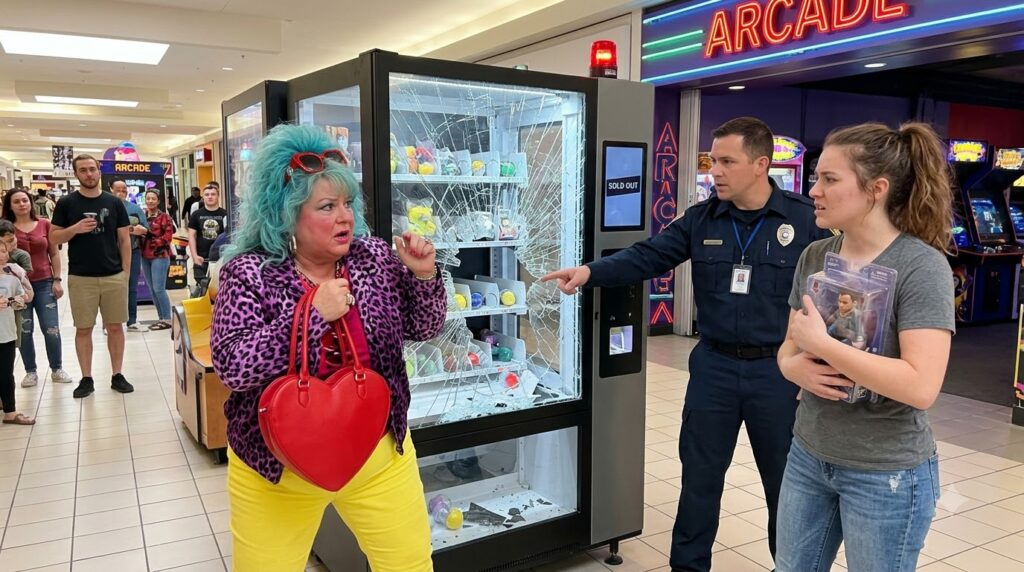
Three months later, the collectible vending machine at Brookfield Commons Mall had a new glass front.
Its touchscreen worked.
Its alarm had been tested.
A fresh assortment of figures stood neatly behind the display.
Most shoppers passed it without noticing anything unusual.
The arcade entrance looked exactly as it had before Patricia Whitmore’s outburst.
But several lives had changed.
Emily Carter had started her dental hygiene program.
She continued working part-time at Dr. Reed’s office and spent Sunday afternoons visiting her grandmother.
The Winter Garden Girl remained in Margaret’s glass cabinet.
Sometimes Margaret moved it a few inches to catch the afternoon light.
Sometimes she stood in front of it for several minutes, remembering Robert.
The figurine had become more than the missing piece of a collection.
It reminded her that love could outlast the person who first expressed it.
And that a promise made years earlier could still find its way home.
At Briarwood Estates, the HOA had adopted clearer procedures for complaints, meeting records, and community communications.
Helen Parker joined a small committee reviewing how residents could raise concerns without fear of embarrassment or retaliation.
The changes were modest.
They did not transform the neighborhood overnight.
But they made it easier for people to speak.
Leonard Price attended his first association meeting in more than a year.
He asked a question about landscaping fees.
Someone answered it.
No one threatened him with a fine.
That simple exchange felt like progress.
Patricia, meanwhile, had begun spending more time away from neighborhood politics.
She volunteered twice a month at a local community pantry.
At first, she found the work frustrating.
There were schedules to follow, supplies to sort, and volunteers who did things differently from the way she preferred.
On her second morning, she began telling another volunteer how the shelves should be arranged.
Then she stopped.
She asked whether there was a reason for the existing system.
There was.
The arrangement helped older visitors reach the items they needed without bending or lifting heavy packages.
Patricia listened.
Then she followed the instructions.
It was a small moment.
No one applauded.
No one even noticed.
But Patricia did.
She had spent years believing that leadership meant having the final word.
Now she was learning that sometimes the most useful thing a person could do was listen.
Her relationship with Rebecca improved slowly.
They began meeting for coffee.
Patricia learned to ask about her granddaughter’s school projects without criticizing how Rebecca managed the household.
She apologized for several past arguments.
Rebecca did not pretend that everything was fixed.
But she welcomed the effort.
One Saturday afternoon, Patricia visited her granddaughter’s birthday celebration.
She brought a watercolor painting set and a handwritten card.
No rare collectibles.
No expensive surprise.
No attempt to impress the room.
Her granddaughter opened the gift and immediately began painting.
Patricia sat beside her.
For nearly an hour, they worked quietly together.
When the little girl accidentally spilled blue paint across the table, Patricia reached for a towel.
Then she laughed.
It was the first time Rebecca had heard her mother laugh at a mistake in years.
Later that month, Patricia returned to Brookfield Commons to purchase a birthday card for Charles.
She passed the arcade entrance.
The repaired vending machine stood beneath the bright overhead lights.
A young couple was examining the collectibles.
Patricia stopped.
For a moment, she remembered the terrible sound of glass breaking.
She remembered Emily’s frightened expression.
She remembered the alarm, the security office, and the humiliation of seeing her own actions on camera.
Then she noticed a little girl pointing excitedly toward a figure inside the machine.
The child’s father checked his wallet.
He shook his head gently.
They walked away together.
Patricia felt an impulse to follow them and offer money.
Once, she might have done it loudly, making certain everyone noticed her generosity.
This time, she considered whether the family would welcome help from a stranger.
She decided to respect their private moment.
She continued toward the card shop.
It was a choice so ordinary that no one would ever know she had made it.
But that was part of what made it meaningful.
Across town, Emily was helping Margaret arrange photographs in an old family album.
They found a picture of Robert standing beside a Christmas tree, holding a small wrapped package behind his back.
Margaret smiled.
“He thought he was so clever.”
Emily laughed.
“Was that one of the figurines?”
“Of course.”
Margaret studied the photograph.
Then she looked toward the glass cabinet.
“Your grandfather never cared much about what things cost,” she said. “He cared about what they meant to somebody.”
Emily followed her gaze.
The Winter Garden Girl stood beside Robert’s favorite figurine.
Two small objects.
A lifetime of memories.
And a lesson Emily knew she would carry long after her grandmother was gone.
She thought about the woman at the mall.
The screaming.
The broken glass.
The demand that something belonging to someone else should be surrendered simply because she wanted it.
Then she thought about the apology that had arrived weeks later.
Emily did not know whether Patricia would continue changing.
She hoped so.
But she understood that Patricia’s future was Patricia’s responsibility.
Her own responsibility was to live according to the values her family had taught her.
To be fair.
To be kind.
To stand firm when necessary.
And never to confuse another person’s anger with an obligation to give in.
Margaret closed the photo album.
Outside, the evening sunlight settled across the garden.
“Would you like some tea?” she asked.
Emily smiled.
“I’d love some.”
They walked into the kitchen together.
The glass cabinet remained in the quiet living room, its little figures glowing softly in the fading light.
The story had begun with a woman who believed she could buy whatever she wanted, take whatever she desired, and frighten anyone who stood in her way.
It ended with a grandmother and granddaughter sharing tea in a modest home, grateful for something money alone could never have provided.
Patricia had been willing to destroy a machine to possess a collectible.
Emily had been willing to stand her ground because the collectible represented love.
That was the difference between wanting something and understanding its value.
And in the end, the most important thing anyone had learned at Brookfield Commons had nothing to do with toys, money, or broken glass.
Respect cannot be purchased. Dignity cannot be demanded. And the things that matter most are often the very things we choose to give, rather than take.