Chapter 6: The Meeting at the Old Grange Hall
The old Grange hall stood beside a two-lane road, surrounded by oak trees and a gravel parking lot.
For generations, local farming families had gathered there for harvest dinners, equipment auctions, weddings, and community meetings.
Daniel remembered attending Christmas parties there as a boy.
His father had once helped repair the roof after a storm.
Now Daniel was returning for a different reason.
He had invited several local growers to discuss fair contracts, buyer relationships, and the increasing pressure small farms faced from larger purchasing companies.
He deliberately avoided turning the meeting into a campaign against Patricia.
Samuel had advised him to focus on documented business concerns and practical solutions.
Daniel agreed.
He wanted farmers to share information without spreading rumors.
Seventeen people attended.
Some were longtime friends.
Others barely knew him.
Walter Briggs sat near the back, holding a folder of paperwork.
Raymond Ellis brought his wife.
Rebecca Collins attended to explain what distributors generally looked for in reliable suppliers.
And Linda Hayes came after finishing her shift at Patricia’s market.
She sat quietly beside the door.
Daniel opened the meeting by explaining what had happened at his farm.
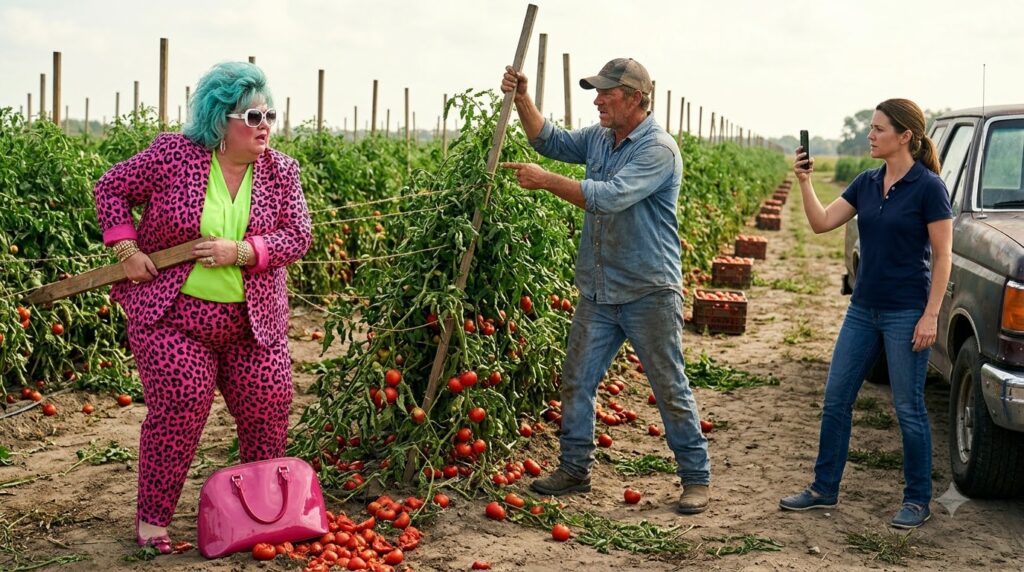
He described the damaged tomato row.
He explained the complaints sent to buyers.
He mentioned the proposed contract.
He did not play the video immediately.
Instead, he asked the room a question.
How many of them had been pressured to accept terms they didn’t fully understand?
Several hands rose.
How many had worried that refusing a buyer might cost them future business?
Almost everyone raised a hand.
Daniel wasn’t surprised.
Farming had always involved difficult negotiations.
But the stories that followed revealed a common problem.
Small growers often lacked access to independent contract advice.
They were negotiating against companies with more information, more capital, and more time.
Walter spoke about his experience.
His voice shook slightly as he described the deductions.
He admitted he had been ashamed to tell anyone.
Raymond placed a hand on his shoulder.
Nobody laughed.
Nobody criticized him.
Several farmers offered to review his records with him.
Rebecca then explained how growers could improve their position by maintaining accurate quality documentation, developing multiple buyer relationships, and understanding contract terms before accepting advances.
She also described the possibility of coordinating certain logistics while keeping each farm independently owned.
The idea interested the room.
A shared transportation schedule could reduce costs.
Joint purchases of packaging materials might improve margins.
A voluntary marketing association could help growers reach more customers without surrendering control over their land.
The conversation shifted.
Instead of discussing what Patricia had done, people began discussing what they could build.
Daniel felt something he hadn’t experienced in months.
Hope.
After the meeting, Walter approached him.
“I came here thinking I was the only fool in the county.”
Daniel shook his head.
“You trusted somebody who made you a promise. That’s not foolish.”
Walter looked toward the remaining farmers.
“Maybe I can still save my place.”
Daniel hoped so.
But the evening wasn’t entirely peaceful.
As people left the hall, Hannah noticed a familiar white SUV parked across the road.
Patricia was sitting behind the wheel.
She had apparently learned about the meeting.
When Daniel stepped outside, she lowered her window.
She accused him of organizing competitors against her.
Daniel remained calm.
He explained that farmers had the right to discuss their own businesses and seek independent advice.
Patricia threatened legal action.
Samuel, who had attended the meeting, advised Daniel not to argue.
Patricia drove away.
Hannah had quietly documented the encounter.
The following week, something unexpected happened.
Three growers contacted Gulf Coast Fresh Distribution about potential future supply arrangements.
Rebecca arranged preliminary inspections.
Meanwhile, Daniel’s farm completed another shipment for an established customer.
The tomatoes passed quality checks.
The payment arrived on schedule.
The bank received updated projections showing a more stable outlook than Daniel had feared.
For the first time, Patricia’s pressure was producing the opposite of what she intended.
Farmers were talking.
Buyers were asking better questions.
And the evidence against her was growing.
Then Victor Lane made a phone call that brought the dispute closer to a resolution.