Chapter 5: The Offer That Wasn’t Really an Offer
Patricia Whitcomb did not enjoy being told no.
She had built her business by negotiating aggressively, demanding concessions, and presenting herself as the most important customer in every room.
Sometimes that approach worked.
Sometimes suppliers walked away.
Patricia usually found someone else.
But Daniel Mercer was different.
He had refused her price.
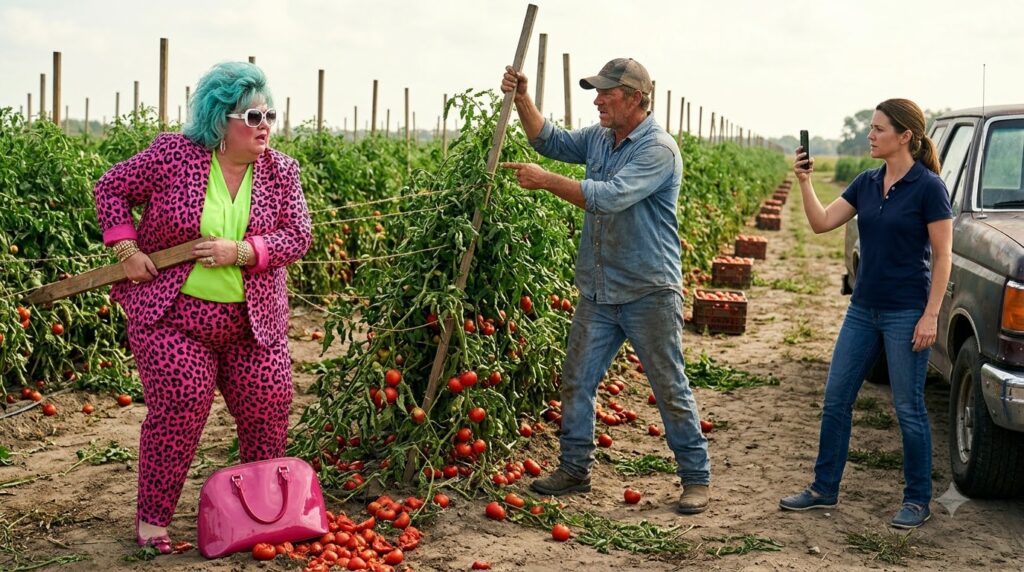
He had ordered her off his land.
And now he had involved an attorney.
To Patricia, the situation had become personal.
She called her operations manager, Victor Lane, into her office.
Victor was fifty-two, a practical man who had spent years managing inventory, transportation, and supplier relationships.
He understood that Patricia’s temper could be costly.
He also knew she didn’t like hearing that.
Patricia instructed him to prepare a new proposal for Mercer Family Farms.
It offered Daniel a large advance payment in exchange for a multi-year exclusive supply agreement.
On the surface, the amount looked attractive.
Daniel could use the money to pay down his operating line and replace aging equipment.
But the contract contained provisions that troubled Samuel Brooks.
The proposed pricing formula allowed substantial deductions for quality adjustments.
Patricia’s company would have broad discretion over accepting shipments.
The agreement restricted Daniel’s ability to sell certain grades of tomatoes to other buyers.
And the early termination provisions could leave him owing money if he tried to leave the arrangement.
Samuel reviewed the document twice.
Then he called Daniel.
“This might solve one problem today and create five bigger ones tomorrow.”
Daniel already suspected as much.
The offer arrived with a deadline of forty-eight hours.
Patricia’s accompanying message said she was willing to forget their unfortunate misunderstanding if Daniel signed.
There was no apology.
No acknowledgment of the damaged crop.
No commitment to correct the accusations sent to buyers.
Only a demand for control.
Daniel placed the proposal on the kitchen table.
Ellen read it carefully.
Hannah calculated several possible outcomes using the pricing formula.
Under an unfavorable but plausible combination of deductions, the farm could receive substantially less than the headline price suggested.
Margaret watched them work.
She remembered when Thomas had nearly lost the original forty acres during a difficult season.
A large distributor had offered him a contract that promised immediate relief.
Thomas had refused after discovering terms that would have left him dependent on one buyer.
He struggled for two more years.
Then he recovered.
Margaret told Daniel the story.
He had heard pieces of it before, but never the whole account.
“Your father wasn’t against taking help,” she said. “He was against giving away the right to make his own decisions.”
Daniel looked at the contract.
For a moment, he imagined what signing could accomplish.
The bank would be less frightening.
The equipment repairs could be completed.
Ellen might finally sleep through the night.
But he also imagined the following season.
Patricia deciding which shipments to accept.
Patricia determining deductions.
Patricia using the agreement to force him into another concession.
The thought made him feel trapped before he had signed a single page.
He rejected the offer.
Samuel sent the response.
That should have ended the matter.
Instead, Patricia began contacting other growers who supplied the same regional distributors.
She told them Daniel was struggling financially.
She suggested his farm might soon be available for purchase.
She claimed that Whitcomb Produce Holdings was preparing to consolidate local supply.
Some growers ignored her.
Others became nervous.
One called Daniel directly.
The man, a sixty-one-year-old farmer named Raymond Ellis, had known the Mercer family for decades.
Raymond asked whether Daniel was selling.
Daniel told him no.
Raymond explained what Patricia had been saying.
Then he mentioned something that caught Daniel’s attention.
Patricia had offered Raymond a similar exclusive contract.
So had she offered one to two other growers he knew.
Daniel asked whether Raymond had signed.
“No,” Raymond said. “But I know somebody who did.”
That farmer was already having trouble.
His name was Walter Briggs.
He was sixty-seven and operated a smaller vegetable farm thirty miles away.
Walter had accepted a large advance from Whitcomb Produce Holdings after a difficult harvest.
Now his payments were being reduced by quality deductions he believed were unreasonable.
He was considering selling equipment to cover his expenses.
Daniel felt a chill.
Patricia’s proposed agreement wasn’t simply an aggressive business opportunity.
It resembled a pattern that could leave growers financially vulnerable.
Daniel contacted Walter.
They spoke for nearly an hour.
Walter was embarrassed.
He admitted he had signed without fully understanding the contract.
He had trusted the promise of stable income.
Now he felt as though every shipment created another argument.
Daniel didn’t pretend he could fix Walter’s problem.
But he gave him Samuel Brooks’s contact information and suggested an independent contract review.
Walter thanked him.
Before hanging up, he said something Daniel couldn’t forget.
“I thought I was protecting my farm. Turns out I may have handed somebody else the keys.”
That night, Daniel walked alone through the tomato rows.
The damaged section had been repaired as well as possible.
New stakes supported the surviving vines.
But several plants remained bent and weakened.
He ran his hand along the twine.
He thought about Walter.
About Linda.
About the workers who depended on the harvest.
Then he realized something important.
Patricia had tried to make every farmer feel isolated.
Perhaps the answer was to stop facing her alone.