Chapter 6: The Records Nobody Was Supposed to Question
Sunday morning, Robert arrived at Helen Morris’s house carrying a notebook and a thermos of coffee.
Michael joined him.
Sarah had wanted to come, but Robert insisted that she and her new husband enjoy at least part of their first weekend as a married couple.
Michael had quietly disagreed.
He told Sarah that helping her father would take only a few hours.
Besides, he had spent years reviewing construction documents and municipal regulations.
He knew the importance of keeping accurate records.
Helen welcomed them into her dining room.
The table was covered with HOA meeting minutes, financial summaries, violation notices, and copies of the association’s governing documents.
Helen had collected the records over several months.
As a former board member, she understood which documents residents were entitled to request and which procedures the association was supposed to follow.
She began with Robert’s fines.
The first problem was obvious.
Several violation notices cited rules that did not appear in the association’s published guidelines.
One demanded that all porch railings be painted a particular shade of white.
The actual rule required only that exterior colors be approved when changed.
Robert had never changed his railing.
Another notice prohibited climbing roses near front walkways.
No such prohibition appeared in the documents Helen possessed.
Michael compared the dates.
The rose-trellis violation had been issued three days after Robert challenged Karen at a neighborhood meeting about increased maintenance fees.
“That’s interesting,” Michael said.
He placed the papers side by side.
Helen nodded.
“Keep reading.”
The next discovery concerned the fines themselves.
According to the association’s governing documents, residents were entitled to notice and an opportunity to be heard before certain penalties could be imposed.
Robert had received bills, but several lacked evidence of the required review process.
He had requested hearings twice.
Neither request had received a response.
Michael made notes.
He was careful not to jump to conclusions.
Some problems might have been administrative mistakes.
Others appeared more serious.
Then Helen showed them the meeting minutes.
Karen had repeatedly claimed that the board unanimously approved new enforcement policies.
But the minutes recorded only three members present at several meetings.
Under the association’s rules, four were required for a quorum.
Without a quorum, the board could not validly conduct certain official business.
Robert stared at the pages.
“How did nobody notice?”
Helen gave him a tired smile.
“Most people don’t read the minutes.”
She had.
And once she started asking questions, she noticed other inconsistencies.
A landscaping contract had been renewed without the competitive review normally required by the association’s purchasing policy.
The vendor was a company called Green Horizon Property Services.
Its registered business address matched the address of a small office building owned by Karen’s brother-in-law.
That relationship did not automatically prove wrongdoing.
But Helen believed it should have been disclosed and reviewed.
The board’s records contained no such disclosure.
Michael leaned forward.
“Has anyone asked for the contract?”
“Three times,” Helen answered.
“And?”
“We were told it was confidential.”
Michael looked at Robert.
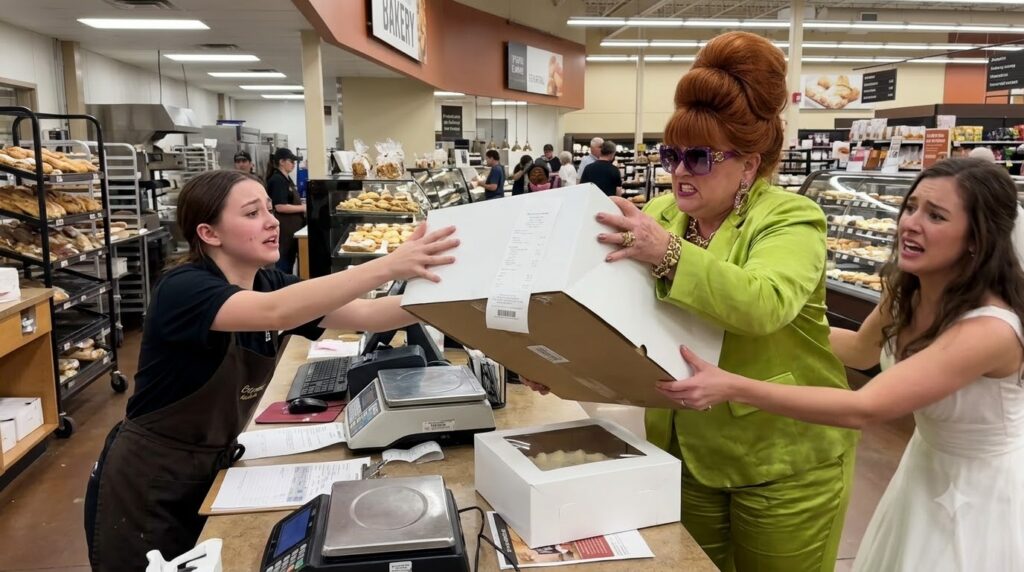
The cake incident had been outrageous.
But these documents suggested that Karen’s behavior might be part of a broader pattern of using authority without proper oversight.
Helen explained that she had already spoken with two other homeowners.
One was a retired nurse named Patricia Ellis.
The other was a former Army mechanic named Frank Dawson.
Both had received unusual fines after questioning HOA decisions.
Patricia had been charged for leaving a wheelchair-accessible garden path visible from the street.
Frank had been fined for a flagpole installed years before Karen became president.
Neither had received a satisfactory explanation.
Robert felt anger rising.
He had assumed he was simply unlucky.
Now he saw that other neighbors had been dealing with similar treatment.
Michael closed the folder.
“We need to separate what we can prove from what we suspect.”
Helen agreed.
They decided to prepare a factual presentation for Monday’s hearing.
They would ask for the specific authority behind each fine, copies of the relevant board decisions, and a clear accounting of the charges.
They would also request that Karen recuse herself from any decision involving Robert because of the bakery confrontation and her personal involvement.
Robert listened.
For the first time in months, he felt less alone.
Before leaving, Helen handed him one final document.
It was a printed email from the association’s management company.
The message had been sent to Karen six weeks earlier.
It warned that several proposed fines lacked sufficient documentation and should not be assessed until the required procedures were followed.
Robert read the final sentence carefully.
The management company had explicitly recommended suspending those charges.
Yet Karen had continued sending the notices.
Robert looked at Helen.
“She knew.”
Helen nodded.
“That’s what concerns me.”