Chapter 7: The Vote That Changed Cedar Point Shores
The special meeting was scheduled for January 14.
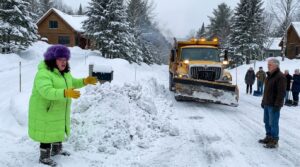
By then, snow covered the lawns around Cedar Point Shores.
The lake had turned a hard winter gray, and thin ice had begun forming along the sheltered shoreline.
Holiday wreaths had disappeared from most front doors.
But the Thanksgiving incident remained a constant subject of conversation.
The meeting notice listed two major items.
The first was a proposed removal of Karen Whitmore from the HOA board.
The second was a plan for independent financial oversight and reforms to the association’s enforcement procedures.
Caroline Price ensured that the meeting complied with the governing documents and applicable requirements.
Homeowners received proper notice.
Voting eligibility was verified.
Proxy procedures were reviewed.
An independent election inspector was retained to supervise the count.
The residents wanted a result that could withstand scrutiny.
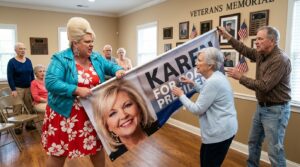
Karen arrived wearing a bright crimson coat and carrying a thick binder.
She had prepared a speech.
For nearly twenty minutes, she defended her leadership.
She described herself as the only person willing to make difficult decisions.
She argued that residents had become spoiled, irresponsible, and unwilling to pay for necessary community improvements.
She claimed Daniel had manipulated the neighborhood by turning a minor enforcement disagreement into a public scandal.
Then she suggested that the investigation was motivated by personal resentment.
Daniel sat quietly near the front.
He had prepared a short statement, but he did not intend to trade insults.
When his turn came, he stood beside the table where the election inspector had placed the voting materials.
He looked around the room.
He recognized nearly every face.
Some belonged to people he had known for twenty years.
Others were newer residents who had moved to the lake after retirement.
He thought about Susan.
She had loved Cedar Point Shores.
She used to say that the best part of living there was knowing that if something went wrong, someone would come over before you even had time to ask for help.
Daniel wanted that community back.
He described Thanksgiving.
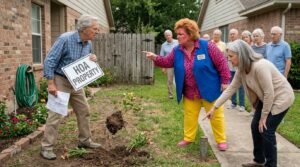
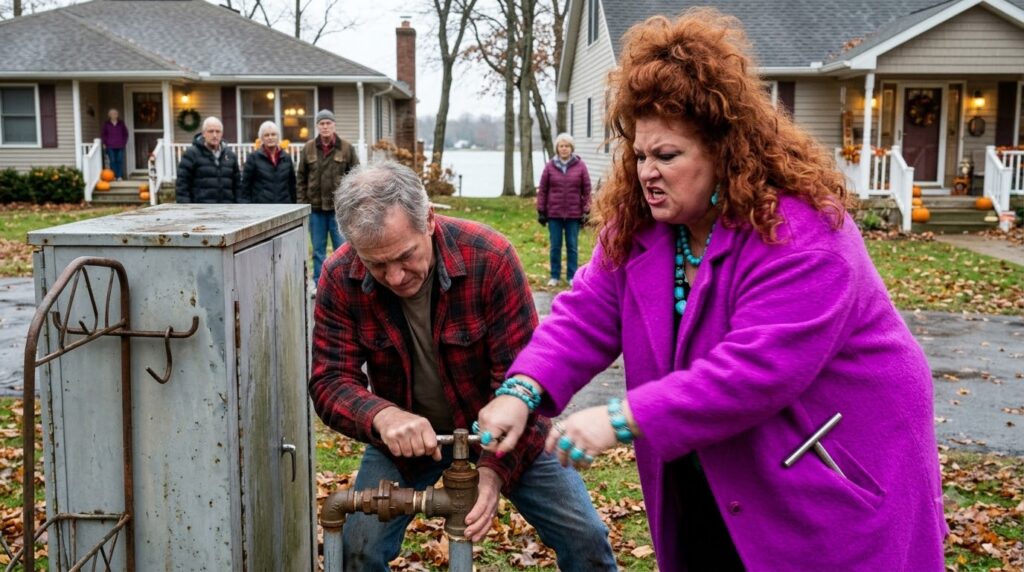
He explained that Karen had closed a shared water valve to force payment of a disputed assessment.
He acknowledged that he had used the spare handle to restore service.
He did not claim to be a hero.
He said he had simply been trying to protect his household and the neighbors who depended on the same water supply.
Then he spoke about what the incident had revealed.
The missing financial records.
The unsupported consulting payments.
The disputed signatures.
The unauthorized enforcement letters.
And the fear that had kept people silent.
He ended with a simple observation.
An HOA existed to maintain shared property and serve the community.
It did not exist to give one person power over everyone else’s home.
Daniel sat down.
There was no dramatic applause.
Instead, residents began asking questions.
A retired accountant wanted to know how special assessment funds had been tracked.
A former nurse asked whether the association had any emergency plan for residents who depended on essential utilities.
A younger homeowner questioned why enforcement appeals had been handled almost entirely by Karen.
The questions were practical.
They were also devastating.
Karen had built her authority around the belief that residents should not challenge her decisions.
Now the room was full of people asking for explanations.
Caroline summarized the accountant’s preliminary findings without making unsupported accusations.
She confirmed that several payments remained under investigation.
She also explained that the board had already withdrawn Daniel’s fine and that the cooperative had rejected Karen’s claimed authority over the water system.
Patricia Lowell attended using a wheelchair.
She had recovered enough to speak briefly.
She confirmed that her signature on the Thanksgiving notice was unauthorized.
She also explained why she had preserved the disputed financial correspondence.
Her statement carried particular weight.
Patricia had once been one of Karen’s closest allies.
Now she was telling the membership that the association’s financial controls had failed.
Karen tried to interrupt.
The meeting chair asked her to wait.
For perhaps the first time in her presidency, Karen was required to follow the same rules as everyone else.
The vote began shortly afterward.
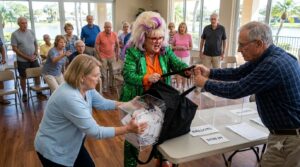
Homeowners submitted their ballots.
The independent inspector checked the count.
The room waited.
Daniel watched snow falling beyond the clubhouse windows.
He was not thinking about revenge.
He was thinking about how much work would remain even if Karen lost.
The water system needed stronger protections.
The financial records needed a complete audit.
The board needed people willing to serve without treating the position as a personal kingdom.
And the community needed time to rebuild trust.
Finally, the inspector announced the result.
Of the sixty-eight eligible households, sixty-one had participated.
Forty-nine voted to remove Karen from the board.
Twelve voted against removal.
The required threshold under the association’s governing documents had been met.
Karen was no longer a director.
Her presidency ended with her board membership.
She remained seated for several seconds.
Then she gathered her binder.
Her face was rigid.
She looked toward Daniel, but he did not return the stare.
He was watching Margaret Ellis.
The elderly woman had closed her eyes.
A small, relieved smile crossed her face.
Karen left without another word.
The meeting continued.
The membership approved the proposed financial oversight measures and authorized the board to pursue recovery of improperly spent funds.
A temporary board appointment process was established under the bylaws.
George agreed to serve as interim president until the board completed its officer election.
Helen volunteered for a committee to review enforcement procedures.
Walter agreed to advise the cooperative on infrastructure access and maintenance safeguards.
Daniel declined a board position.
He had spent enough years managing other people’s problems.
But he offered to help review the water system’s maintenance plan.
As the residents left the clubhouse, Margaret approached him.
She took his hand.
“Your Susan would have been proud of you.”
Daniel looked down.
For a moment, he could not answer.
Then he squeezed Margaret’s hand gently.
Outside, the snow had stopped.
The road home was quiet.
For the first time in years, the quiet felt peaceful.