Chapter 8: What Margaret Had Been Protecting
The wooden box was smaller than Karen expected.
It rested on a high shelf in Samuel’s workshop, wrapped in an old cotton cloth.
Samuel lifted it down carefully.
The brass key turned with a faint click.
Inside were photographs, handwritten notes, newspaper clippings, and a folded map of Willow Creek Park.
Karen recognized several faces.
Daniel Brooks appeared in one photograph as a young maintenance worker.
Walter Harris stood beside Eleanor in another.
Samuel himself was pictured helping install a wooden fence near the playground.
But the most striking photograph showed Margaret standing in front of the town council.
She held a large poster reading:
A PUBLIC PARK BELONGS TO EVERYONE.
Karen studied her mother’s face.
Margaret looked determined.
Almost fierce.
Samuel sat beside her.
“That was the night the developer offered the town more money for the land.”
Karen looked up.
“What developer?”
“A company that wanted to build private townhomes.”
Samuel explained that the original plan included a gated recreational area available only to residents who purchased homes in the development.
The public would lose access to the land.
Margaret opposed the proposal.
She argued that older residents, families with limited incomes, and children from nearby neighborhoods deserved access to green space.
The debate lasted months.
Some people accused her of standing in the way of progress.
Others warned that a public park would attract outsiders and lower property values.
Margaret refused to retreat.
She collected signatures.
Organized public meetings.
Raised private donations.
And helped negotiate the agreement that permanently protected the park’s public use.
Karen unfolded the map.
The oak tree was marked with a small blue circle.
Beside it, Margaret had written:
Keep this place open.
Karen traced the words with her finger.
For years, she had used the same arguments that Margaret had fought against.
Property values.
Exclusivity.
Neighborhood image.
Control.
Karen looked at Samuel.
“She must have been disappointed in me.”
Samuel considered his answer.
“Sometimes.”
Karen lowered her head.
“But she never stopped hoping you’d change.”
He pointed toward a final envelope inside the box.
It contained a handwritten list.
At the top, Margaret had written:
People Who Helped Save Willow Creek Park
Dozens of names followed.
Some belonged to wealthy homeowners.
Others belonged to teachers, mechanics, nurses, retirees, and shopkeepers.
Margaret had recorded each person’s contribution.
Money.
Time.
Labor.
Materials.
Meals for volunteers.
Transportation to meetings.
Childcare.
Karen noticed that the smallest contributions were listed with the same care as the largest.
At the bottom, Margaret had written:
No one built this alone.
Karen sat quietly for a long time.
Then she asked Samuel whether she could make copies of the photographs and documents.
He agreed.
Over the following week, Karen worked with Daniel and the town historian to organize the material.
The documents revealed how many people had contributed to the park’s creation.
They also confirmed that Margaret had insisted on permanent public access as a condition of the town’s preservation agreement.
Karen shared the records with Susan Caldwell and the HOA board.
Susan proposed a new community education program explaining the boundaries between HOA property and public land.
The board also began reviewing its enforcement procedures.
Several fines were refunded after the review found they had been issued improperly or without sufficient notice.
Other cases were resolved through revised payment arrangements or clearer communication.
Karen did not lead those changes.
She had resigned.
But she provided records and answered questions whenever asked.
The parks department, meanwhile, completed its investigation.
Karen received a formal notice requiring reimbursement for the documented damage and restoration expenses.
She paid the amount in full.
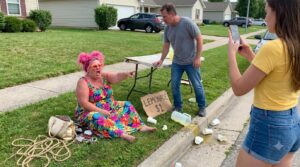
The town also required her to remove the unauthorized PHOTO SPOT sign and prohibited her from organizing future installations or alterations on park property without approval.
Karen accepted the conditions.
She removed the sign herself.
Then she helped Daniel restore the disturbed grass beneath it.
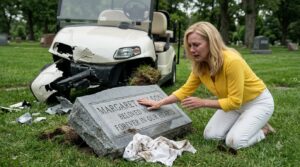
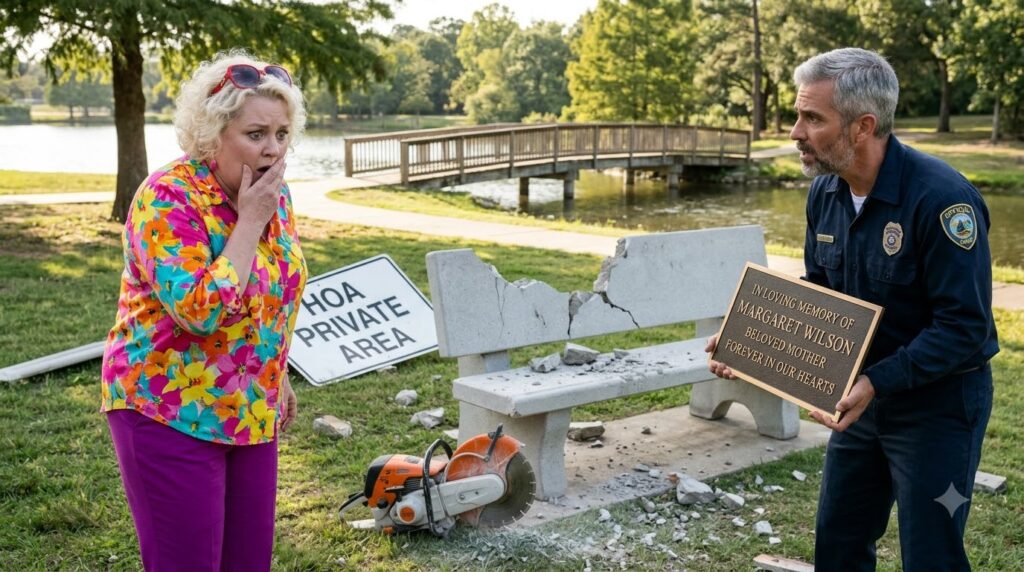
By early autumn, the reconstructed bench was nearly finished.
Samuel had preserved several original wooden pieces.
The black metal armrests had been repaired and repainted.
The bronze plaque had been professionally cleaned.
Its engraved lettering shone clearly again.
The town planned a small rededication ceremony.
Karen asked that it remain simple.
No banners bearing her name.
No photographs centered on her.
No speeches praising her efforts.
She wanted the attention returned to Margaret and the people who had loved her.
But Daniel had one final suggestion.
He wanted Walter Harris to participate.
Karen hesitated.
Walter had not spoken to her since their conversation on his porch.
She doubted he would agree.
Daniel looked at the finished bench.
“Then let him decide.”
Karen nodded.
She wrote Walter a short letter.
She described the restoration and invited him to attend.
She made no request for forgiveness.
She simply told him that the bench would be returned to its original place beneath the oak tree.
Three days later, a handwritten reply arrived.
Walter would attend.
He had one condition.
Karen read the final sentence twice.
I want Eleanor’s favorite yellow roses planted beside it.
Karen smiled through tears.
She knew exactly where to find them.