Chapter 5: Following the Money
The independent accountant began work the following week.
Her name was Rebecca Morgan, and she had spent more than twenty years reviewing financial records for small businesses, nonprofit organizations, and community associations.
She was patient, methodical, and unimpressed by dramatic accusations.
She wanted bank statements, receipts, invoices, meeting minutes, and supporting documentation.
The board instructed Karen to surrender all association financial records and equipment in her possession.
Karen initially claimed that several documents had been misplaced during a home office renovation.
Rebecca continued her review using records obtained from the bank, former board members, and vendors.
Within days, several discrepancies became apparent.
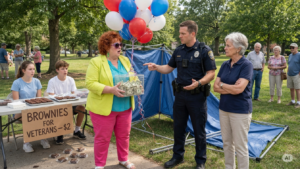
The shop vacuum used to destroy the cupcake stand had indeed been purchased with association funds.
It had been approved for cleaning the clubhouse and maintaining common areas.
Karen had taken it home without documenting its removal.
The discovery angered homeowners.
Their own association dues had paid for the equipment used against Emily and Daniel.
But Rebecca’s investigation uncovered more serious concerns.
Numerous cash payments collected from residents could not be matched to bank deposits.
Several purchases described as neighborhood maintenance expenses lacked adequate supporting records.
There were reimbursements for items that appeared unrelated to association business.
Rebecca identified approximately $8,400 in transactions requiring further explanation.
She emphasized that the amount represented unresolved discrepancies, not a final determination that every dollar had been misappropriated.
The board nevertheless took immediate steps to protect association funds.
Karen’s independent spending authority was suspended. Financial transactions required additional approval, and the board arranged for secure access to its records.
For the first time in years, Karen could not spend association money without meaningful oversight.
She reacted by accusing the other directors of conspiring against her.
She also began contacting residents individually, insisting that the financial review would increase everyone’s dues.
Some homeowners were frightened.
Willow Creek contained many retirees living on modest pensions and Social Security benefits.
Even a small increase in expenses mattered.
Karen understood that fear and tried to use it.
But Charles distributed a clear explanation of the audit’s purpose, estimated cost, and safeguards.
He also organized an open financial information session.
Residents could ask questions without being criticized.
The effort restored confidence.
Meanwhile, Emily and Daniel received an unexpected invitation.
The owner of a small local coffee shop, sixty-year-old Judith Harper, had seen the cupcake video.
Judith had operated her business for nearly twenty years. She understood how difficult it was to begin with limited resources.
She offered Emily and Daniel the opportunity to participate in a weekend community market hosted on the coffee shop’s property.
There would be no vendor fee for their first event.
She would also help them understand the applicable food-sale requirements and connect them with other local bakers.
Emily was excited but nervous.
She worried that people would buy their cupcakes only because they had seen the video.
Judith assured her that sympathy might bring someone to the table once.
Good cupcakes would bring them back.
Over the next two weeks, Emily and Daniel worked on recipes.
They tested lemon cupcakes, chocolate cupcakes with peanut butter frosting, and a vanilla variety topped with fresh strawberry icing.
Daniel designed a simple system for organizing ingredients within comfortable reach.
Emily created labels and packaging.
They named their business Second Rise Bakery.
The name reflected both baking and the experience of beginning again after disappointment.
On the morning of their first market, Susan helped transport the supplies.
Emily arranged the display herself.
Daniel positioned the payment terminal where both could reach it comfortably.
Their new sign was larger than the one Karen had destroyed.
By noon, they had sold every cupcake.
Several customers asked whether they accepted special orders.
A woman purchased two boxes for her husband’s birthday.
A retired firefighter ordered a dozen lemon cupcakes for his grandchildren.
Nobody needed to be told about the confrontation.
The cupcakes spoke for themselves.
Back in Willow Creek, Rebecca’s investigation was nearing completion.
Karen had provided explanations for some disputed transactions, but others remained unsupported.
She eventually acknowledged that she had collected permit fees without formal board authorization.
She claimed she had considered the payments a convenient way to fund neighborhood activities.
The records, however, showed that several thousand dollars could not be adequately accounted for.
Thomas advised the board to pursue recovery through appropriate legal channels rather than attempting to settle the matter through neighborhood pressure.
Charles agreed.
The goal was accountability, not public humiliation.
A special homeowners meeting was scheduled to consider Karen’s removal from the board.
Before the meeting, Karen visited several longtime supporters.
She reminded them of the landscaping improvements she had organized and the entrance repairs completed during her presidency.
Some acknowledged those accomplishments.
But they also asked about the missing money.
Karen had no satisfactory answers.
On the evening before the special meeting, Susan found another envelope in her mailbox.
There was no HOA letterhead.
Inside was a handwritten note from Karen.
She offered to reimburse the cupcake expenses if Susan would withdraw her complaints and ask the board to end the financial investigation.
Susan read the note carefully.
Then she placed it beside the other documents.
Karen still believed that money could make the problem disappear.
She hadn’t understood that the problem was never simply about cupcakes.