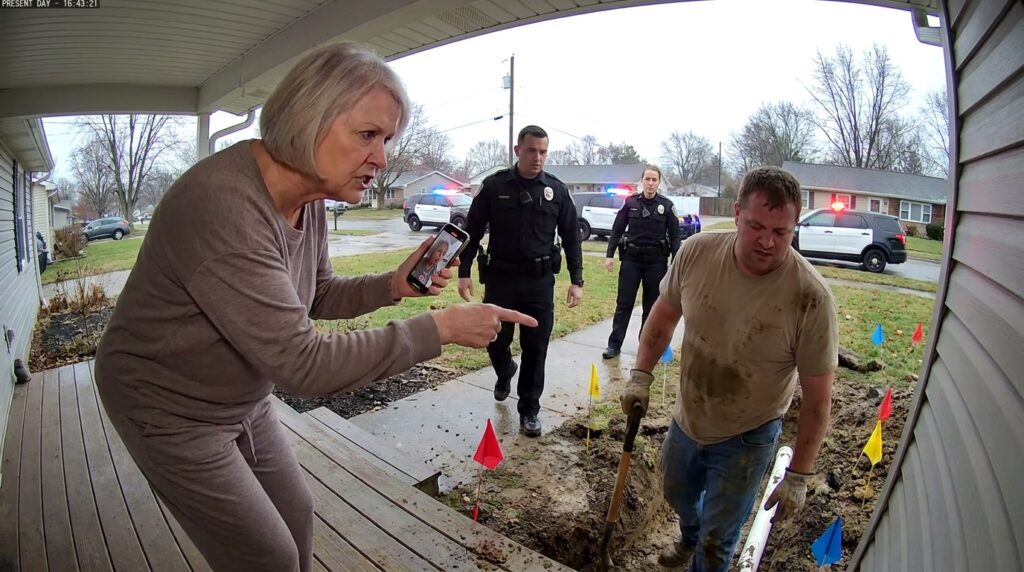
CHAPTER 1: THE COLD IRON RUN
The spade did not strike dirt first; it struck the calcified grease of an old residential curb line, the shock vibrating through the hickory handle and straight into the meat of his forearms. Miller didn’t curse. Cursing wasted the salt in his mouth, and the humidity at six in the morning was already thick enough to slick his collar before the sun cleared the roof eaves. He drove the iron point down again, using the heavy heel of his work boot to grind through three inches of compacted gray limestone fill.
The residential street was quiet, desaturated by the dawn, the lawns holding that peculiar chemical green sheen that looked clean from fifty feet but left a bitter, powdery residue on his knuckles if he touched a blade. To his left, the concrete walkway was clean—swept clean of every leaf and pebble by someone who treated dirt like a personal insult.
He leaned into the shovel, his stocky frame working by dead weight rather than muscle. Below the limestone, the earth turned the color of dried liver—dark, dense loam that had been buried under sod forty years ago when the development went up. The city map said the water main ran exactly eighteen inches from the curb edge, pinned inside a four-foot municipal easement that gave him the legal right to dig up any root, rock, or flower bed that stood in his way. But maps were drawn by men in air-conditioned rooms, and Miller had spent fifteen years learning that the ground never followed the ink.
He reached down, his leather work gloves caked in cold clay, and planted three pink plastic utility flags along the margin of the grass strip. They looked like little plastic teeth against the perfection of the sod.
A shadow broke the light across the trench.
It didn’t come from the sun. It came from the wide, covered porch three yards away. The front door hadn’t clicked—it had slid open with the soft, oiled friction of a house that cost more than Miller would clear in a decade. She didn’t walk down the steps so much as occupy them, her slim frame wrapped in a taupe lounge set that looked heavy, expensive, and dry.
“You’re two inches over the line,” she said. Her voice didn’t carry the raw gravel of a street argument; it had the cold, rhythmic precision of a formal deposition.
Miller kept his thumbs locked over the iron cap of his shovel. He didn’t look up immediately. He looked at her shoes first—clean, white sneakers without a single grain of dust on the rubber trim. “Morning, ma’am. City water repair. The main valve under this section has a hairline split.”
“I don’t care about the valve,” she said, her phone already held at chest height, the lens dark and steady, aimed directly at the mud on his t-shirt. “I care about the plat map filed with the county clerk in ninety-two. The public right-of-way ends at the concrete curb line. This grass is deeded. You’re trespassing on private improvements.”
Miller wiped his brow with the back of his sleeve, leaving a rust-colored smear across his forehead. He could see his own reflection in her dark sunglasses—a stocky shape trapped in a square hole, holding a piece of blunt iron. In the lower corner of the porch ceiling, the small black dome of her doorbell camera hummed, its tiny blue ledger light blinking once every three seconds. There was a third shape in the dirt beside his boot—a thin, black wire wrapped in frayed canvas insulation that didn’t belong to the city water system at all.