
CHAPTER 3: THE STRATAGEM OF THE BARRICADE
The metallic scrape of a heavy chassis engaging its transmission cut through the dry hum of the plaza’s air conditioning grid. Eleanor Crane didn’t walk back to her vehicle; she moved with a calculated, rhythmic stride that signaled a long-established habit of commanding open ground. The white luxury SUV didn’t just back out. The massive tires crunched over a stray strip of plastic landscape edging, spraying a fine spray of red mulch across the pristine stamped concrete of the shopping corridor walkway.
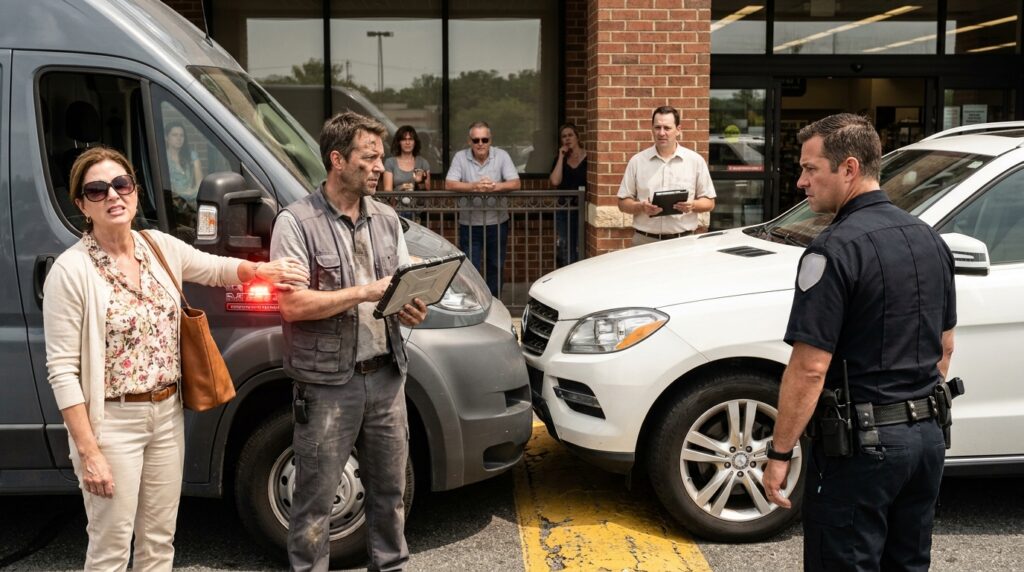
Marcus stayed in his seat, his palms flat against the smooth silver casing of the rugged tablet. Through the salt-crusted sweep of the windshield, he watched the white hood swing across his line of sight. The vehicle didn’t clear the lane. With a heavy, deliberate turn of the wheel, Eleanor guided the three-ton machine directly perpendicular to his front grill, the polished chrome of her passenger door stopping less than two inches from the van’s stamped steel bumper. She put the vehicle in park, the heavy hydraulic sigh of the automatic suspension lowering the frame until it formed a solid, unbroken wall of steel between Marcus and the exit lane.
The physical trap was set, completely sealing the gray utility transport against the twelve-inch concrete lip of the storefront curb.
Marcus tapped the tablet screen, the cold glass recording the tiny oil patterns from his thumbs as he pulled up the active internal climate logs of the hold. The display flickered once, showing a steady climb: 39.1 degrees. The small red notification light at the top of the bezel began its slow, systematic pulsing. In twenty minutes, the digital ledger would send an automated failure report to the central terminal in the city, freezing his independent logistics license before he could unlatch the rear partition doors.
He reached down, his fingers gripping the heavy handle of the driver’s side door. The latch popped with a dry, metallic thud that sounded unnaturally loud in the narrow corridor between the vehicles. As his work boots hit the concrete, the grit of the unwashed pavement ground beneath his heels. The heat out here was immediate, a physical weight that pressed against his chest, smelling of hot asphalt oil and the bitter, chemical undertone of the luxury SUV’s low-idle exhaust system.
“Ma’am,” Marcus said, walking toward the driver’s side window of the SUV. He didn’t raise his voice; he kept it anchored in that flat, unyielding register he used when logging cargo damages at major freight yards. “You’ve blocked an active commercial transport route. If the local fire marshal rounds the north curve of this pavilion, the fine for obstructing a designated storefront access lane begins at five hundred dollars for the registered owner. You’re sitting right over the main secondary shut-off valve for the pharmacy line.”
The dark tinted glass of the SUV slid down halfway, a cold pocket of climate-controlled air spilling out into the sweltering heat of the lot. Eleanor didn’t remove her sunglasses. She kept her fingers draped lazily over the leather-wrapped steering wheel, her heavy gold rings catching the harsh glare of the midday sun. Marcus’s eyes caught a minor detail near the bottom corner of her windshield—two separate, distinct registration decals from the township building department, both marked with a crossed-out zoning code and a hand-written clearance number that matched the prefix on his restricted manifest notes. It wasn’t just a shopping trip. The vehicle was marked with the internal administrative stamps of a property development firm that had been quietly petitioning the county to reclassify the entire storefront lane for high-density retail parking.
“The fire marshal doesn’t take instructions from independent logistics labor, Mr. Wright,” Eleanor said, her voice dropping behind the low rattle of her vehicle’s eight-cylinder engine. She gestured toward the glass double doors of the pharmacy, where a small white notice was taped just behind the display window. “This development sector has a strict aesthetic covenant. If you check your digital logs carefully, you’ll find that the loading allowance for third-party logistics services was suspended under the temporary infrastructure review three weeks ago. You shouldn’t even have the master access code for the rear security gates.”
“The master access code is issued by the state medical distribution network, not the local merchant board,” Marcus said, leaning slightly closer until his reflection in her dark lenses showed the tight, gray utility vest pulled taut across his shoulders. He held the tablet screen flat against her window sill, forcing her to look down at the pulsing green checkmark. “The temporary review you’re talking about applies to general dry-goods freight. This manifest is classified under medical priority tier-two. If you check that secondary sticker on your own glass, you’ll see the municipal reference code matches the exclusion clause on this screen.”
The lines around Eleanor’s mouth hardened, a quick, structural shift in her composure that lasted only a fraction of a second before she rolled the tinted glass back to the seal, completely cutting off the connection.
Marcus stood on the hot asphalt, the steady whine of his van’s straining refrigeration compressor vibrating through the soles of his boots. He looked down the long, empty corridor of the plaza walkway. From the far end of the north plaza, the distinct, low electric hum of a security cart signaled that the balance of the lane was about to change. Officer Davies was already coming around the brick perimeter, his yellow light bars flashing silently against the clean glass fronts of the upscale boutiques.








