
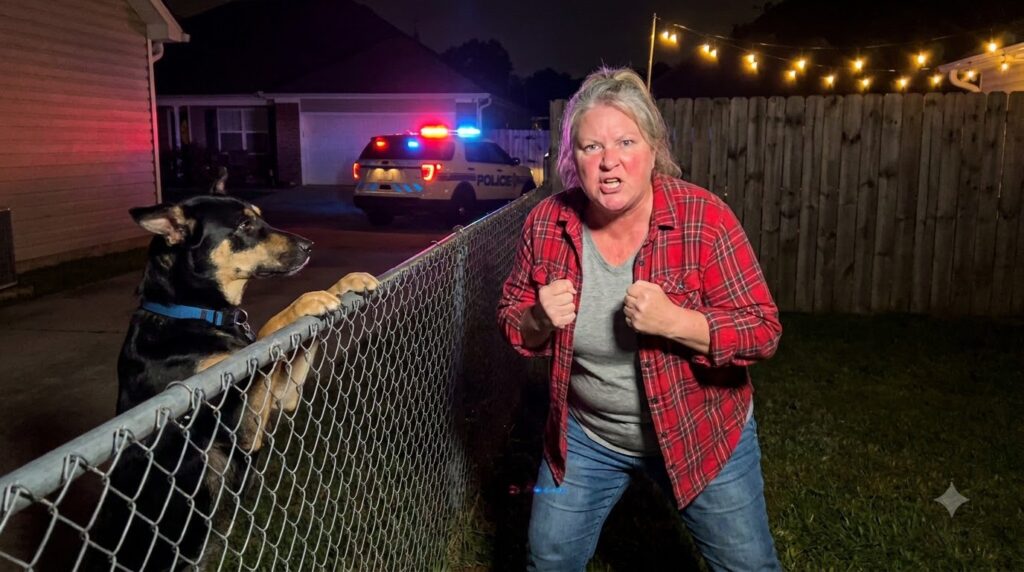
CHAPTER 5: THE DEED IN THE DUST
The heavy kitchen screen door slammed shut behind me, the spring whining as it pulled the frame flush against the oak casing. Outside, Brenda was still screaming, her voice muffled through the glass panes as she cursed into the humid darkness, her broom handle clattering rhythmically against the corrugated tin of her shed.
I didn’t turn on the overhead lights. I walked straight to the kitchen table, where the yellow glow from the stove hood illuminated the cold Formica countertop. My fingers were stiff, dark with iron rust and green verdigris from the Sears tackle box lid.
I pulled the folded parchment from inside my canvas jacket. The paper was heavy, brittle at the creases, smelling faintly of dried mildew and old motor oil. As I flattened it against the Formica, the yellowed edges crackled under my thumbs.
It wasn’t a standard land record. It was a hand-drawn 1984 property agreement executed on county clerk letterhead, bearing the faded red wax seal of the county recorder in the bottom left corner.
In sharp, black fountain-pen ink, the top line read: INFORMAL BOUNDARY EASEMENT & SETTLEMENT AGREEMENT — AUGUST 12, 1984.
My eyes scanned the cursive script, tracing the faded blue fountain lines drawn across a crude sketch of the lot lines. There was my grandfather’s signature—Arthur R. Hayes—written in a heavy, forward-leaning slant. Right beneath it, in a small, shaky hand, was Brenda’s mother’s name: Evelyn Miller.
My heart hammered against my ribs as I read the central paragraph:
“In consideration of three hundred dollars cash and mutual boundary maintenance, Arthur R. Hayes hereby grants Evelyn Miller an unrecorded, perpetual three-foot land allowance along the southern property boundary, measuring from the eastern oak post to the drainage ditch, for the placement of garden beds and a private drainage line.”
I stared at the paper. The breath locked in my throat.
The decoy secret hit me like a physical blow to the sternum. The three-foot strip wasn’t just Brenda’s unhinged entitlement. It wasn’t an imaginary line born from suburban arrogance or neighborhood malice.
There was a real document. An actual, signed 1984 agreement between my grandfather and her mother, tucked away in my grandfather’s own tackle box for forty years. Brenda had been right about the history—her mother had bought that land allowance.
The confidence I had felt while holding the smartphone camera at the fence line suddenly felt brittle, hollowed out by forty years of forgotten family history. If Brenda produced this paper in civil court, my new county survey wouldn’t just be an open-and-shut case of property damage; it would spark a messy, prolonged legal battle over implied easements, unrecorded deeds, and forty years of continuous open possession.
Outside, a heavy boot struck the wooden steps of my back porch.
Buster let out a low, vibration-heavy growl from the hallway, his tail stiffening against the doorframe.
Through the small window in the back door, I saw the dark, square outline of Brenda’s red plaid shirt. She wasn’t holding the broom anymore. In her right hand, she held a long iron crowbar, its curved foot gleaming under my patio floodlight.
She didn’t knock. She leaned her flushed, sweat-slicked forehead directly against the glass, her dark eyes locking onto the yellowed paper lying open on my kitchen counter.
“You took it,” she hissed, her voice rattling the glass pane. “You went over my fence and took my mother’s box.”
I kept my hand flat on the parchment, my thumb covering my grandfather’s signature. “This box belonged to my grandfather, Brenda. And this paper isn’t recorded at the county courthouse.”
“It doesn’t have to be recorded!” she screamed, her breath fogging the windowpane in small, jagged bursts. “He took three hundred dollars from my mother when she was dying of cancer! He signed that line! You put those police on me tonight, but you’re the thief, Arthur! You’re the one stepping on a dead woman’s dirt!”
She raised the crowbar three inches, the iron tip tapping against the glass—a cold, metallic clink that sounded like a chisel hitting slate.
“Give it back,” she whispered, her voice dropping into a desperate, jagged rasp. “Give me the paper, or I swear to God I’ll smash every lens on your garage before the sun comes up.”
I looked down at the hand-drawn map on the counter, then back at her wild, desperate eyes through the glass. The victory from twenty minutes ago—the deputy’s yellow ticket, the neighbor porch witnesses, the recorded video—was crumbling under the weight of this rusted parchment. But as I shifted the paper under the light, my eye caught a small, stamped red note squeezed into the bottom margin beneath the wax seal, something I had missed in the initial shock.
It was a single line of typewriter print added two weeks after the original signatures: SUBJECT TO COUNTY ROAD RIGHT-OF-WAY DEDICATION & DRAINAGE OVERLAP — ORDINANCE 402.
I looked up at Brenda, the crowbar still poised against my back door, and realized that neither of us actually understood what had happened to this three-foot strip forty years ago.








