
CHAPTER 2: SHADOW ON THE ASPHALT
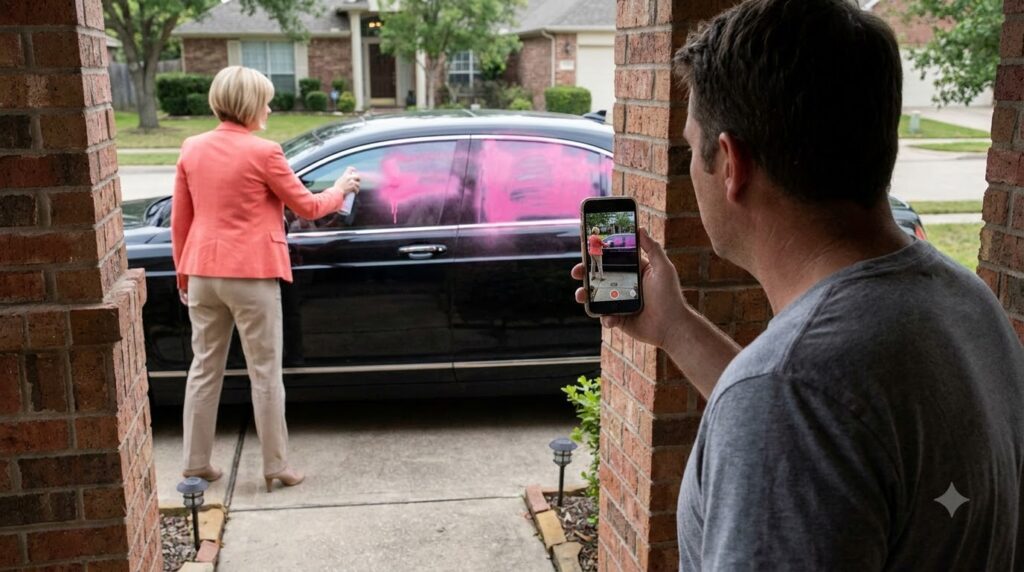
“The fine isn’t yours to collect, Evelyn,” I said. My voice barely carried past the hood of the sedan, but it didn’t need to. The phone remained wedged between my thumb and forefinger, perfectly steady, framing the coral edge of her sleeve against the wet pink ruin on my glass. “And the board didn’t sign that paper.”
She took one half-step back, her nude heel grinding a fleck of loose gravel into the driveway expansion joint. Her eyes darted toward the street, checking the empty asphalt before snapping back to the lens. The composure she wore like armor—the sprayed bob, the pearl studs, the neat, tailored lines of her blazer—cracked just enough to show the twitch in her jaw.
“I have served on the architectural review committee for nine years,” she said, her chest heaving behind the cream blouse. “This neighborhood operates on standards, Arthur. You park a black commercial-looking vehicle across the easement line, you drag down the appraisal value of every parcel on this block. I am executing an abatement order.”
“You’re spraying industrial aerosol on private property,” I replied. “And that blue stamp on your folder was retired by the township three years ago.”
Her fingers twitched around the manila folder. I saw the edge of the paper inside—it wasn’t official bond stock. It was standard twenty-pound printer paper, slightly warped along the margin where cheap inkjet ink had dried too fast. The logo at the top was a low-resolution scan of the old suburban covenant crest, the edges pixelated and bleeding gray into the white margin.
She had spent six months dropping those sheets into my locked mailbox. First came the friendly reminders on green paper, politely requesting that I park my work vehicle inside the closed garage. Then came the yellow warnings, claiming daily fines of fifty dollars were accruing against my parcel deed. Then came the white typed sheets with the blue seal, alleging an imminent tow order authorized by the board.
I had taken every single one of them down to the management office on Oakridge Drive. The property manager, a tired guy named Miller who smelled like stale filter coffee and burnt dust, hadn’t even looked up from his monitor when I slid the second notice across his desk. We don’t issue pink slips for driveway overhangs, Arthur, he had muttered, stamping a blue FILED mark across the corner without looking. Evelyn’s been writing those on her home computer since her husband passed. Just throw ’em in the recycle bin.
I hadn’t thrown them away. They were stacked in a neat, chronological pile inside the glove box of the black sedan—seven months of documented paper trail waiting for the moment she moved from paper to paint.
“Give me the phone,” Evelyn repeated, her tone dropping the official cadence entirely. It was low now, raspy, stripped of the rehearsed HOA authority. She reached out with her left hand, her long, manicured nails hovering inches from the screen. “You don’t understand how this looks. You don’t live here the way I live here.”
“Don’t touch the phone, Evelyn.”
“I built this block!” Her voice cracked, a sharp, ugly sound that echoed off the brick facade of my porch. “When my late husband and I broke ground in ninety-four, there was nothing here but clay and pine trees. We set the rules. We kept the trailers out. We kept the cheap work trucks off the street. You buy in three years ago, you bring your black cars and your late hours, and you think you can just ignore the covenants?”
“The covenants allow two personal vehicles on the concrete apron,” I said. “Section 4, Paragraph B. I read them before I signed the deed.”
“The apron ends at the expansion seam!” She pointed the pink aerosol can toward the ground, the tip glistening with fresh pigment. “Two inches of your rear tire are sitting over the easement line. That makes it common land. That makes it mine to regulate!”
The absurdity of it hung in the hot air between us—a sixty-year-old woman in a three-hundred-dollar blazer standing on sun-caked concrete, arguing over two inches of black rubber while aerosol fumes settled into the hedge row.
Down the block, a garage door hummed as it began to roll upward on its tracks. The metallic rattle cut through the humid stillness of the street. Evelyn heard it too. Her head snapped toward the noise, her eyes widening as she recognized the gray SUV idling in the driveway three houses down.
“Put the phone away, Arthur,” she whispered, her hands dropping to her sides, though the spray can remained gripped in her right fist like a weapon she had forgotten how to holster. “We can talk about the repair. I know a guy in detailing down on Highway 9. He owes me a favor. He’ll take the paint off before it cures.”
“It’s oil-based enamel, Evelyn,” I said, looking down at the heavy, chemical sheen pooling along the wiper blades. “It’s already curing in the sun.”
I didn’t lower the phone. I shifted my weight back, feeling the solid, unyielding heat of the red-brick column behind my shoulder. The red recording timer on the screen crossed the three-minute mark.
“You’re making a mistake,” she said, her voice turning cold again, the desperate edge hardening back into the rigid malice that had governed the neighborhood for thirty years. “The board will back me. They always back me.”
“Then let’s wait for the deputy,” I said, hitting the speaker icon on the screen as the dispatch operator’s voice crackled through the small phone speaker into the quiet driveway.








