
CHAPTER 8: RESTORATION OF THE THRESHOLD
The heavy rubber of the work gloves groaned as Marcus pulled them tight over his knuckles. The street had fallen into a deep, cool quiet, the exhaust fumes of the patrol cruiser dissolving into the evening dampness. Where Brenda’s black bin had rested, two crushed plastic cups lay flattened in the gravel like discarded skin.
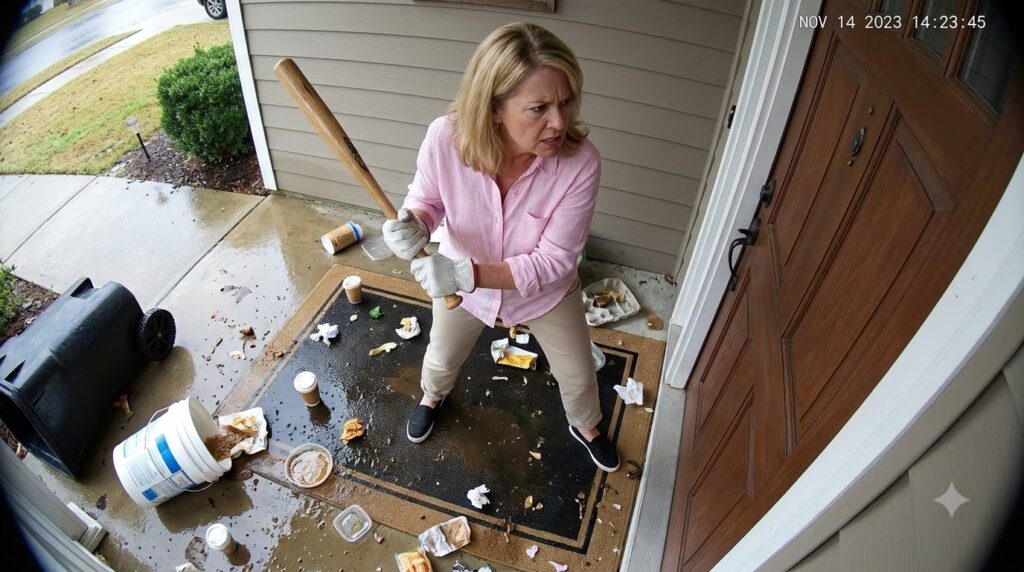
Marcus stepped up to the porch step. The dark, silt-heavy mud she had poured from the utility bucket had begun to set near the edges, forming a tacky, dark skin over the tan concrete.
He walked around the side of the house, uncoiling thirty feet of heavy black garden hose from its iron reel. The brass nozzle clinked sharply against the gravel as he dragged it around the corner, the sound metallic and grounding against the silence of the cul-de-sac. He turned the spigot valve three full rotations. Water surged through the rubber line with a firm, rigid pressure that thrummed against his palm.
Standing at the base of the steps, Marcus opened the nozzle. A high-pressure fan of cold water slammed into the porch floor, tearing through the dried mud and sweeping the scattered paper scraps off the threshold. The brown sludge liquefied instantly, churning into a dark, foaming current that ran down the concrete risers, through the dirt trench at the edge of the lawn, and out toward the street gutter where the municipal storm drain sat waiting.
He picked up a stiff-bristled deck broom, its worn oak handle smooth from years of season-cleaning. Methodically, he worked the bristles into the corners of the doorframe, scrubbing away the dark residue Brenda’s boots had left behind.
With every pass of the broom, the physical evidence of the siege washed away. The wet coffee grounds, the shredded junk mail, the sour kitchen waste—all of it yielded to the friction of stiff bristles and cold water. Beneath the layer of filth, the tan concrete emerged clean and unmarked, its surface rough-textured and solid beneath his work boots.
At the lowest riser, the cold spray cleared a pocket of heavy silt from the corner where the wood met the foundation. The stream of water washed over the small, disc-shaped piece of metal nailed flush into the pine. The old zinc surveyor’s tag glinted bright gray beneath the porch light, its four stamped registry digits completely clear of mud. Marcus brought the hose nozzle closer, flushing out the tight seam around the nail head until the zinc stood bare against the wood.
It wasn’t a boundary built on shouting or forty-year-old indigo drafts. It was a line anchored in zinc, concrete, and county ink.
He turned off the spigot, the sudden silence falling heavy and clean across the yard. He rolled the black hose back onto its reel, methodically wiping the brass nozzle dry before hanging it on the iron bracket.
Returning to the porch, he picked up the blue carbon copy of the citation Deputy Vance had left on the console. He brought it inside, laying it flat on the entryway table right next to the laminated surveyor’s map and the smartphone containing the raw, unedited 4K video file. The paper, the digital record, and the physical land were aligned—a seamless, indisputable record of title.
Marcus stepped onto the porch one last time. He grabbed the handle of his heavy oak front door, pulling it shut. The brass latch engaged with a sharp, deep click that seated the wood firmly into the weatherstripping.
Inside the quiet hallway, he turned the deadbolt. The cold brass cylinder slid into the strike plate, locking the frame tight against the night. He didn’t look back at the monitor. The line had been drawn, the record was set, and the boundary was entirely his own.








