
CHAPTER 6: THE EXTENDED TITLE
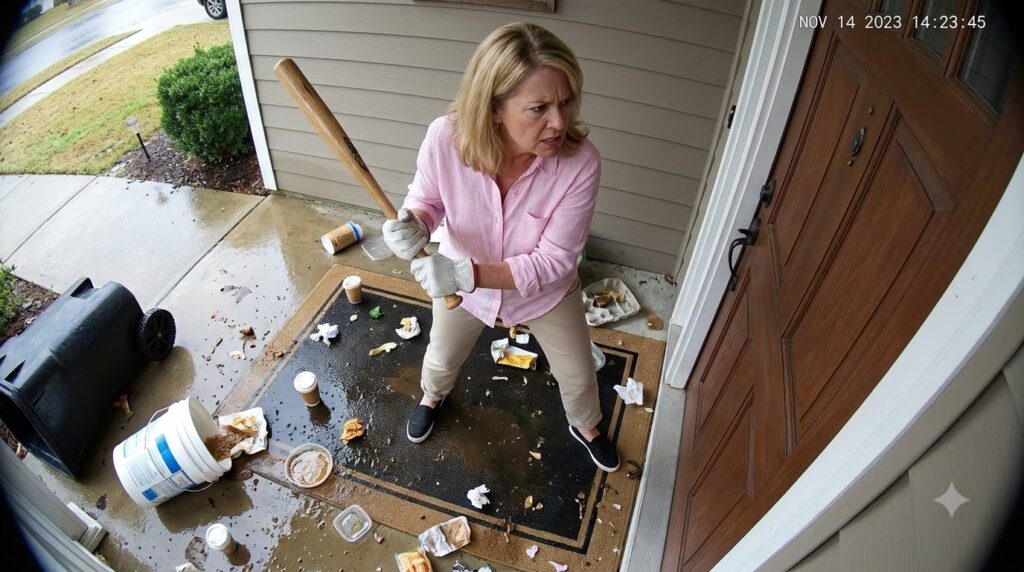
The rasp in Brenda’s voice lingered over the mud-slicked porch, competing with the idle chug of Deputy Vance’s cruiser. Vance pulled Brenda’s wrist back with a firm, practiced twist, the steel handcuff clicking into place around her gloved wrist with a sharp, double-notched clack.
“Save it for the magistrate, ma’am,” Vance said, his voice dropping into a steady, flat tone. He led her down the concrete steps, her boots dragging through the dark sludge she’d poured across the doorway.
Marcus stayed on the step, his work boots planted right at the dry threshold. He didn’t watch her stumble toward the back door of the patrol car. Instead, his eyes dropped to the laminated plat map he still held in his left hand. The heavy plastic sheet was cool against his fingers, but the words she’d whispered hit an old mental gear. Ninety-nine.
He turned the map over. Stapled to the stiff cardboard backing board was a secondary municipal attachment—an addendum page he’d retrieved from the county archives during his closing five years back. His thumb swept across the clear plastic overlay, brushing away a stray droplet of dirty water.
There, tucked under a faint red line marked MUNICIPAL INFRASTRUCTURE RE-ROUTE — ORD. 99-142, was the missing piece of geometry Brenda had spent twenty-five years misreading.
In 1999, the city hadn’t expanded the easement. They’d done the exact opposite. The municipal public works department had executed a complete re-route of the main storm culvert, shifting the drainage line thirty feet east under the primary road bed. The old secondary pipe running beneath Marcus’s porch steps hadn’t just been abandoned—the city council had formally vacated the utility easement in its entirety, releasing the land back to the fee-simple title of the lot.
The 1984 draft Brenda held wasn’t just a tentative sketch; it was a ghost. The 1999 ordinance had legally extinguished the encumbrance fifteen years before Marcus ever signed his mortgage papers.
“Deputy,” Marcus called out, his voice cutting across the narrow yard just as Vance reached the rear driver-side door of the cruiser.
Vance paused, his hand on the door handle, keeping Brenda pinned against the side panel. “Mr. Vance? What is it?”
Marcus walked down the two steps, his boots grinding against the grit on the bottom riser. He held out the backing board of the survey, pointing directly to the stamped ordinance number on the archived county sheet.
“She’s relying on a pipe that was legally decommissioned in 1999,” Marcus said as Vance leaned over to read the text under his flashlight. “Ordinance 99-142. The city formally extinguished the easement twenty-seven years ago and surrendered all municipal right-of-way back to this parcel. There is no shared pipe. There is no utility corridor. The land beneath this step is completely unencumbered private property.”
Vance’s flashlight beam lingered on the embossed county registrar stamp adjacent to the ordinance line. He let out a low breath that fogged slightly in the cooling evening air. “So her draft wasn’t just pending approval back then. It was wiped off the city books entirely.”
“It was dead before I bought the house,” Marcus said. “And she knew the city moved the main line to the street.”
From inside the open door frame of the cruiser, Brenda’s jaw worked silently. The pink collar of her shirt was crooked, her hair damp with sweat and drizzle, her hands bound behind her back. The neighbor watching from the curb stepped closer, taking in the full sight of the municipal paper held side-by-side with the sheriff’s report.
Vance straightened up, his hand settling on the door frame. “Dispatch,” he spoke into his shoulder microphone, his tone final and unyielding. “Update incident report for 414 Elm. Property title verified unencumbered. Proceeding with transport for criminal mischief and third-degree criminal trespass.”
He guided Brenda into the back seat and shut the door with a heavy, solid thud that echoed off the damp concrete of the driveway. The red and blue flashes reflected off the wet windows of the house across the street, illuminating the clear, undisturbed line where Marcus’s property met the road.
Marcus turned and walked back up his steps, leaving the deputy to finalize his notes at the curb. The boundary was marked, recorded, and sealed.








