CHAPTER 5: THE REMOVAL OF THE LEDGER
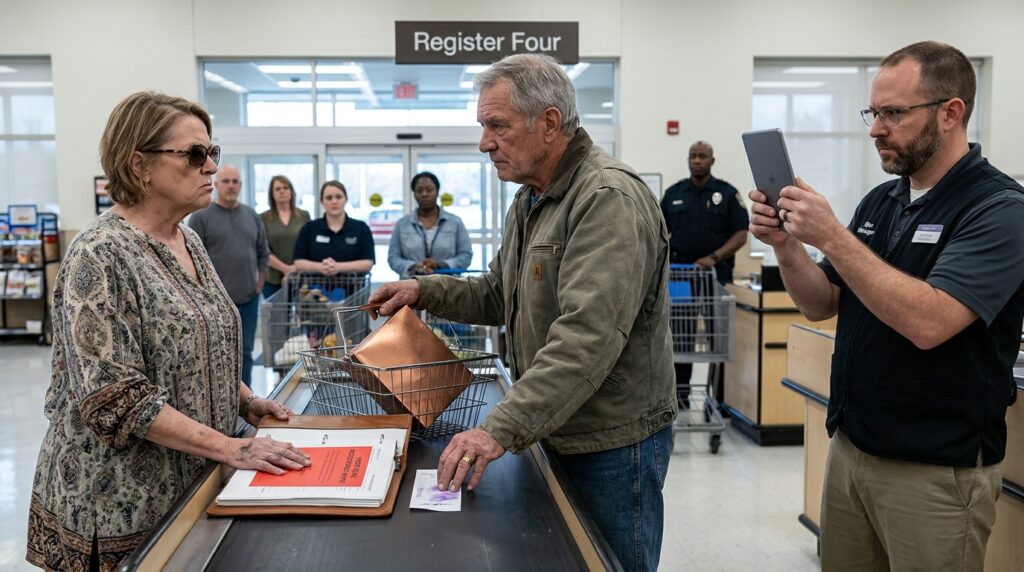
“Let go of the fiber tape, Mrs. Crawford,” Marcus Vance said, his voice dropping into the small space between their hands with the thin, metallic scrape of an old blade. He didn’t touch her arm. He didn’t reach across the dividing rail. He simply laid the flat edge of his gray digital tablet across her fingers, the hard plastic casing pressing down against her rings until the physical pressure forced her grip to slip from the rough cardboard box.
The air in Lane Four was completely static now. The rhythmic beeping of the neighboring scanners had dropped away as three separate operators turned their stools around to watch the center corridor. Arthur stood perfectly straight, his work boots immovable on the unsealed concrete, his left thumb still hooked into the tarnished brass ring. The metal felt warm now, heated by the steady, unhurried pulse of his own blood. He looked past Beatrice’s shoulder, his gaze fixing on the large digital terminal clock. It read 11:46. Fourteen minutes had been cut from his ledger, but the margins were still wide enough if the traffic on the lower county road held clear.
Beatrice drew her hand back slowly, her fingers curling into her palm as if she could hide the grey smudges left by the warehouse dust. She yanked her leather binder against her chest, her oversized tunic catching on the metal corner of the conveyor frame with a small, dry rip that sounded like old canvas tearing. “This isn’t an isolated procurement, Marcus,” she whispered, her lips pale against the dark plastic frames of her glasses. “The valley board will have the state injunction signed before the bank doors open on Monday. If you let this man walk out of the store with a documented structural asset, you’re exposing this franchise to a formal conversion claim.”
“The state filed the collection order forty-eight hours ago, Mrs. Crawford,” Marcus said, his finger making a single, definitive stroke across the glass screen. The horizontal green lines of the ledger system shifted, turning into a stark column of black zeroes. “The conversion claim is already void. The terminal has dropped the registration prefix completely. The nine-zero series is off our books, cleared under the parish tax voucher. The store doesn’t have a variance to settle because there is no longer a balance to track.”
He turned to the checkout clerk, his head moving in a short, precise nod. “Scan the rosemary bags. Log the cheddar blocks under the standard parish account. Void the lane code.”
The clerk’s fingers moved instantly, the keys clicking with the fast, dry impact of a typewriter. The red laser window flashed three times, throwing thin lines of crimson light across the faded canvas of Arthur’s jacket before the terminal gave a short, high-pitched chime that signaled the final balance execution.
Beatrice looked from the manager’s tablet to the small blue screen of the register terminal. The transition was absolute. Her authority, constructed from years of board logic, developmental easements, and prestige-coded registries, had been systematically reduced to a series of closed entries on a state liquidation sheet. She took a half-step backward, her sandals scraping against a ridge of dry floor grease, her frame suddenly appearing smaller under the unyielding glare of the ceiling bulbs.
Behind her, the witness layer shifted with a dry rustle of clothing and moving carts. The man who had been holding his phone camera lowered the device slightly, his expression changing from curious voyeurism to a flat, heavy indifference. The crowd didn’t shout; they simply moved around her, their wheels squeaking on the concrete as they bypasses the wedge of her cart to find open lanes. The social isolation was instantaneous, a quiet quarantine executed by regular neighborhood shoppers who knew the difference between real labor and a paper-thin performance.
“Miller,” Marcus said, his hand returning the tablet to his hip holster with a sharp click of the strap. “Clear Mrs. Crawford’s cart from the conveyor path. Move it to the customer service hold bay until the trust representative arrives to review the personal items.”
“You can’t touch the foundation records,” Beatrice said, but her voice had lost its metric rhythm. It was light, dry, drifting upward into the high steel rafters of the ceiling like dust from a dry field. She didn’t look back at the register as the guard reached for her handles. She turned sharply, her binder held like an iron shield against her ribs, and walked toward the heavy glass front doors. The hazard lights of the silver sedan outside continued to pulse against the grey asphalt, but the vehicle looked hollow now, an empty asset waiting for a bank driver to claim the keys.
Arthur didn’t watch her pass the threshold. He reached into his jacket, pulled out three clean dollar bills to cover the variance on the fresh greens, and laid them on the zinc counter next to the purple-smudged receipt. The paper money was dry, solid, real.
“You’re clear, Artie,” the register clerk said, sliding the heavy cardboard box into a plain brown paper sack that smelled of starch and clean timber. “The ledger is locked.”
Arthur lifted the sack, the weight settling firmly into his shoulders as he turned his cart toward the exit glass. The metal casters gave one last, low shriek against the concrete, then went silent as they hit the smooth rubber mat of the vestibule. Outside, the air was cold and clean, smelling of dry earth and coming rain. The clock was still running, but the promise was secure, its weight carried forward by a man who knew exactly what his work was worth.