CHAPTER 2: THE PAPER CONDUIT
“The cage stays locked until the morning transfer sheet clears, Artie,” the clerk muttered, his thumb tracing the jagged edge of a zinc counter strip that had peeled away from the particle board beneath. He didn’t look at Arthur’s face. He looked at the heavy fiber tape binding the corners of the copper saucier box, his eyes narrow beneath a low-hanging fluorescent tube that flickered with a faint, metallic click every seven seconds. The air in this rear corridor was colder than the floor, heavy with the smell of damp cardboard and the faint, acidic sting of old hydraulic fluid from the freight elevator down the hall.
Arthur didn’t pull his hands from the cart handle. The brass key ring wound around his thumb felt like a cold nail pressing into the skin, a steady reminder of the three miles remaining between this loading bay and the community kitchen ranges. “The invoice has the parish stamp,” Arthur said, his voice dropping into the narrow space between them like a heavy iron weight. “The terminal registered the transaction at 10:14. It’s out of your inventory.”
The clerk pulled a yellowed ledger toward himself, the spine cracking with the sound of dry pine breaking under a boot. He flipped through three pages of carbon receipts, his fingers stained a dark, permanent violet from the legacy ink pads used in the wholesale bay. He stopped at a line marked with a double purple star—the unique identifier for historical regional allocations. “The system says it’s out, yeah. But the physical manifest inside that box isn’t a floor slip. It’s got a cross-reference tag to the old district maintenance warehouse. The one they boarded up back in ’22.”
Arthur shifted his weight, his work boots grinding a small grain of dried salt into the concrete. He reached down, his fingers catching the rough texture of the fiber tape on the box. Through the cardboard, he could feel the solid, cool mass of the copper—not the thin, spun metal of modern retail stock, but the dense, unyielding metal of a tool built to survive thirty winters of constant scrape. “The district account was liquidated during the merger,” Arthur said quietly. “The assets were cleared for public purchase under the third clause of the county code. I signed the ledger myself.”
“Maybe you did,” the clerk said, his hand finally moving to the iron handle of the mesh gate. The metal shrieked as he pulled it back six inches, the latch catching on a rusted lip of steel. “But someone else was down here an hour ago looking for this exact serial number. Had a ledger with the country club seal on the cover. A brand new leather binder that smelled like a new car interior. She knew the item number down to the last decimal.”
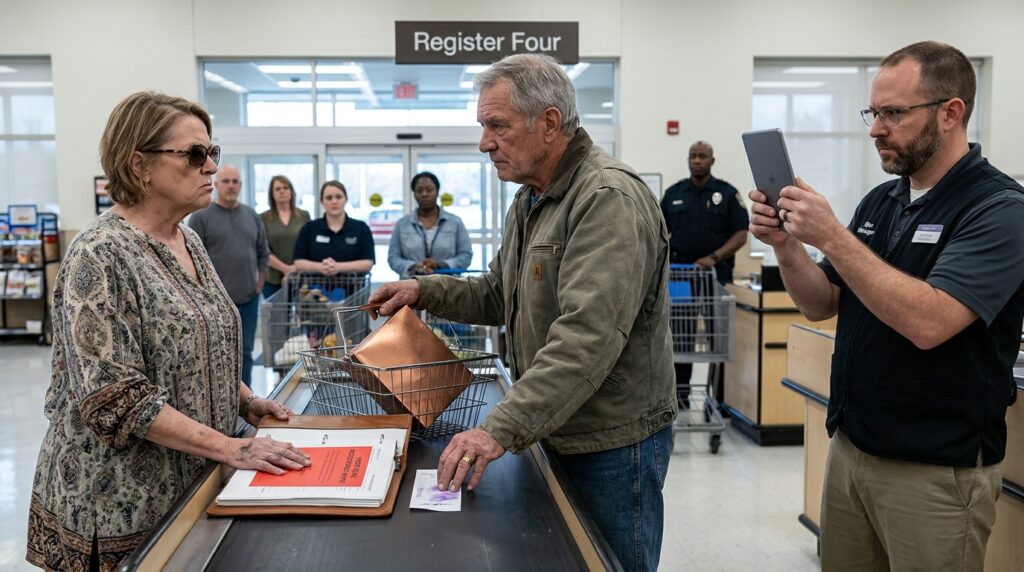
The image of Beatrice Crawford’s rigid frame, her oversized designer sunglasses catching the gray fluorescent light at the entrance of Lane Four, returned to Arthur with the cold force of an open freezer door. He remembered the claw-like grip she had kept on his canvas sack, the tight, furious line of her jaw when he refused to cede the square yard of concrete his cart occupied. She hadn’t been looking for a generic registry item; she had been tracking this specific tracking code.
“She didn’t have the blue slip,” Arthur stated. It wasn’t a question.
“No,” the clerk admitted, his fingers tapping a fast, rhythmic beat against the ledger’s cardboard cover. “She had a corporate authorization draft. Signed by the valley foundation treasurer, dated for next Tuesday. She wanted me to log it as a ‘pre-clearance withdrawal’ and move it to the side dock before the weekend count. I told her the system wouldn’t drop the lock without a live cash confirmation or a certified county voucher. Five minutes later, she was up at Register Four trying to cut the line before you could reach the front glass.”
Arthur reached into the pocket of his canvas jacket, his fingers brushing past three spare washers and a piece of dry chalk until they found the printed paper receipt. He pulled it out, smoothing the margins against the zinc surface of the counter. The purple smudge from the ink pad was still damp enough to leave a faint trace on his skin. When he held it under the flickering tube, he noticed the discrepancy—the terminal had printed a secondary sequence of seven digits beneath the standard transaction code. A secondary asset tracking number that wasn’t supposed to exist on a public retail document.
“Look at the bottom line, Artie,” the clerk whispered, his hand stopping its tapping. He leaned over the counter, the iron smell of his sweat mixing with the cold draft from the floor vents. “That’s a lien-hold flag. The store didn’t buy this from the distributor. It was seized during the district audit. The foundation didn’t put it on their registry because they bought it—they put it on there because they claimed it was already their property under an old development easement.”
A low rumble from the floorboards signaled the movement of the heavy freight elevator down the corridor. Arthur looked toward the turn in the hallway, where the high-gloss floor gave way to raw, unpainted plaster. The logic of Beatrice’s anger was shifting, its clean, entitled edges blurring into something heavier, something tied to the dry, financial rot that had been quietly eating through the town’s historic core since the mills went dark.
“The easement was dissolved when the county took the road,” Arthur said, his voice tightening as he tucked the receipt back into his jacket. He lifted the box from the zinc surface, the cardboard scraping against the metal with a sharp, dry rasp. He set it back into his metal basket, settling the canvas sack over the top until the brown corners were completely hidden under the weight of the cheese blocks and rosemary. “The parish owns the kitchen now. The pot stays in the cart.”
The clerk looked at the closed ledger, then back at the iron mesh gate. He didn’t lock it again. He just let the key ring drop onto the wood with a small, flat ping. “You’d better get to the front before the evening shift manager rotates the gate logs, Artie. If Crawford’s binder has the foundation seal on it, she isn’t going to stop at the register lane. She’s already waiting by the manager’s office near the glass doors.”
Arthur turned the cart, the heavy casters screaming as they took the friction of the turn on the unsealed floor, his eyes fixed on the long, dim corridor that led back to the light of the front registers.