CHAPTER 4: THE LOGISTICAL REVERSAL
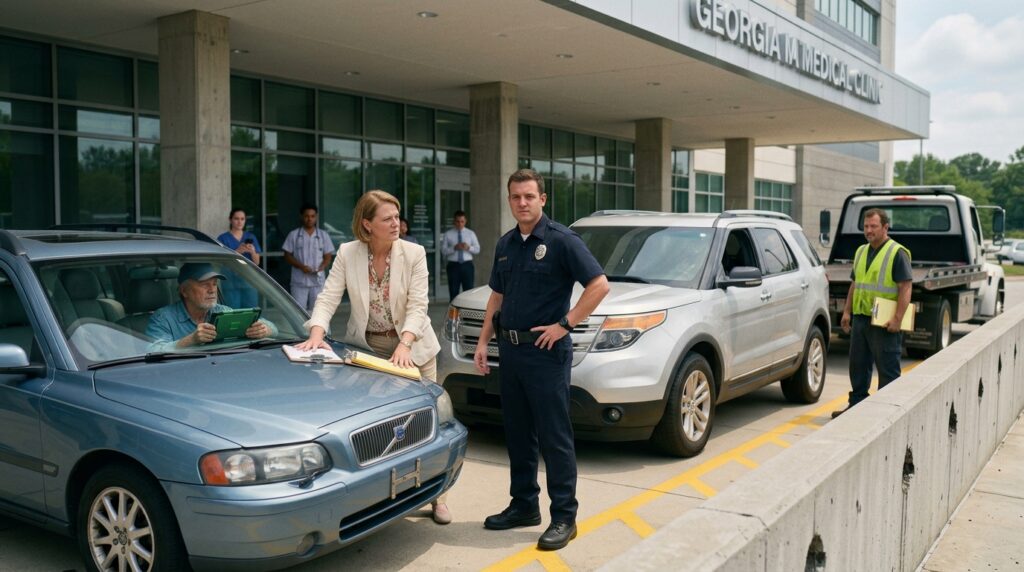
“I’m not pulling down your high-risk liabilities for a hundred-dollar street run, Victoria,” Pete said. He let go of the heavy iron hook, allowing it to drop against the courtyard pavement with a dull, hollow clunk that sent up a tiny puff of pulverized stone dust. He spat into the dry heat, wiping his greasy palms on his neon safety vest. “The old man’s rig is tagged into a federal accessibility manifest. My commercial insurance company clears out the second my lift-arms engage an active medical line. You didn’t mention this was a clinical pickup window when you rang the dispatch desk.”
Victoria’s sunglasses slipped a fraction of an inch down the bridge of her nose, her eyes flashing like dark flint behind the mirrored lenses. She didn’t look at Pete; her whole torso leaned toward Officer Vance, her tailored linen blazer wrinkling under the sudden, rigid strain of her posture. “Marcus, you are the authorized security coordinator for this perimeter. I have an explicit, silver-stamped emergency directive from the District Beautification Council right here stating that all non-commercial vehicles in this crescent are subject to immediate removal during promotional hours. Sign the private property removal log.”
She shoved the clipboard toward the guard’s chest, the metal corner of the clasp scraping against his silver badge.
Arthur reached across the front seat, his calloused thumb keeping a slow, rhythmic pulse against Clara’s knuckles. She had stopped wringing her dress, but her head was tilted back toward the roof liner, her lips moving in a silent, frantic count of the perforated ventilation holes. The cabin air was growing thin, choked by the concentrated diesel fumes drifting from the idling flatbed truck just three feet from their radiator grille.
“Officer Vance,” Arthur said, his voice flat as cold slate, cutting through Victoria’s rising cadence without a single ripple of heat. “Before you set your ink to that page, take a look at the lower margin of her authorization packet. The third sheet down is a duplicate zoning draft for the proposed west-wing conversion. It isn’t an approved city council ordinance; it’s an internal architectural plan dated six months from now.”
Vance blinked, the sweat dripping from his temple onto his blue collar as he reached out and took the clipboard from Victoria’s hand before she could yank it back. His thumbs fumbled with the clip, flipping past the silver embossed header to the raw, yellow legal stock hidden beneath.
Arthur had caught the color difference in his side mirror two minutes ago—the exact desaturated tint of unfiled corporate layout sheets used by commercial redevelopers when they mapped structural boundaries before a public clearing notice was published. The sheets detailed the removal of all long-term diagnostic units, replacing them with private, high-end wellness suites. The altered drainage marks he had noticed earlier on the baseline wall weren’t a maintenance mistake; they were the first physical step of an unpermitted structural squeeze designed to flood out the clinic’s lower level and force a lease forfeiture under the guise of an aesthetic emergency.
“What is this, Mrs. Davenport?” Vance asked, his voice losing its professional deference as his finger tracked a red-lined boundary mark labeled Phase 2: Clinical Egress Elimination. “This layout shows our emergency ambulance lane turned into a cobblestone entryway for the boutique next door. The city planning stamp on the footer is a dummy watermark.”
“It’s a district improvement blueprint under active executive review,” Victoria snapped, her manicured fingers curling into a fist against her linen skirt. “The infrastructure is being modernized to protect the real estate valuation of this entire corridor. We are replacing outdated, low-utility facilities with premium wellness investments. This station wagon is a deliberate obstruction to that progress.”
A delivery driver in a gray uniform stepped out from the clinic doors, a stack of oxygen crates balanced on his handtruck. He didn’t move toward the loading dock; he stayed by the glass entryway, his phone raised high, its lens tracking Victoria’s escalating shouting match. On the far side of the courtyard, two outpatient nurses paused under the concrete awning, their arms crossed as they watched the private security guard slowly shake his head.
“This layout hasn’t been cleared by the county engineering board,” Vance said, his face hardening as he looked from the dummy watermark to the blinking blue light of Arthur’s dual-lens dashcam. He turned toward the flatbed driver. “Pete, drop your rig lines. The white SUV is the vehicle violating the municipal fire-access code. It’s parked diagonally across a marked yellow clearance zone without an active medical manifest or an approved county transit waiver.”
Victoria took a step back, her high heel catching on the edge of a drainage grate, her body jerking as she scrambled to regain her footing on the hot asphalt. “Marcus, you don’t have the administrative authority to execute a corporate impound on my transport. I fund the security detail here.”
“The state accessibility transit act does, ma’am,” Arthur said from behind the wheel, his clock ticking over to 12:12 PM. He had exactly three minutes left on his logistical schedule, and every variable was sliding into its calculated slot. “Officer Vance is an agent of the campus, and once a fraudulent enforcement action is documented on a live risk-management broadcast, his failure to clear an actual obstruction makes the entire security company civilly liable for any medical distress caused to the passenger. He’s simply protecting his firm’s baseline.”
Pete laughed, a loud, raspy bark that smelled of tobacco and road dust. He swung himself back into the cab of his flatbed, the hydraulic controls groaning as he engaged the power take-off unit. The heavy steel lift-arms began to descend toward the front wheels of Victoria’s luxury SUV, the iron drop-links clinking against the pristine white bumper like a hammer on an anvil.
“You can’t do this!” Victoria screamed, her voice cracking as the first metal hook slipped under her front axle with a harsh, grating screech of steel on painted aluminum. She turned toward the delivery driver and the small crowd gathering along the sidewalk, her arms flailing as she tried to block the camera lenses. “Turn those off! This is private corporate business! This is an unpermitted setup!”
The delivery courier didn’t lower his hand; he adjusted his grip, his thumb sliding along the zoom track to capture the exact micro-second the heavy nylon winch straps tightened against her luxury chassis. A low, rolling murmur ran through the clinic patrons—a collective shift of weight as thirty people stepped forward into the sun to watch the self-appointed council leader lose her grip on the concrete.