
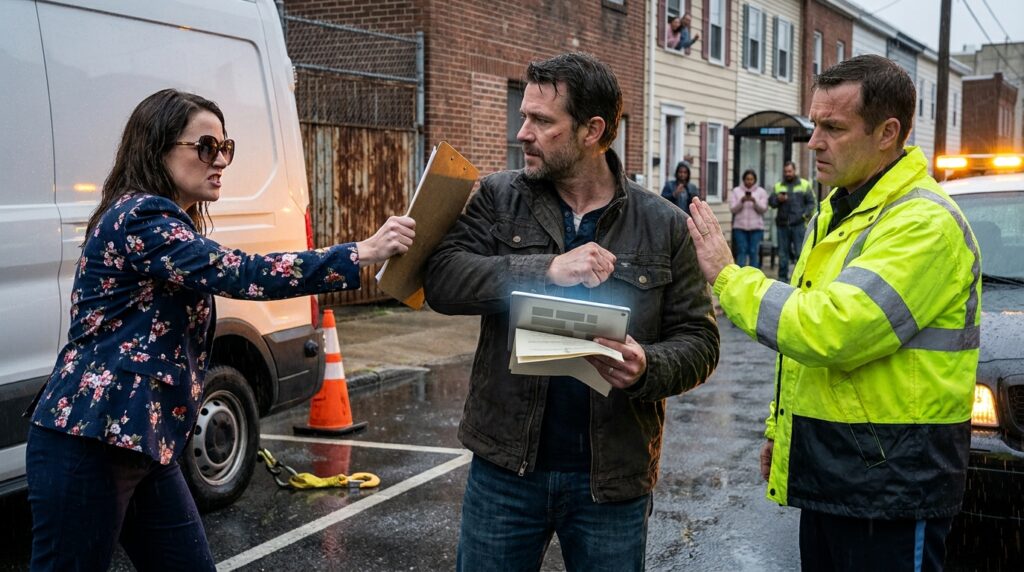
CHAPTER 3: The Tin Box Ledger
The latch of the cellar door gave a dry, splintering pop under Julian’s palm, releasing a puff of stagnant air that tasted of dry rot and lime. He didn’t flip the overhead toggle immediately. Instead, he let his eyes adjust to the pale amber beam of sunlight slanting down the wooden steps, illuminating the floating motes of dust that danced above the concrete floor like fine gray ash.
Every house along this stretch of Miller and Spruce carried the ghosts of its previous layout, but his grandfather’s basement was a literal archive of friction. Stacks of yellowed lumber leaned against the damp concrete foundation; spare PVC pipes and rusted conduit fittings rusted together in sagging metal bins. But against the far western wall, sitting directly beneath the low-slung joists that supported the front parlor, sat the old green metal strongbox with its brass clasp tarnished to the color of wet straw.
Julian descended the stairs, his boots thumping heavily against the warped pine treads. The cold seeped up through the soles of his shoes, biting into his heels. He knelt on the gritty concrete, pulling the box toward him. It weighed heavy—not with gold or jewels, but with the dead, immutable weight of paper.
He didn’t need a key; his grandfather had never trusted locks that could rust shut in a damp cellar. The latch lifted with a dull, heavy scrape.
Inside, organized by decade in faded manila folders marked with grease pencil, lay the history of a silent war. Julian flipped past the receipts for corrugated roofing and seed grain until his thumb caught on a heavy, linen-weave envelope bearing the embossed stamp of the county planning office, dated October 1998. He pulled the documents out, carrying them toward the shaft of amber light.
The top sheet was a hand-drawn blueprint overlaid with official municipal survey lines. The parcel boundaries weren’t the neat, square boxes the new townhouses occupied; they cut across the modern blacktop like an uneven jagged tooth, proving that the entire side turning lane and the lower half of the Maplewood visitors’ parking strip sat squarely on land deeded in perpetuity to the original corner farmstead. Beneath it lay a stack of certified property tax statements, paid in full every single year up through his grandfather’s final months, showing assessments on acreage that the modern neighborhood association maps conveniently labeled as “common community space.”
A folded letter slipped from the back of the folder, landing face-up on the concrete floor. The handwriting was sharp, jagged, and unmistakably his grandfather’s, written in the frantic weeks before his death.
They aren’t trying to fix the neighborhood, Julian, the ink read, the lines pressing so hard through the paper they felt embossed from the reverse side. They’re starving out the title holders one fine at a time so the county tax auction can reclassify the whole strip as blighted commercial re-entry. Don’t pay them. Don’t argue with the clipboard. Make them show the original survey.
Julian stared at the words until the ink blurred at the edges. The cellar door overhead gave a sudden, sharp rattle as a heavy delivery truck rumbled past on the asphalt outside, sending a cascade of loose mortar dust down from the floorboards above. He folded the letter carefully, slid it into his inner jacket pocket alongside Susan’s list of fake badge numbers, and stood up from the cold floor. The math was simple now. Brenda Gable wasn’t an overzealous neighbor; she was the collection arm of a paper machine designed to erase everything his family had built.








