
CHAPTER 2: THE BOUNDARY OF RUST
The gravel road didn’t so much end as it dissolved into the dry, chalky silt of the foothills. By the time the old truck rattled to a halt against the cattle guard, the smell of airport wax had been thoroughly scoured from the cab, replaced by the bitter, metallic tang of unwashed iron and alkaline dust. The old man sat with his hands resting on the cracked vinyl of the steering wheel, his eyes fixed on the three-strand barbed wire that marked his western boundary.
The wire was down. It wasn’t a clean snap born of a winter freeze or the heavy shoulder of a stray bull. The rusted galvanized steel had been snipped clean at the cedar post, the tension releasing so violently that the barbs had curled into the wild cheatgrass like dead scorpions. The tool that made the cut had left a bright, unoxidized scar on the wire’s core—a tiny, yellow-white gleam against the dull gray patina of sixty years of exposure.
Beside the gate, a white Ford cruiser sat idling, its exhaust pipe coughing thin, blue smoke into the pale sagebrush.
Deputy Vance didn’t get out of the car immediately. He waited until the old man killed the truck’s engine, letting the silence of the valley settle over them like gravel filling a trench. When Vance finally swung his leg out of the cruiser, his leather duty belt creaked with a heavy, ungreased stiffness. He didn’t look the old man in the eye. Instead, his gaze wandered along the dry creek bed, his thumbs hooked loosely into his vest panels, hovering two inches above his service weapon.
“You took a late flight,” Vance said. His voice lacked the natural weight of a lawman in his own territory; it was thin, dry as paper, catching on the wind before it could reach the truck’s fender.
The old man opened the door. The hinge gave a sharp, iron shriek that made the deputy’s shoulder twitch. The old man stepped down into the dust, his scuffed boots sinking an inch into the gray earth. He didn’t look at Vance’s badge or the low-slung holster. He looked at the ground between them, tracking the wide, flat tread marks of a commercial utility vehicle that had backed up to the fence line within the last six hours.
“Someone used a pair of twenty-four-inch bolts cutters,” the old man observed. He didn’t raise his voice. He walked to the severed wire, his black jacket rustling against the dry brush as he knelt. He touched the cut end with his thumb. The steel was cold, but the grease from the tool’s pivot pin was still wet enough to leave a dark smudge on his skin. “Not local work. Local man uses fencing pliers. Saves the wire.”
Vance shifted his weight, his boot heel grinding a piece of quartz into the grit. “Winds are picking up from the north. Could’ve been scavengers, Miller. Or kids looking for cedar posts to burn up by the reservoir.”
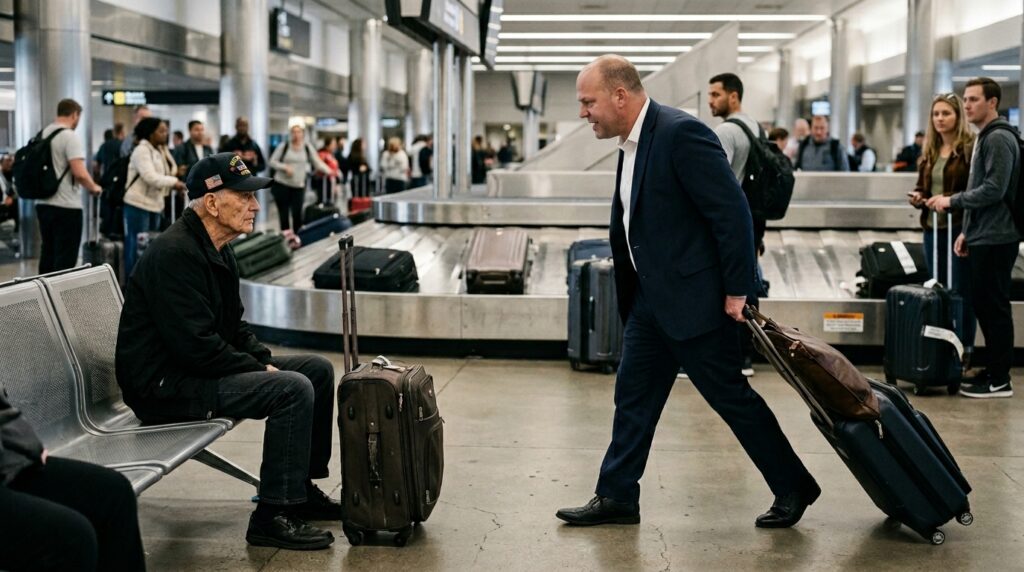
“Scavengers don’t drive eight-lug Michelins,” Miller said. He stood up, his knee joint giving that same low, mechanical click that had echoed in the terminal. He reached into his coat pocket, his fingers brushing against the stiff leather of the folder he had taken from the terminal floor. The blank death certificate remained tucked inside, a cold weight against his ribs. “And they don’t leave their high-beams on while they do it. There’s battery acid dripped right there by the corner post. They were jumping an auxiliary winch.”
Vance let his hands drop from his vest. He took a slow step forward, his shadow stretching long and distorted across the broken fence line. The desaturated orange of the setting sun hit the deputy’s face, revealing the deep, gray rings under his eyes—the kind that come from three days of sleeplessness and a telephone that wouldn’t stop ringing at three in the morning.
“Miller, you ought to consider that offer they made you last month,” Vance said, his voice dropping into a flat, transactional drone. “The county’s changing. The water tables are dropping out by the flats, and the commissioners are looking at the utility corridors. An old man alone out here… it’s a lot of acreage to fence by yourself. Things break down. The timber goes rotten. The wire rusts out. Sometimes it’s better to let the dirt go to people who have the grease to keep the machinery turning.”
Miller didn’t answer. He walked past the deputy toward the back of his truck, his fingers trailing along the rusted iron of the bed rail. He reached down and lifted a five-gallon jerrycan from the payload, the fuel inside sloshing with a heavy, rhythmic gurgle. The scent of gasoline cut through the dry smell of the sage, sharp and toxic.
“My father put these posts in,” Miller said, looking over the cab toward the low ridge where the soil turned to red clay and shale. “He used split juniper because the bugs won’t touch it and the rot takes fifty years to find the heart. The wire’s old, Vance. But the iron under the rust is still thick enough to hold.”
“The people in the suit cars don’t care about juniper, Miller,” Vance hissed, the professional veneer cracking just enough to let the panic show through. He stepped into Miller’s perimeter, his breath smelling of stale gas-station coffee and tobacco. “The man you left on the floor back at the hub… he’s already filed the paperwork with the district attorney. They’re calling it an unprovoked assault by a hostile local. They aren’t coming with surveyors next time. They’re coming with a conservatorship order. They’re going to say your mind went soft out here in the dust.”
Miller stopped. He didn’t turn around, but his shoulders squared under the black jacket, his frame catching the final, desaturated sliver of daylight. The silence between them grew so thick that the mechanical hitch of the pocket watch in his vest seemed to fill the valley.
“Tell them the wire is three-ply,” Miller said softly. “And tell them I’ve still got forty rods of it left in the shed.”
Vance stared at the old man’s back for a long second, his mouth opening as if to spit another warning into the dirt, but the stillness of the old soldier silenced him. Without another word, the deputy turned and climbed into the white cruiser. The door slammed with a tinny, hollow ring, and the car backed down the gravel road, leaving a hanging screen of white dust that smelled of lime and old bones.
Miller watched the taillights disappear into the gray fold of the hills. Then he carried the jerrycan toward the dark shadow of his tool shed. As his hand found the cold iron handle of the latch, his boot struck something hard hidden in the weeds beside the door. He looked down. It was a standard-issue county lock, identical to the one he had placed on his own gate three years ago, but this one had been completely dissolved by a concentrated chemical solvent, the steel turned to a gray, crumbly paste that stained the dry earth like salt.








