
CHAPTER 6: THE OFFICIAL CORRECTION
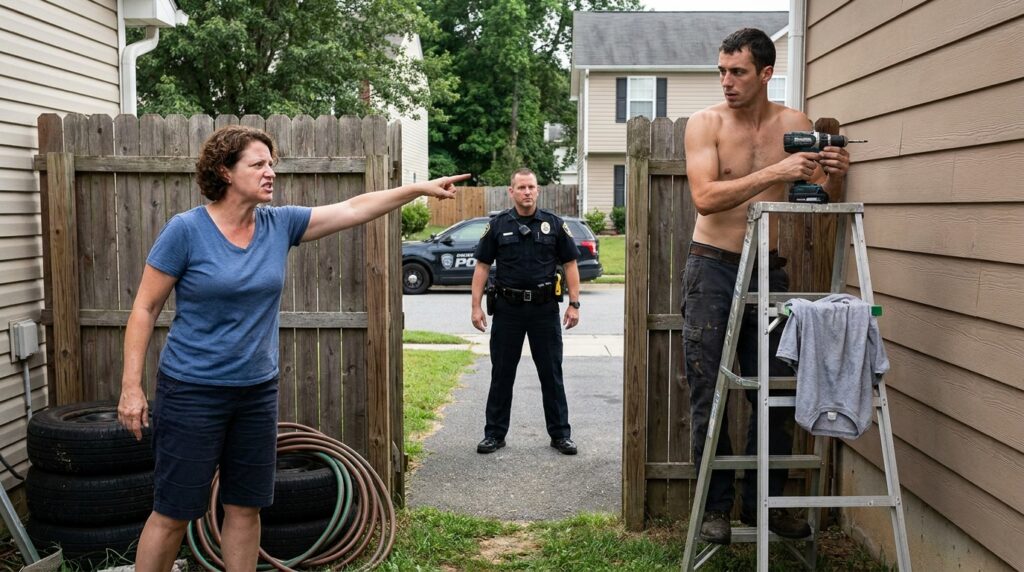
Officer Miller tapped the edge of the blue plastic sleeve against his gloved palm, the heavy vinyl making a sharp thwack that seemed to echo in the narrow corridor between the two houses. Across the street, Mr. Henderson had turned off his riding mower entirely, sitting back against the yellow vinyl seat with his arms folded over his chest, watching every movement along the fence line.
“The county plat map on file with the registrar is the sole legal authority governing lot boundaries in this township,” Miller said. His voice was flat, rhythmic, carrying the dry, unyielding weight of municipal code read aloud from a bench. “The stamped iron pin exposed in Marcus’s side yard bears the 1984 developer’s license code. It sits forty inches east of this cedar fence.”
Brenda’s mouth opened, but no sound came out. Her face, flushed deep red from the afternoon heat, suddenly went pale around her cheekbones. She took a half-step back from the fence rail, her heel catching on a stray garden hose coiled in her grass.
“That means,” Miller continued, pointing his pen at the wooden pickets, “this entire privacy fence sits inside Lot 14. It belongs to Marcus Vance. Every square foot of grass between his house foundation and this timber line is his deeded property. You have zero legal standing to issue a cease-and-desist, you have zero authority to tie marker strings to his fence pickets, and you have no ground to demand a halt to his permitted siding work.”
Brenda’s hand holding the smartphone dropped completely to her side. The screen went dark, reflecting only the gray shadows of her own porch roof. “Officer… Howard Vance told me thirty years ago—”
“Howard Vance was a private citizen who built a fence where it was convenient for him,” Miller cut in cleanly. “He didn’t re-plat the lot, and he didn’t file a recorded boundary deed. What you have in your hand is an unapproved, unverified sketch from a rejected variance application. If you attempt to use it again to interfere with permitted work on this lot, or if you call the municipal dispatch line with a false trespass complaint regarding this side yard, I will personally file a report for misuse of emergency services.”
Brenda swallowed hard, her throat moving in a tight, convulsive jerk. She looked past Miller’s shoulder at Marcus, who remained standing beside his ladder, his grey work shirt dark with sweat, his face entirely expressionless.
“Marcus,” Miller said, turning his head back toward the ladder lane. “You’re clear to proceed with your siding repairs under the terms of your municipal permit. If anyone steps across this exposed survey line or tampers with the corner pin you just uncovered, call the precinct desk directly.”
“Understood, Officer,” Marcus said quietly.
Miller handed the plastic sleeve containing the county plat map back to Marcus. He didn’t offer a dramatic nod or a polite smile. He simply pulled his notebook closed, tucked his pen into his breast pocket, and turned on his heel. His heavy leather boots crunched over the gravel edge of the driveway as he walked back toward his utility cruiser, his radio clicking once with a brief, static-laced burst from dispatch.
Brenda stood frozen on her side of the fence for three full seconds after the cruiser door slammed shut. Her eyes flicked from the exposed iron pin in the dirt to the watching neighbors on the sidewalk, then back to Marcus’s guarded face. Without uttering a single word, she turned abruptly, her sneakers squeaking in the grass, and marched up her back steps, slamming her screen door so hard the glass pane rattled in its frame.
Marcus stood alone in the quiet side yard. He looked down at the four-inch iron pin gleaming under the sun, then reached for his cordless drill on the third rung of the ladder.








