
CHAPTER 6: THE SOVEREIGN LINE RESTORED
“Keep moving those tracks backward, all the way past the culvert line,” Deputy Wayne directed, his voice dropping into a low baritone that cut clean through the cooling valley air. The heavy metal tracks of the excavator clanked in reverse, a slow, mechanical retreat that scraped a fresh path through the cooling tar.
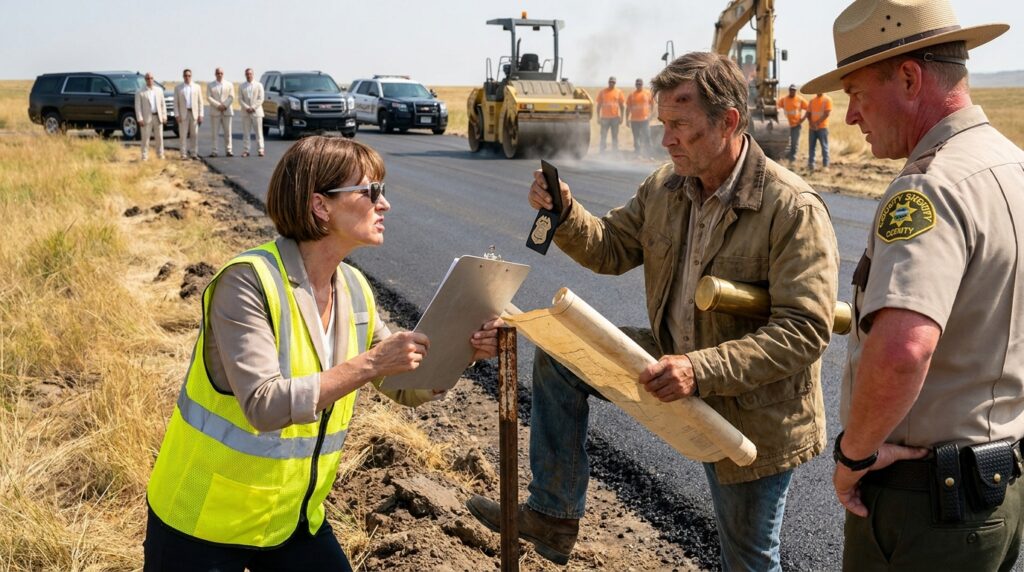
Marcus Sterling didn’t move from the iron boundary pin. He stayed right at the edge of his property, his canvas jacket buttoned against the first light chill of the late afternoon. He watched the white designer sneakers belonging to Victoria Vance sink deep into the thick, unpaved red mud of the drainage ditch as the sheriff’s deputy escorted her toward the rear seat of the county cruiser. The aluminum clipboard she had carried like an administrative weapon sat abandoned on the hood of Marcus’s truck, its legal sheets fluttering in the rising wind, completely stripped of their false authority.
The five investors from the Apex Valley syndicate had already retreated to their vehicles, their expensive luxury SUVs reversing down the narrow access road in a frantic, uncoordinated exit. The glossy brochures detailing the private airfield had been left behind, scattered across the raw gravel like fallen leaves. The valley wasn’t entering a new era of corporate prestige; it was witnessing a complete regulatory collapse.
“This is an unconstitutional overreach,” Victoria yelled from the open door of the patrol car, her sharp bob haircut disheveled, her silver sunglasses hanging loosely from one ear. She glared at Marcus through the glass, her fingers clawing at the window frame. “The coalition board will have a federal injunction on your desk by Monday morning, Sterling! You can’t dismantle a public utility project with an outdated homestead patent!”
Marcus looked at her through the clear air, his expression remaining perfectly still, matching the gray resilience of the cedar posts. “The patent isn’t outdated, Victoria. It’s sovereign. And your coalition board doesn’t exist anymore. The county clerk logged the fraudulent addendum into the federal database twenty minutes ago. The state environmental protection division is already freezing Apex Valley’s commercial corporate assets for deliberate wetland bypass violations.”
The door of the cruiser slammed shut with a heavy, industrial latch sound that echoed across the pasture. The blue lights of the vehicle flickered against the darkening timber as the deputy pulled away, leaving the lane completely quiet for the first time in a week.
Marcus walked over to the abandoned concrete barriers blocking his secondary gate. The three hired grading crew workers were already hooking up the heavy chains to their flatbed, their movements silent, deliberate, and cooperative. They didn’t ask for his identification badge again; they had seen the federal seals on the original land map. The leader of the crew, a large man with grease-stained leather gloves, tipped the brim of his cap toward Marcus as he secured the final link.
“We’re taking the highway stone back to the district yard, Mr. Sterling,” the operator said, his voice carrying the rough, transactional pragmatism of a man who worked for whoever held the legal permit. “The coalition’s work order has been marked as invalid on our screens. Sorry about the fence line.”
“Just leave the cedar rails by the barn,” Marcus replied quietly. He didn’t check the progress of their trucks. He turned his back to the road, his boots stepping off the fresh asphalt and back onto the native blue-stem grass of his grandfather’s pasture.
The sun was dropping below the western ridge now, casting long, desaturated shadows across the valley floor. The chemical smell of the hot tar was fading, replaced by the deep, wet scent of fresh topsoil and the clean wind moving through the cornstalks. Marcus walked down to the edge of the deep trench where the excavator had stopped its work. The severed oak root was still visible in the clay bank, but the water in the ditch wasn’t rising; it was draining naturally toward the southern limestone basin, following the true topography of the land.
He crouched down, his fingers finding the rough, rusted head of the old iron boundary pin buried in the silt. It had remained unchanged through forty years of commercial expansion, a permanent anchor hidden beneath the surface of the valley. Victoria had tried to draw a line with asphalt and forged ink, but the true line belonged to the soil itself, paid for by generations of labor that couldn’t be voted away by an entitled neighborhood coalition.
Marcus stood up, dust brushing from his canvas sleeves as he looked out over the open fields. The heavy machinery was gone, the fence was going back up, and for the first time in a month, you could actually hear the wind in the trees. He turned back toward the old farmhouse, the quiet of the homestead settling around him like an earned victory.








