
Chapter 4: The Story Gets Bigger
By the end of the week, Thomas noticed people behaving differently.
A neighbor who usually waved simply nodded.
Someone had moved a package from his porch to the side gate without telling him.
At the mailbox, conversations stopped when Thomas approached.
None of it was dramatic.
That was what made it painful.
At sixty-two, Thomas had no interest in neighborhood popularity contests.
But he cared deeply about his home.
It was the house he and Margaret had bought twenty-six years earlier. The kitchen still had the small scratch in the cabinet door she had accidentally made while moving a cast-iron skillet. Her handwriting remained on an old garden calendar in the basement.
Thomas could tolerate being disliked.
He could not tolerate losing the peace Margaret had helped him build there.
So he did something Denise did not expect.
He stopped defending himself one neighbor at a time.
Instead, he wrote a short factual statement for the HOA.
No accusations.
No insults.
Just dates.
The camera had been installed after a package theft.
It was pointed at his entrance.
Denise had entered his porch.
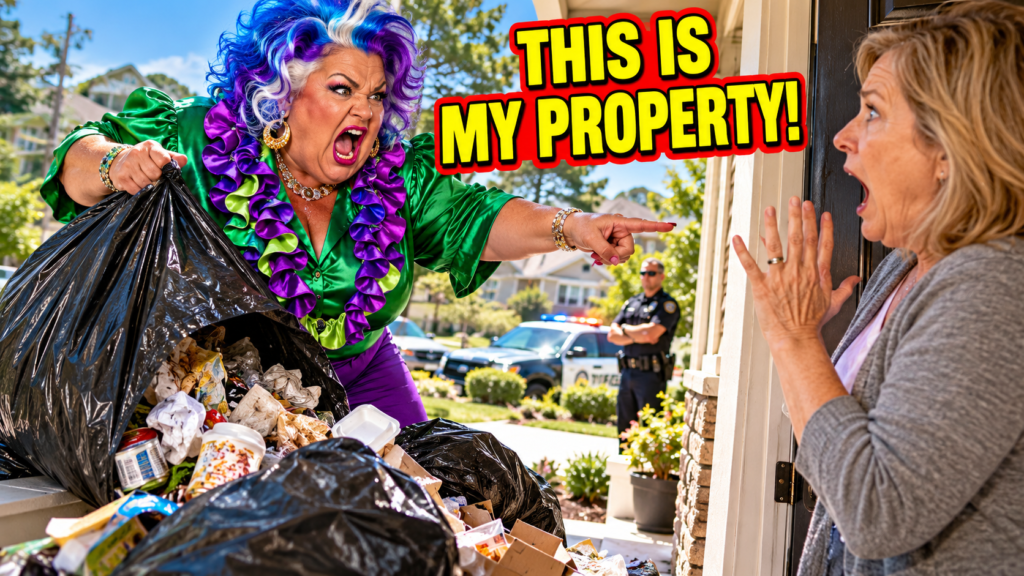
She had overturned his trash bin.
She had thrown the bucket.
The complete recording existed.
He attached still images showing the camera’s limited angle.
Then he added one sentence:
“I want the same thing everyone else in this neighborhood wants: to feel secure at home without being treated as though ordinary privacy is a threat.”
Linda circulated the statement to the board.
Something unexpected happened.
Three other homeowners responded.
One said Denise had previously asked them to remove doorbell cameras.
Another said she had complained about their motion lights.
A third homeowner said Denise had accused him of leaving trash near the curb, only for a delivery driver to appear on his camera carrying the bag from another property.
There was no secret conspiracy.
There didn’t need to be.
The pattern was enough to make the HOA realize the problem was larger than one porch.
At the next meeting, Linda proposed a neutral rule.
Home security cameras would be allowed as long as they were positioned reasonably and did not intentionally record private areas.
The board would handle complaints using actual evidence rather than photographs without context.
The proposal was simple.
Denise objected.
She said the rule was designed for Thomas.
Linda replied that it applied to everyone.
That distinction mattered.
Thomas watched Denise gather her papers.
He expected another confrontation.
Instead, she said something that stopped him.
“You don’t understand what it’s like to feel watched.”
Thomas looked at her.
For a moment, the anger fell away.
He could hear the fear beneath her words.
He still did not excuse what she had done.
But he understood that the argument was no longer simply about a camera.
It was about control.
And Denise had just revealed that she felt she was losing it.
The board voted to continue reviewing the matter.
Thomas left without celebrating.
The new rule protected him.
But the personal damage remained.








