CHAPTER 1: THE SCRAPE AT THE EDGE
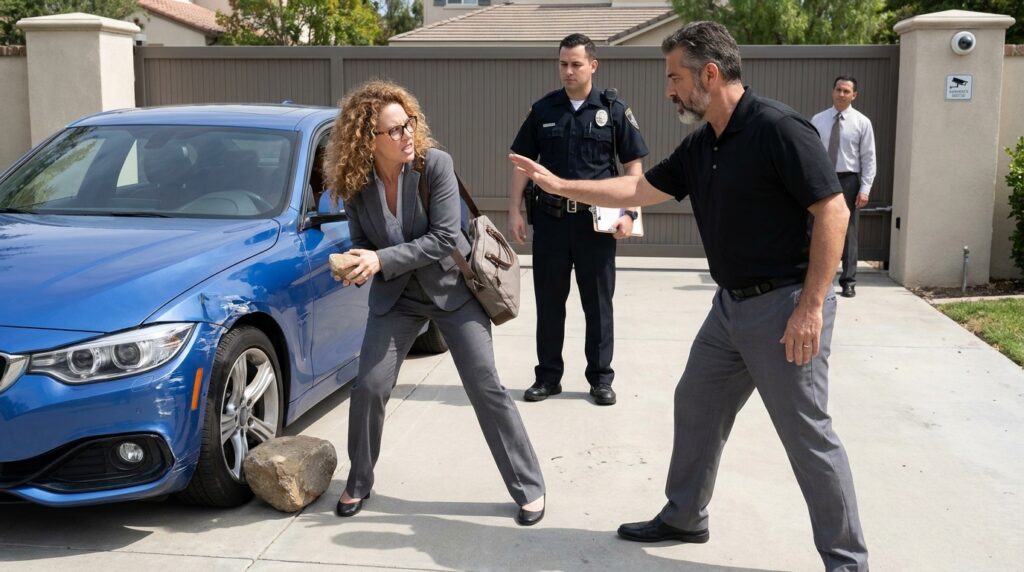
The sound of a heavy metamorphic stone scraping through five layers of factory-sealed metallic clear coat is immediate and jagged, cutting clean through the midday humid silence of the driveway. It isn’t a clean sound. It has the wet, grinding friction of raw mineral tearing into cold zinc-plated steel.
I don’t yell. Out here on the flat gray expanse of the concrete boundary, yelling is a waste of oxygen and a surrender of leverage. Instead, my shoes make a sharp, rhythmic contact against the aggregate surface as I drop the aluminum water hose nozzle. The rubber line thumps against the manicured turf behind me. Five steps. That is the distance between my front porch step and the front-left quarter panel of the blue sedan.
She is still leaning into the turn, her heavyset frame anchored uncomfortably in two-inch tan heels that press deep into my St. Augustine grass. Her fingers, small and red-knuckled under the gold-plated rings, are still white from the effort of pulling the sixty-pound decorative limestone block across the property line. Her gray business suit jacket is bunched at the shoulders, smelling faintly of synthetic lavender and old paper folders.
“I said this car doesn’t belong in my neighborhood!” Her voice is reedy, vibrating with a manic sort of civic piety that she wears like a badge. She doesn’t look at my face; she looks at the deep, white-edged furrow she has just plowed into the metallic blue paint.
I plant my right boot three inches from her toe line, my body weight shifting down, dropping my center of gravity until I am a vertical wall between her gray shoulder and the car’s damaged flank. I don’t touch her. Touching a woman like her in an enclave like this is an invitation for a municipal injunction. I lift my right palm, flat and rigid, a clean two inches from her chest fabric.
“Get back on the asphalt,” I say. My voice has the dry, flat delivery of an insurance adjuster logging a totaled frame. “You’re off the easement.”
Behind her, near the heavy black iron mailbox pillar, her shadow associate—a man in his late 30s wearing a crisp white corporate shirt and a silk tie that matches the local neighborhood association color scheme—freezes. His hand is half-extended toward his leather portfolio, a stack of unfiled compliance notices tucked beneath his armpit. He looks at the fresh white powder of ground stone dusting the blue bumper, then looks up at the brick gate column behind me.
On top of that column, nested in a matte-black weatherproof housing, the small glass lens of the security camera hums as its internal servo adjusts for the glare of the noon sun. It isn’t a standard consumer model; it’s an industrial power-over-Ethernet unit with an unblinking focal ring that has been recording since her heels first crossed the curb.
The neighbor doesn’t back away. She uses her clipboard like a shield, pressing the aluminum edge against her purse. “This vehicle violates the sub-chapter architecture guidelines for guest parking duration, Arthur. I am documenting the nuisance. Captain Scott said your family needs to align with the street’s aesthetic or face—”
“I’m recording this,” I cut in, my thumb already pressing the side button of the smartphone I’ve pulled from my slacks. The lens is three inches from her face, capturing the sweat beads pooling along the rim of her oversized designer glasses. “Send an officer for property damage now.”
She blinks, her mouth remaining half-open, a strange gray shadow of dawning liability passing beneath her pale blouse. The silent associate near the mailbox takes one deliberate step backward into the public street, his fingers releasing the corner of his leather portfolio.