CHAPTER 8: THE SOVEREIGN BOUNDARY RESTORED
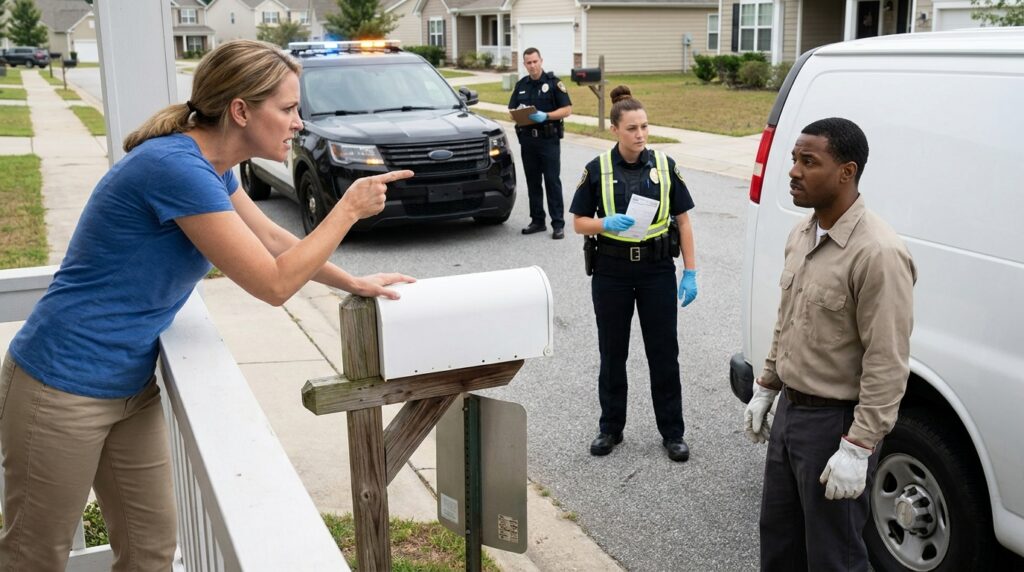
The heavy drop of summer rain that hit the top of the white van’s radiator didn’t wash away the soot; it turned the dust into long, greasy streaks of slate-gray that ran down the flaking iron bodywork. The engine was dead, its cooling fan spinning to a slow, whistling stop that left only the wet sound of the creek runoff pouring through her grandfather’s concrete culvert.
Elena let her fingers uncurl from the cedar timber. The bark was cold now, slimy with rain and the sticky dark crust of her own dried blood where her thumb had pinned the edge of the galvanized plate. The skin was stiff, but she didn’t rub it. She stood steady in the unwatered clover, her boots sunk into the clay, watching the primary officer slide the heavy blue folder into the side compartment of her reflective vest with a clean, nylon snap.
“The ignition log stays with the station terminal,” the primary officer said, her blue-gloved hand gesturing toward the second deputy, who was already locking the oxidized aluminum chocks behind the van’s rear tires. She turned her sunglasses back toward the worker, her face remaining a flat, unyielding line in the blue glare of the roof lights. “Get your personal gear out of the cab. The tow line is three minutes out from the county yard.”
The worker didn’t reach for the brass ring on the hood. He stood on the edge of the asphalt apron, his white cotton gloves dark with steering grease, his shoulders dropping down until the starched seams of his beige shirt buckled under his chin. His mass seemed to shrink as the blue lights caught the edges of his unbranded patches. He didn’t look at the neighbors who had come down to their gravel fence lines; he kept his eyes on his boots, his teeth biting into his lower lip until a thin line of red showed through his gray salt-stain.
“It was an open tract,” he muttered, his voice dropping into a flat, dry raspy whisper that barely cleared the sound of the rising wind. “The old man said the county wouldn’t track the index numbers if the lane stayed clear of the ditch main. It was five hundred down and five hundred when the timber trucks cleared the back gate.”
“George Miller hasn’t had a validation stamp since eleven,” the second officer said, his digital stylus snapping hard against the silver frame of his clipboard. He walked around the front fender, his hand dropping to the heavy black casing of his belt radio as the terminal screen gave a final, green confirmation chirp. “The county pool hasn’t run an unindexed chassis since the consolidation. You’re logged for three counts of simulated enforcement and one of property destruction, resident. Move your boots to the rear seat of the utility car.”
The worker turned his back to the mailbox post, his white gloves lifting slow and heavy to his head as he stepped into the shadow of the police SUV. There was no argument left in his frame; the mechanical logic of his overreach had broken completely against the actual legal layout of the street.
Elena watched his boots clear her gravel apron. She didn’t look at old man Miller, who was now backing his aluminum walker toward his screen porch, his head low against his chest as his front door clicked shut against the rain. The ultimate final reality of the timber tract had been stripped down to its oldest line—not an official public necessity or a municipal drainage path, but a private, multi-generational greed that had used a junked city truck and a fake piece of tin to bypass a dead man’s boundary line.
The primary officer walked over to the cedar post, her blue gloves tracing the split where the rotten timber had sheared away from the iron bracket. She reached down, her fingers catching the three dropped letters from the wet clay of the ditch, and handed them back across the post. The white envelopes were damp, stained with gray limestone dust, but the names were clear beneath her thumb.
“The supervisor will have a maintenance crew out here by noon tomorrow to backout those zinc screws,” the officer said, her voice dropping into a quieter, transactional tone that left the street’s heat behind. “The plate goes into the evidence box. You keep your car exactly where it sits, Elena. The county line ends four inches before the wood, and no one clears that apron without a judge’s signature.”
Elena took the damp letters, her thumb pressing into the gray paper until she could feel the thick edge of the electricity bill inside. She didn’t offer a thank you; she didn’t smile. She simply stood her ground by the sovereign post, her boots anchored into the unwatered clover while the red and blue reflections from the cruiser’s roof lights faded into the dark, steady downpour of the afternoon. The blockade was breaking up, the tow truck’s heavy yellow lights already rounding the corner by the old grain silo to clear the lane, but her hand remained flat against the wood, guarding the old boundary her family had sunk into the dirt fifty years before.