CHAPTER 8: THE SECURED PERIMETER
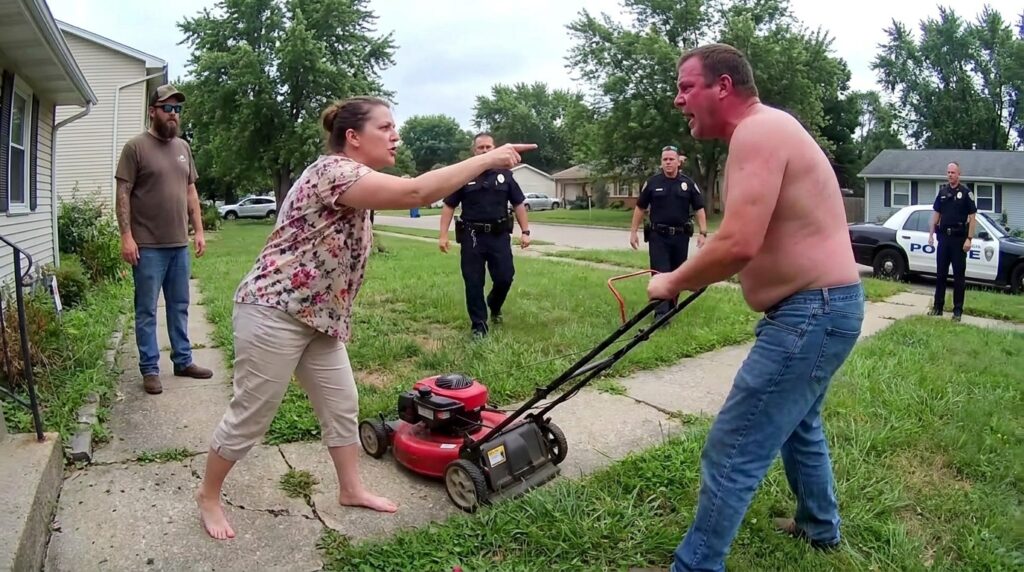
The yellow warning tape crinkled as Officer Davis pulled it taut across the two metal stakes, the sharp, plastic hum cutting through the low idle of the code enforcement truck that had finally parked at the curb. The bright ribbon divided the front yard into two separate, uneven sectors, its reflection cast in long, yellow bars against the black paint of the police cruiser’s door.
“This is your official notice of a boundary quarantine, Gary,” Officer Miller said. He unclipped his pen from his vest pocket, his thumb pressing down on the plastic cap with a dry, mechanical click that sounded like an old lock catching. He handed a white carbon copy of the citation across the yellow line, his glove brushing against the rusted handle of the mower that remained stuck dead center in the grass. “You don’t cross this fescue. You don’t operate machinery within ten feet of the industrial index until the city engineer maps the valve seat from the main ledger.”
Gary didn’t reach for the paper. He let the white sheet flutter against his knee before his grease-stained fingers slowly closed around the margin, his knuckles gray with the dust of the lawn. His chest had stopped heaving, but his mouth remained twisted into a tight, hard line that running sweat had washed clean of grit. “The ledger doesn’t change the footprint, Miller,” he muttered, his voice dropping into a register that was barely louder than the drone of the truck’s radiator fan. “The valve box is still sitting four inches onto her side of the nineteen-sixty foundation. When that sleeve cracks, the town isn’t going to fix her basement floor. They’re going to dig the whole apron up.”
“That’s for the courthouse to settle,” Miller replied, his boots shifting back toward the asphalt edge. He didn’t look at the crowd that had gathered near Mrs. Gable’s fence. He simply touched the brim of his cap toward Sarah, his heavy leather gear creaking as he turned back to his vehicle. “Ma’am, keep your line clear until the surveyor files the update on Monday. If he comes over the gravel before then, you call the desk directly.”
Sarah didn’t speak. She watched the black-and-white cruiser lift as its front tires cleared the concrete incline, the engine whine fading down Croyden Lane until the only sound left on the block was the slow, rhythmic ticking of the cooling metal under the code truck’s hood. Her bare feet were numb from the cold grease that had leaked out of the mower’s housing, the sharp limestone dust of the driveway margin clinging to her skin like dried salt.
Mark was still standing by the porch rail, his sunglasses tucked into his shirt pocket now, his eyes tracking the way Gary was backing his truck down his own side of the concrete lane. “He’s not going to stop, Sarah,” Mark said, his voice entirely flat, stripped of neighborly comfort. “He’s just going to wait until the city sends the assessment notice. Once the tax maps change, everyone on this ridge is going to see the numbers.”
Sarah turned her back on the road. She walked toward the narrow crawlspace door beneath her kitchen window, her heels sinking into the unclipped clover where the tracks had been torn by the blade. In the shade of the foundation wall, a small green plastic box sat nestled between two foundation blocks—the newly mounted security camera she had spent three hours configuring the night before. The small glass lens caught the grey afternoon light, a tiny black eye recording the silent, empty margin between the two houses.
She reached down and pulled the brass inventory tag from the mower’s oil cap, using the edge of her house key to pry the copper rivets out of the rusted housing. The metal was thin, cold, and pitted with green rot on the reverse side. Stamped directly into the underside of the plate, beneath forty years of grease and old soil, were two letters followed by a five-digit code: M.V. 1996-04. Her father’s initials, carved into the very tool Gary’s grandfather had surrendered to the township to pay for the first drainage easement.
The house didn’t feel like a home anymore; it felt like a temporary deck built over a massive, unrecorded cavern of old public debts. She tucked the tag into her pocket, her fingers finding the rusted key to the garage crates, knowing that when she turned that lock tonight, the lines on the linen maps wouldn’t match the dirt she was standing on.